

June 9th is International Batten Disease Awareness Day. It’s an opportunity for those dealing with this horrific, rare condition to share stories, spread awareness, and maybe (just maybe) spur on funding and support for much-needed research.
It’s also a chance for me to talk about our daughter Amelia, who was diagnosed with Batten Disease in 2019.
In brief, Batten Disease is a term used to describe 13 rare genetic neurological disorders. You might see it described as “childhood dementia” in media coverage.
There are differences among the various types, but generally speaking, Batten Disease affects how cells process waste, leading to a buildup of proteins and fats around neurons. Symptoms typically include seizures and the loss of several abilities like sight, speech, mobility, and much more. Only one type currently has an FDA-approved treatment to slow progression, but research for cures is ongoing.
It’s estimated that Batten Disease can affect around two to four out of every 100,000 births in the US.
Amelia was born with the CLN1 variant, and many with her type don’t make it to their 10th birthday. When she was diagnosed, an MRI revealed the damage already done to her almost two-year-old brain. Some estimated she’d survive for maybe another year or so.
Amelia fought on for nearly seven years and we resolved to give her the best life possible, and to cherish every second we had with her. We went on outdoor adventures to parks and accessible trails. We celebrated Christmases and Halloweens. We even had a Taylor Swift-themed birthday party in the hospital.
But with no treatment or cure readily available, and with her symptoms continuing to progress, we knew what we’d have to face sooner or later. On February 8th, 2026, Amelia passed away surrounded by her family. A few weeks later, we celebrated what would’ve been her ninth birthday.
While we continue to grieve, our fight against Batten Disease marches on. And that includes raising awareness and spreading the word about this little-known condition.
And so with this year’s International Batten Disease Awareness Day upon us, I wanted to highlight some of the ways this rare disease has been represented in movies, TV, and other media and hopefully call more attention to the urgent need for research.
For more information about all forms of Batten Disease, visit the Batten Disease Support, Research, & Advocacy Foundation.

Hugh Dancy and Odelya Halevi, Law & Order
Virginia Sherwood/NBCBatten Disease plays a pivotal role in a 2025 episode of Law & Order. Titled “White Lies,” the third episode of the 25th season features a child with Batten Disease and a desperate, frustrated parent going to extreme measures to ensure potentially life-saving medical research continues. The episode touches on some of the difficulties rare disease researchers can face, like fighting for funding against better-known, more profitable ventures.
The actual depiction of Batten Disease doesn’t quite get into the nuances of the 13 different types, but one doctor has a line that’s both succinct and soberingly accurate: “Batten Disease,” she says. “It’s brutal.”
The Saint of Second Chances
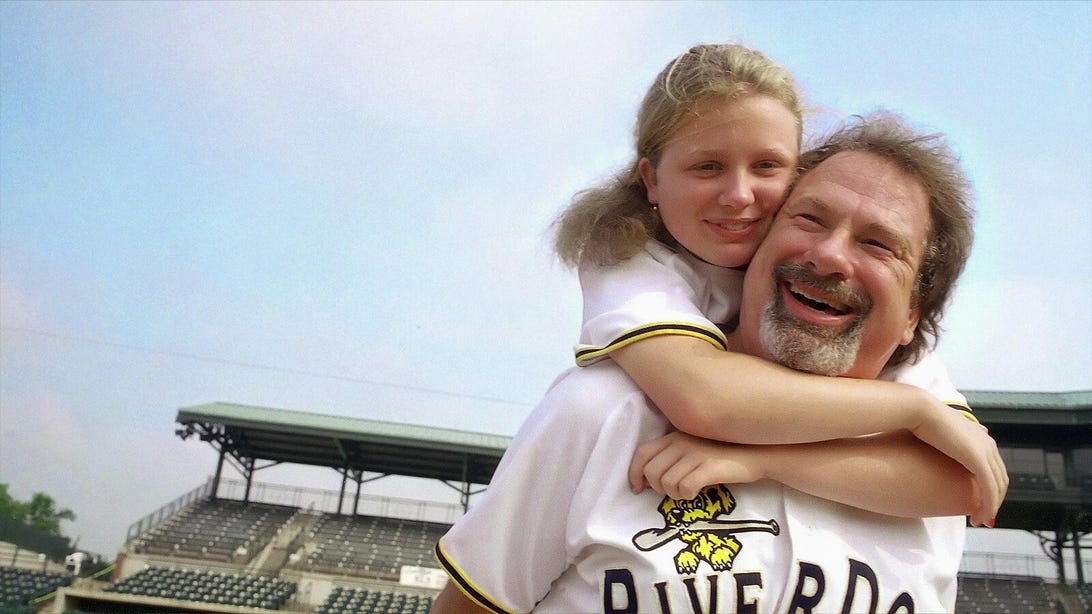
Rebecca and Mike Veeck, The Saint of Second Chances
NetflixPerhaps the most significant new addition to the list of Batten Disease stories comes via this baseball-centric documentary on Netflix. The 2023 film focuses on the exploits of baseball promoter Mike Veeck, who helped organize the infamous “Disco Demolition Night” that led to riots at a Chicago White Sox game. Jeff Daniels narrates while Charlie Day portrays Veeck during reenactments that chart his rise, fall, and eventual resurgence.
Outside the diamond, though, the film shines a loving light on Veeck’s daughter, Rebecca, who was initially diagnosed with retinitis pigmentosa (a rare eye disease) as a child. A passionate baseball fan herself, Rebecca later experienced a seizure in her 20s, which led her family to discover she had actually been born with Batten Disease.
Rebecca Veeck passed away in 2019, and her family continues to celebrate her life and spread Batten Disease awareness.

Love, Kennedy
This 2017 film is based on the life of Kennedy Hansen, who was born with Juvenile Batten Disease. Early on in the movie, she’s shown enjoying a healthy, seemingly typical teenage life filled with friends, family, and sports. When she begins to lose her sight and ability to walk, it’s made clear something serious is going on.
We watch Kennedy’s family turn to their faith and the support of the community as they attempt to come to terms with what they fear will be a short lifespan. Dealing with a Batten Disease diagnosis, and the life-altering changes that follow, often lets loose a roller coaster of emotions for those involved. Love, Kennedy does a solid job showcasing the highs and lows involved in making the most of a cruelly short time.
The Act (Episode 3: “Two Wolverines”)

The Act
HuluThere aren’t many shows or feature films that focus on Batten Disease as a main plot point. But the ultrarare condition does garner a few mentions here and there, sometimes as a means of relating to the struggles experienced by a main character.
Take 2019’s The Act, a true crime drama starring Patricia Arquette and Joey King. Based on a true story, this miniseries tells the tale of Dee Dee Blachard (Arquette), who was accused of abusing her daughter (King) and insisting she was seriously ill.
In the third episode (“Two Wolverines”), a man named Russ (played by Dean Norris) encounters what he thinks is a mother struggling to care for her terminally ill child and attempts to bond with her. He reveals he had a similar experience with his own son.
“I’ve been where you’ve been,” Russ says. “I lost my boy when he was 13. It was Batten Disease. He was in a chair at the end.”
It’s just a fleeting mention, but Russ’ description certainly tracks. Mobility is one of the major abilities those with Batten Disease typically lose.
Amelia was just beginning to get used to walking before Batten Disease stole it away. At first, we thought she was getting scared of walking, and then we eventually discovered the truth.
So The Act‘s Batten Disease representation might not be the most robust, but what it depicts certainly rings true.

Coronation Street
For another example of mentioning Batten Disease to help relate to a main character’s anguish, we turn to Coronation Street. In 2020, the long-running (11,000 episodes!) British soap opera featured a storyline in which Leanne Battersby struggled to cope with her son’s mitochondrial disease diagnosis. At one point, family members suggest she join a support group for parents of children with life-threatening diseases, but she initially declines.
Then, in episode 10086, Leanne is introduced to Josie MacGyver, a mother who created the support group after she lost her nine-year-old son to Batten Disease.
“He put up a very brave fight, but however long we had, we always knew the end would come,” Josie says of her son Matthew.
Leanne reveals she’s reluctant to join the group because it sounds like the members have accepted their futures instead of wanting to fight to change it. But Josie assures her it’s more nuanced than that, adding that it’s less about resigning oneself to fate and more about maximizing whatever time you have left.
Josie shares that her son Matthew was given four years to live when he was first diagnosed, but he managed almost six.
“And I made the most of them,” she says. “I squeezed every last drop out of my time with him.”
Chicago Med (Season 8, Episode 12: “We All Know What They Say About Assumptions”)

Chicago Med
NBCIn a Season 8 episode of NBC’s Chicago Med, doctors race to figure out why an otherwise healthy young boy is suddenly struggling with low energy and seizures.
As they get to the bottom of the boy’s condition, they consider some real-world diseases that could be at fault. One doctor mentions looking up various conditions that would bring about such sudden symptoms, and Batten Disease gets a quick mention.
Luckily for the fictional character, it ends up being something far more treatable, but it makes sense that doctors would consider Batten Disease given its tendency to bring about life-changing effects like seizures seemingly out of nowhere.
The Disorder Channel

Disorder Channel
If you’re interested in all things rare disease, there’s a streaming channel for that. It’s called The Disorder Channel and it’s currently available on Amazon’s Fire TV platform. The content can vary over time, so you may or may not come across titles that focus on Batten Disease.
But it’s still a useful resource that’s shedding light on a host of under-the-radar conditions.
Alien: Colony War

Alien: Colony War
We’re straying away from movies and TV shows to highlight perhaps the most surprising instance of Batten Disease I’ve found so far: David Barnett’s 2022 novel Alien: Colony War. Set just a few years after the events of Alien 3, the book features a synthetic character named Therese Hambleton, who was created after geologist Merrilyn Hambleton lost her six-year-old daughter to Batten Disease.
At one point, Merrilyn describes how she became pregnant with help from a donor. However, the screening process did not detect that her donor was a carrier for the disease.
Hambleton says her daughter started having seizures and struggled to walk when she was 5, followed by vision issues before she died a year later.
Much of what Barnett includes in this character’s story rings true for a lot of Batten Disease families. Amelia was born via IVF, and, similar to the book, genetic testing at the time did not flag that both my wife and I were carriers for the disease.
And like Merrilyn, we thought everything was fine — until it wasn’t.
So kudos to Barnett for including a largely relatable bit of story into the Alien franchise. Although the book does take place in the 2180s. And while researchers are still a long way from curing all 13 types of Batten Disease, I have to hope we’ll have met that goal by then.
Team Ball Player Thing

Team Ball Player Thing
Let’s wrap up this roundup with a song. In 2015, seemingly every famous person from New Zealand gathered together for a charity song meant to support both the country’s national rugby team (aka the famous All Blacks) as well as raise funds for Batten Disease gene therapy research. Professor Stephanie Hughes of the University of Otago says the effort was part of what’s now a clinical trial for the CLN5 variant.
The song, titled Team Ball Player Thing, featured more than a handful of recognizable faces, including Taika Waititi, Sir Peter Jackson, Melanie Lynsky, and Lorde — among many, many others.
For more information about all forms of Batten Disease, visit the Batten Disease Support and Research Association.