

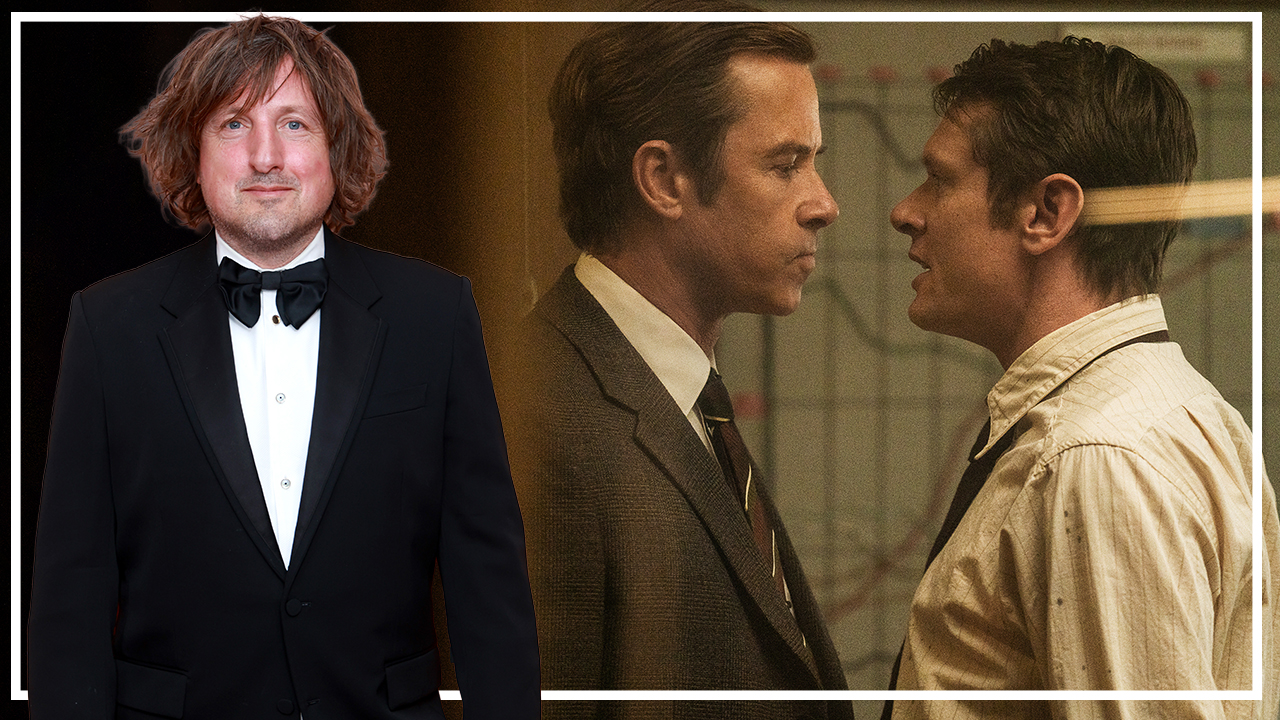
Picture Credits: Getty Images / Netflix
Composer Daniel Pemberton and filmmaker Danny Boyle are compatible storytellers. Together, they produce genuine excitement in Steve Jobs and now Ink, based on Rupert Murdoch (Guy Pearce) buying The Sun and changing the news of the world… Boyle, who’s famous for his frenetic filmmaking, and Pemberton, known for some very kinetic scores, create pure, off-the-rails propulsion in their latest work.
In 2026 alone, Pemberton has scored The Drama, Project Hail Mary, Masters of the Universe, the new season of Slow Horses, and coming out soon, the Alex Gibney-directed Musk. As a composer, he’s got a strong identity across genres. Shortly after Ink played at the Toronto International Film Festival, Pemberton spoke with What’s On Netflix about his scoring process.
Given his wide range of credits, we asked him, what’s he always looking for in a project or potential score? Here’s his answer:
“Well, there’s choosing the project, first of all. I always choose projects that allow me to be creative. I generally stay away from franchises or sequels because there’s an expectation there, and that rarely allows a level of creativity. Sometimes it does, but often I feel it doesn’t.
I kind of go where I can be myself, in a way, and not try and pretend to be someone else. I don’t mind trying to pretend to be someone else. That can be fun if I’m being creative doing it.
So that changes a lot of the kind of movies you do, and it also means the movies you do will become more surprising because people don’t know what to expect. And that is always what I find exciting about films: going into a film and not knowing what it’s going to be.
What are you going to see? What are you going to experience? How are you going to feel? And when you start working like that, then you are more engaged with the project because you are asking these questions yourself.
I have done films where I know exactly what I’ve got to do, what the audience needs to feel. The audience knows that beforehand as well, and they’re not as fulfilling often from a creative point of view because you know what you’re getting before you see it.
If you think about a big superhero movie or whatever, you kind of know what that film is before you even walk in, generally, and you know what it’s going to feel like, what it’s going to sound like. And when it doesn’t do that, that’s when it gets interesting.”
Pemberton’s scores – including Across the Spider-Verse and films with Celine Song, Guy Ritchie, Michael Mann, and Ridley Scott – continue to stand out for their originality. In Project Hail Mary, he used wood blocks to bring a tangible, human sound to a massive space adventure about saving Earth. In Across the Spider-Verse, he used a quacking duck as an instrument. Even when he’s working on IP, he stays original.
Check back toward the release of Ink for our full conversation with Daniel Pemberton.