

Picture Credits: Netflix / Getty Images
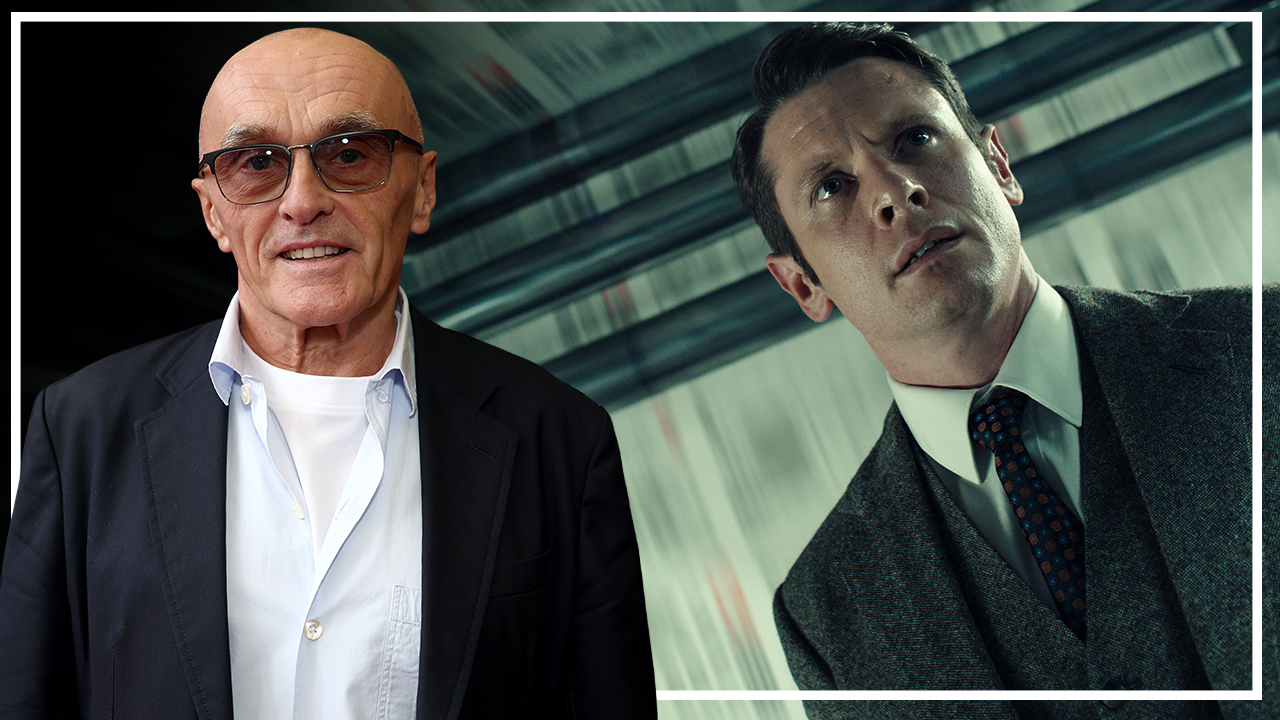
Danny Boyle is as charismatic as the movies he makes. He’s a natural storyteller. The director behind Trainspotting, 28 Days Later, Slumdog Millionaire, Sunshine, and his newest film for Netflix, Ink, knows how to captivate an audience on and off-screen.
So it’s quite a treat that at the Toronto International Film Festival he was a part of a Visionaries panel, although he laughed off the label and said he wouldn’t bother going to a Visionaries panel featuring himself.
But taking the work seriously, not himself, is important to Boyle. It’s one of many anecdotes the filmmaker shared during a very high-profile panel.
A Dose of Punk
Boyle forged his own path as a filmmaker, making a variety of movies all through his unique lens. Behind the post-apocalyptic tales, sci-fi adventures, and love stories, though, is a punk music fan. “I’m a big music fan, and I was very lucky to live through a number of different music movements in Britain, which were fantastic,” Boyle said. “The biggest one was punk for me. I remain, at heart, a punk, really. I’m very proud of that. Tear it down, really. Just do it differently. Don’t listen to people telling you how to do it.”
Debuting Shallow Grave
Boyle declared himself as a filmmaker to follow with his directorial debut, Shallow Grave. It’s a wonderful crime film. The Cannes Film Festival didn’t accept it in the competition, though – but the experience taught the director a lesson about fests.
“The more general point is how important film festivals are in the ecosystem of making a film,” Boyle said. “They’re not just the endpoint. They’re a kind of insertion of hope, of energy, into the filmmaking process, that you might get into Toronto or you might get here or get there. Anyway, we didn’t get into Cannes, which was very crushing at the same time. But we had a midnight screening there.”
Want to Direct Se7en? No, Thanks
But Boyle wasn’t done talking about his first premiere. He admitted to passing on one of the best spec scripts of the ’90s, Se7en, written by Andrew Kevin Walker and later directed by David Fincher.
“When we had the midnight screening, it went down really well,” Boyle added. “This American woman came up to me afterwards and she said, ‘I’ve got a script for you.’ Now you’re told not to accept scripts because of copyright and everything like that. I said, ‘Oh, thanks very much.’ And I looked at the script and it was Seven.”
The crowd oohed, just before the story took an unexpected twist.
“I read it and I thought, ‘That’s terrible,’” Boyle continued. “I couldn’t see it at all. And then I went to see Fincher’s film of it, and it was brilliant. Absolutely brilliant. So you have to see it, you know? Some things you see and some things you don’t. And it’s not a quality judgment. It’s just a personal perspective that you arrive at. So I said I just couldn’t do the film. We did Trainspotting instead, so things worked out okay.”
Cr. Anthony Dickenson © 2026.
Tripping Over Laces and Falling on Faces
Boyle is familiar with success. He’s an Oscar winner. He’s made box-office hits. But he’s also experienced failure in theaters, although even those box-office misses went on to find their fans in time.
“You can fall flat on your face,” Boyle said. “Obviously, we did Trainspotting, which was a big kind of cult hit, and then we decided to do A Life Less Ordinary, written by the same guy. It was an incredible flop. It was a massive flop. I saw it again recently. It’s quite good, I thought.”
There was a fun lesson from taking the L, though.
“But it did prove one of the rules that’s very entertaining about film distribution,” Boyle continued, “which is that when you had a huge hit, there was always one territory where it didn’t work. And conversely, when you had a huge flop, there was always one territory where it was a hit. And A Life Less Ordinary was number one in Belgium for three weeks.”
Sunshine Clashes
Another box-office miss but an imaginative and emotional science-fiction film, Sunshine, remains a cinematic marvel. It was one of the many collaborations between Boyle and screenwriter Alex Garland, who wrote 28 Years Later and went on to direct Annihilation and Ex Machina.
Garland went from author to screenwriter to, perhaps thanks to creative disagreements, acclaimed filmmaker.
“We didn’t get on on Sunshine at all,” Boyle shared. “I think it was the beginning of him thinking, ‘I can do this.’ He tried it with a couple of other directors after me, and I don’t think he got on with them either. Then he decided to make one himself, and he made Ex Machina, which is a wonderful film, a really very special film.”
Boyle noted they “remained great friends throughout,” but:
“We just had different sensibilities on Sunshine. Ironically, I’m much more spiritual in a weird kind of way, faith-based, because I was brought up a very strict Catholic. The seeds of that have remained in me about mystery and about the unknown and uncertainty. Alex is much more scientific. And, of course, on Sunshine, that was one of the things we didn’t see eye to eye on. Although I’m very, very proud of the film, and I think he’s proud of the film as well.”
Cr. Anthony Dickenson © 2026.
TABLOID FILMMAKING!
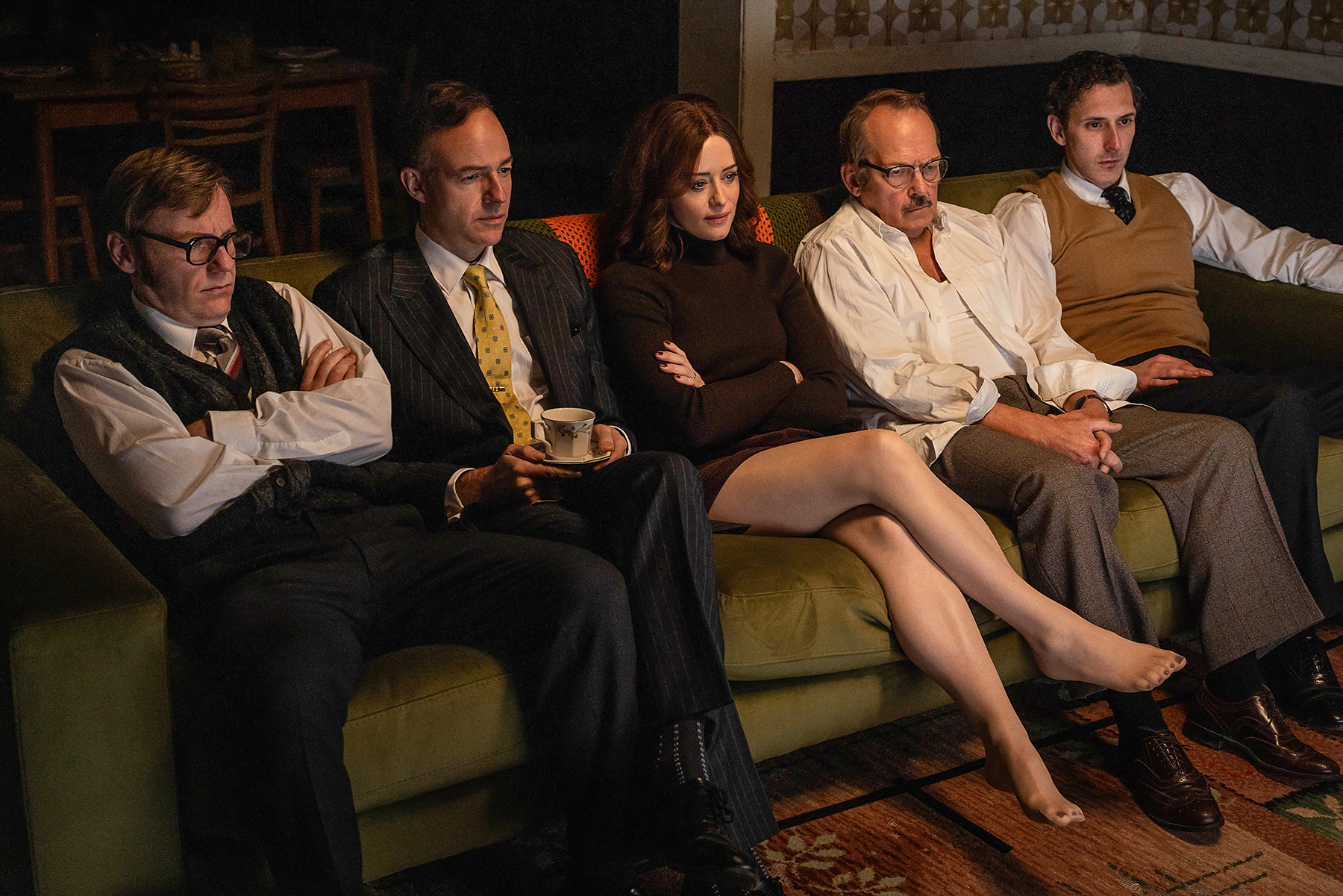
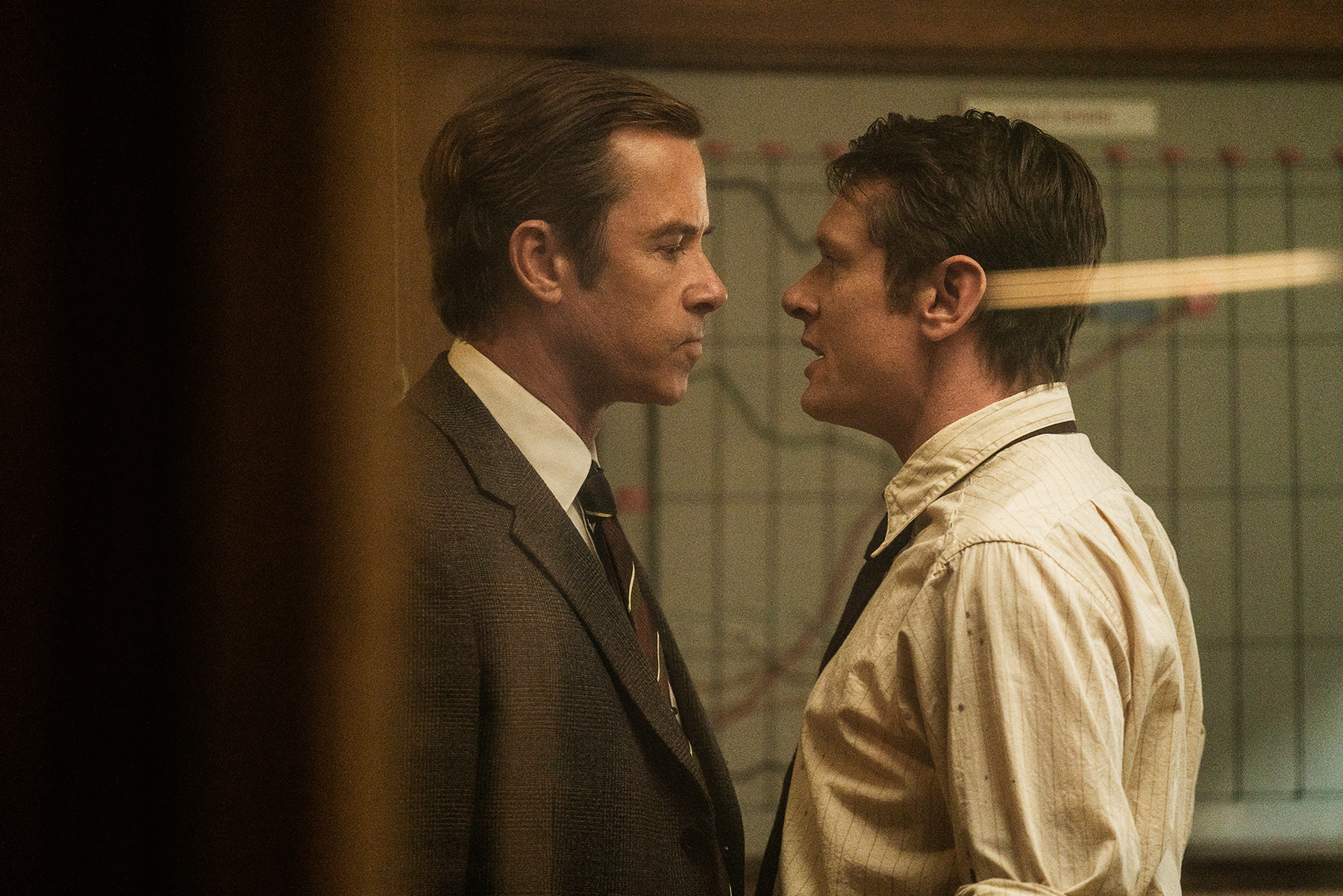
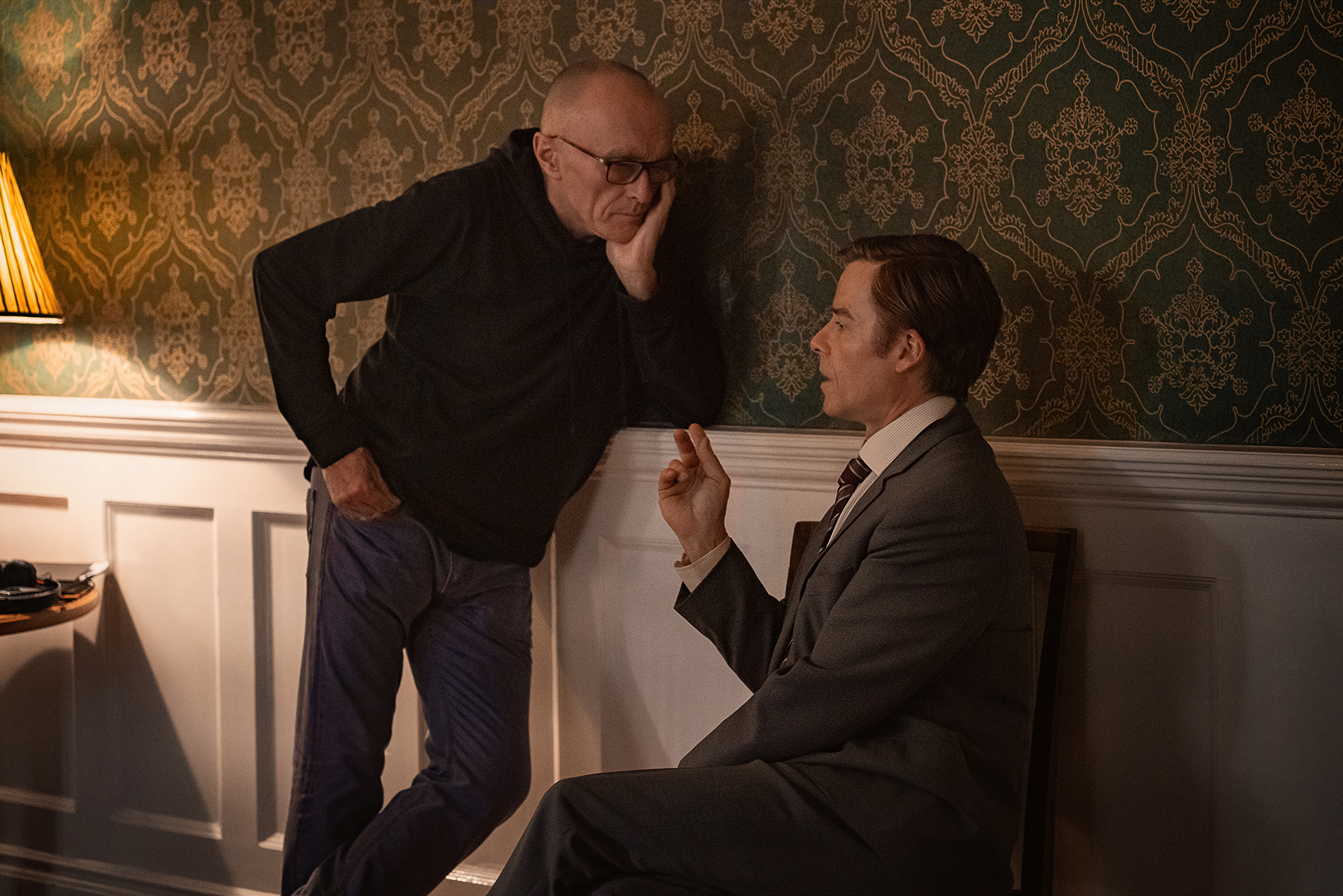
While Sunshine is about saving the world, Boyle’s latest film, Ink, is about worsening it. Going behind the scenes of Rupert Murdoch’s (Guy Pearce) rise with The Sun, Boyle needed to bring out all his bells and whistles for a story that screams for it.
“Film it to suit the content,” he explained. “So, for instance, in Ink, which is a tabloid story, you want to try and have a tabloid mentality in the visual style you bring to it, really. And that’s the thing: it doesn’t have to be totally period because, often, it’s like music. You don’t have to just use period music. There are often things that seem right for the film. It’s an instinct that seems correct for the film even though it’s something that doesn’t belong to that period.”
“A Glamour Story”
Now, this next part isn’t a tabloid story, but it is a very fun name-drop and tangent from Boyle.
“When we were doing Shallow Grave, actually, we hadn’t even finished the film and the phone rang in the editing room,” Boyle recalled. “It was a very small editing room, a very small film, and the assistant editor said, ‘It’s Sharon Stone for you.’ I thought they were taking the piss. It’s like pretending to be, you know, because you do get cut down very quickly in Britain if you start to think you’re successful. But it also shows you how sharp they are. They’re often on the lookout for young filmmakers who will keep them fresh in their work, in their choices, really.”
A 360-Turn
Back to the showmanship of Ink, Boyle is still making choices that make others scratch their heads. “I’m very keen on new technology,” Boyle said. “So in Ink we used this — people were horrified when I suggested it — 360 camera. You know, the one everybody uses for skateboarding? It’s got this incredible freshness, like nobody quite knows what’s going on. We used it as a laugh to try and capture the energy of the tabloid.”
Credit: Anthony Dickenson © 2026.
No Aliens for Boyle
Another glamour story Boyle was asked about at the panel: passing on Alien: Resurrection. “Well, the Alien thing… Obviously, like probably most of us, I’m a huge fan of the Ridley Scott and James Cameron pictures,” Boyle said. “This was the fourth one. I got to meet Sigourney Weaver, which was a privilege, in Vienna, as I remember it. It was on that cusp of animatronics and CG. The film world was changing, and I wasn’t confident about handling that for the monster. So it was literally that.”
No Clue, Either
Through all the genre-hopping, the exploration of different parts of the world and humanity, this is what still drives Boyle these days: “I really like — not just like, I sort of depend on — the feeling of not knowing what I’m doing, in the sense that I don’t know how to do it. You’ve got to find out how to do it.”