

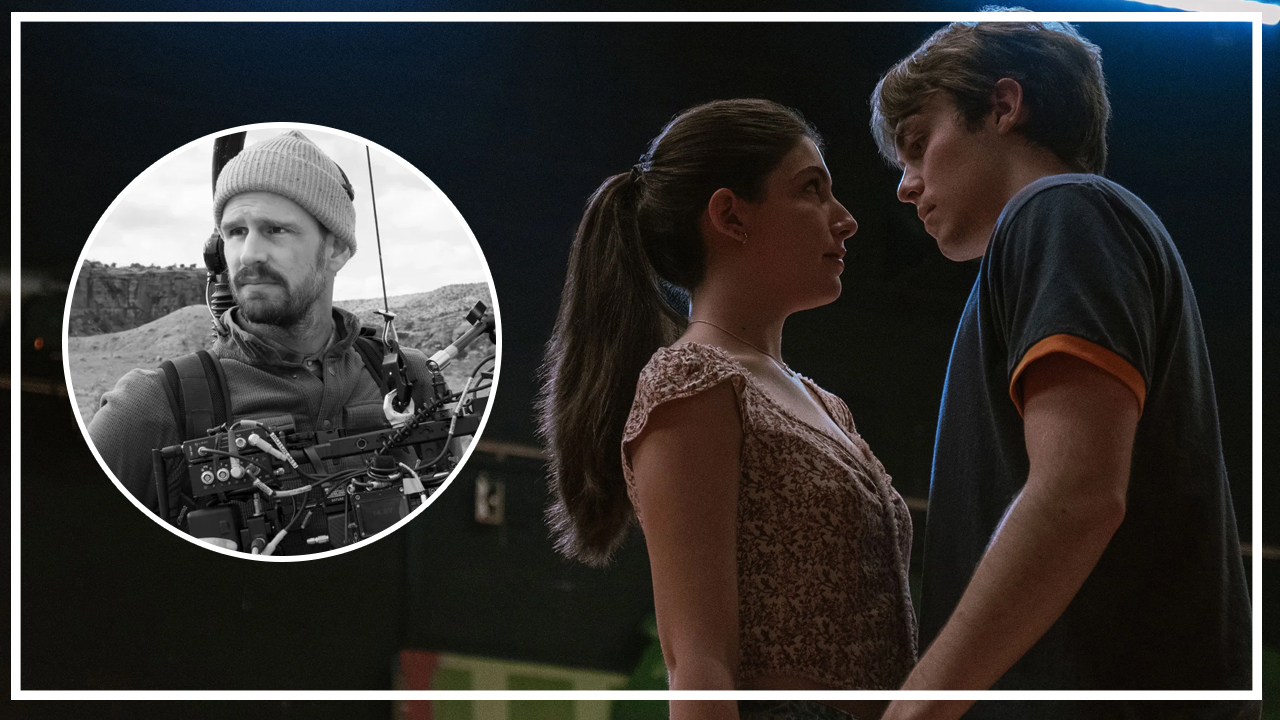
Picture Credit: Netflix / Bryce Fortner
Cinematographer Bryce Fortner and director Julia Hart wanted to balance emotion and laughs in Don’t Say Good Luck. Together, the longtime filmmaking duo score laughs in showing the makings of a high school musical while also sincerely portraying a family struggling with life’s hardships at home. A story about characters struggling at home is the exact type of movie Fortner wants to light.
He’s got a wide range as a cinematographer, having worked on Portlandia and shot Ingrid Goes West as well as Professor Marston and the Wonder Women.
For Hart, Fortner shot I’m Your Woman, Hollywood Stargirl, and the two are already at work on another feature, Better Than Movies, for Netflix. Recently, Fortner told What’s on Netflix about their long-running collaboration as well as his unique journey from businessman to cinematographer.
You and Julia clearly have a good working relationship. How did you two first hit it off and see eye to eye?
The first movie we did together was Stargirl for Disney+, and that was back in 2018. We’re about to shoot our fifth project [in Chicago]. We just connected. A shared love of, I don’t want to say classic movies, but really intentional movies, like movies from the ’70s and the ’80s. It’s funny because we’re doing a romantic comedy right now, so that’s segued into movies from the late ’80s, early ’90s.
And so, just a shared love of filmmaking and storytelling and intention and simplicity and groundedness and things like that. Even the first movie we did, for me, was a big leap. It was a $20 million Disney movie. I had only done $3 million indies, and so I was like, “Oh man, what’s that going to feel like?” Then it was just like, well, I’m going to bring myself to it, which is small and intimate and emotional. It’s just how I like to work.
How do you, as a cinematographer, approach the emotional and the intimate?
It was obviously important to handle that with a steady hand and a secure hand, but not a heavy hand, and for these actors to feel safe. My degree is actually in screenwriting. I’m not a writer, don’t claim to be a writer, but I have a deep appreciation for a good script and a deep appreciation for the acting process, creating and giving space to actors and things like that. I realized a long time ago I would much rather make a good movie than a good-looking movie.
It’s my job to make a good-looking movie, and I try my best to do that, but I would rather set Julia and the actors up for success and the script up for success than try to impose some sort of visual idea I have. Of course, I’m always trying to bring as much visual as I can to the table, but it’s a hard balance. I don’t ever want that to lead the conversation or the creative on a project. But then it also means I don’t get a lot of attention for the photography. I like to believe it’s there, and whether or not people can pick up on that, who’s to say.
[Costume designer] Vanessa Porter and I talked about this, actually, how it’s just as hard if not harder doing something grounded than big and fantastical.
No, totally. But then not scream at you. I think that’s something that a lot of TV and movies and stuff like that do now. I mean, it’s a time of Instagram and screencaps and thumbnails, and so the intention is to always make everything feel beautiful all the time and striking and stunning, and that’s cool. I’m not capable of doing that. I also think, as an audience, as a viewer, you almost become numb to it after a while.
This is not a reference for Don’t Say Good Luck, but My Best Friend’s Wedding is a reference for the movie we’re doing right now. And it’s amazing to see these romantic comedies shot by László Kovács (Shampoo) and Vilmos Zsigmond (Blow Out), or Tak Fujimoto (Something Wild) and Sven Nykvist (Persona).
A lot of those ‘90s films are very lit and studio-feeling, but still very graceful and beautiful.
Were there any times on Don’t Say Good Luck that you wanted to go for bolder visuals, to really earn some big moments?
It’s funny because a lot of those times those decisions are instinctual. I don’t think I went into a scene being like, “This is my 10 moment.” Maybe it’s that observational thing. One of the scariest things for me, but also most exciting, is when we get into blocking and rehearsing with actors because that really informs what you’re going to do and how you approach it. We always shot-list, we know what we’re in theory going to do in that scene, but then there’s an energy that the actors bring. I want to work in tandem with them.
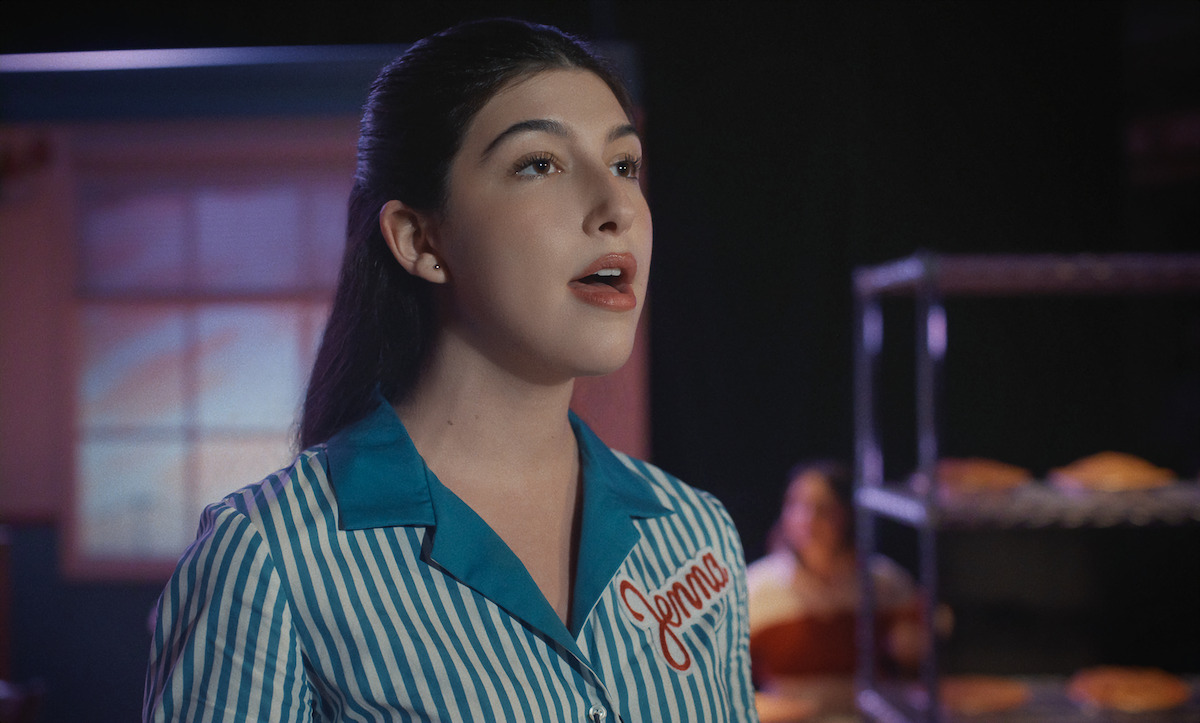
I knew the theater stuff was a chance to go bolder and darker and a bit more colorful. But the fun challenge about that was making sure we didn’t overreach because you see some movies sometimes and it’s like kids are doing a high school musical and it looks like a Hollywood production. You’re like, Jesus, beautiful. And then you look at real high school productions and they don’t look very good. So it’s kind of fun to find that middle ground.
What did you want for the middle ground in making high school theater look good but not too good?
Honestly, that was the most intimidating part of the movie for me because I’m not a theater kid. I don’t know anything about theatrical lighting. I’ve done some stuff over the years, music videos and even movies and TV in theatrical spaces. But yeah, it was that balance of not wanting it to feel like these kids had a million dollars to put on this musical, so keep it grounded, but then lean into this is the most colorful we’re going to get, the darkest.
It’s always good to have sequences where you’re just like, “I don’t know how I’m going to do this.” I feel like that happens on every project where you get to a point and you’re like, “This is outside my comfort” because people in a house, that’s kind of my bread and butter. The movies I love are Dead Poets Society and Good Will Hunting. It’s just people living and it’s very grounded and natural. So to take that grounded, natural approach to the stage was kind of overwhelming to me, but I like to think we delivered anyways.
Don’t Say Good Luck definitely speaks to your interest there. When you are lighting a family home, how do you make it feel grounded, lived-in and real?
I would like to be able to say that I have a formula, but again, it comes down to leading with instinct as much as I can. Harris Savides is a famous cinematographer, and I take a page from his book in terms of I like to light the space as opposed to shots. So that is a starting-off point that I always do.
I’d rather subtract light. I mean, it’s the kind of thing where, if I can make a movie and never turn a light on, I feel like I really did my job. I’m always striving to make things feel as natural and unlit as possible. I start from lighting outside through the windows as much as I can. I try to do as little inside as I can because I think it starts to feel artificial.
I think the actors are starting to pick up on it. So if they’re just living and existing in this space, I think that adds to the naturalism. But beyond that, in terms of lensing and things like that, it really comes down to instinct. For a close-up of somebody, I’d rather be on a 35 and a 40 and be in there with them as opposed to on a 100. But you got to know when and how to use those moments.
What’s a moment in Don’t Say Good Luck that really represents what you love to shoot?
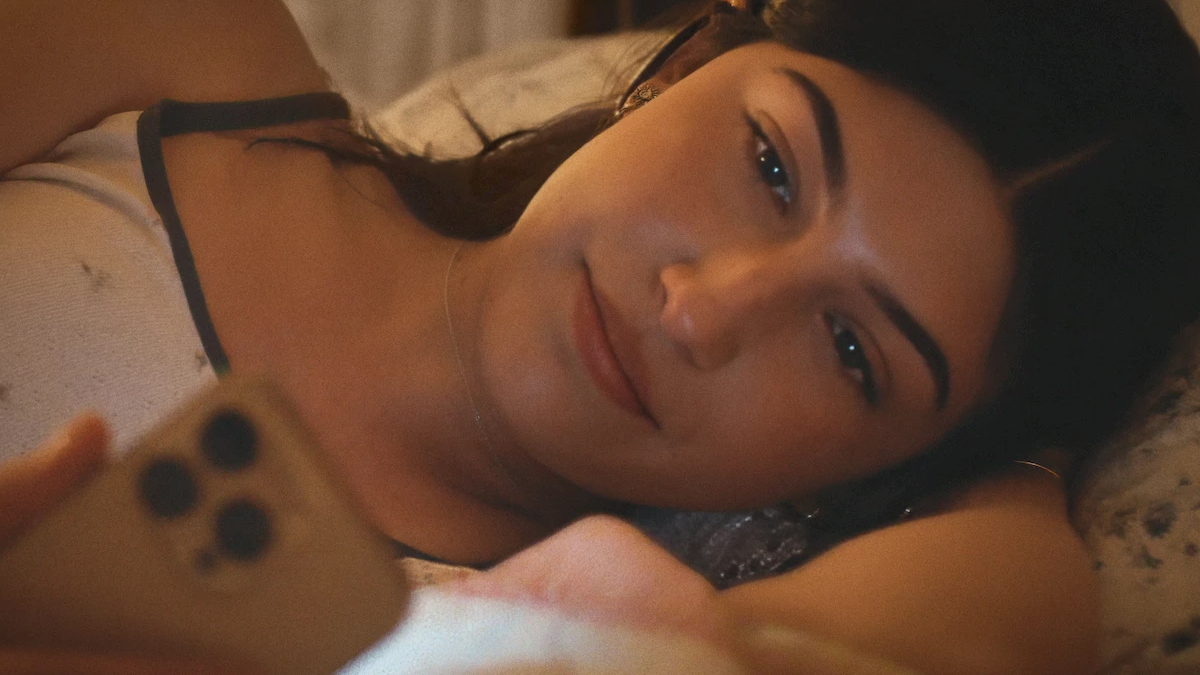
That conversation when Sunny throws herself on the bed and then she’s having the conversation, she’s on her side and Mom’s sitting up and they’re talking about what it was like to be pregnant. I love those kinds of scenes. There’s nothing screaming at you photography-wise, but it’s warm and it’s intimate. I feel like I can feel that moment. You can feel their connection, and obviously that comes from really good actors.
Since you studied screenwriting, how’d the education help pave the way to be a cinematographer?
Well, it was funny because I started off in college as a business major, and I very quickly realized I was taking statistics classes and my roommate was watching movies for classes. I was like, “Well, that sounds a lot better.” Because I thought I wanted to be in the business side of movies.
I was an athlete growing up, so I didn’t really know what it meant to be creative. I thought I wanted to be a writer-director at the time, because it’s easier to understand in a way. The writer-director is like, “What the hell does a cinematographer do? What even is that?” So I signed up, I was a screenwriter, and I was like, “Oh man, this is really hard.” I mean, it’s so hard.
Because as a screenwriter, I’m not supposed to take cinematography classes, but I was like, “Well, this seems interesting. Let me take a class.” And I was instantly like, “Oh, this storytelling that is done through photography is actually really what sparks my thing.”
I remember I’d taken a class and the professor was showing a scene from Jerry Maguire, which is kind of another reference in this movie.
Which scene?
It’s a scene with Renée Zellweger and Tom Cruise on the porch, and they’re, I think it’s post-date, and it’s this really super romantic moment. You see a wide shot of the house and it’s like porch lights on and it’s like, okay, nothing amazing.
You go in and do their coverage, and then it’s very soft. There’s even a light coming from down below, which is like, that makes zero sense. But I was never aware of that watching the scene and being like, oh my God, wow. So Janusz Kamiński was a big inspiration for me, just because he’s bold and stylish.
So I took a lot of inspiration from that because, again, it was easier to see the bold stuff, and I was into diffusion and hard backlights and rim lights and things like that. And then I feel like every DP is going to say Deakins. Fargo is the reason I got into movies. Again, the photography in that movie does not hit you over the head at all, so I didn’t think much about it.
And then the more you do it, the more you realize the sophistication and restraint that comes with that style, the more limited color palettes and the less overt style.
But then it’s just this poetic romance that Deakins manages to bring to everything while still doing it from a grounded approach. Harris Savides was, again, a master. I don’t think I could ever light like him. He does things that it’s like, if I did that, I think it would look like garbage.
His movies with Sofia Coppola were stunning. There’s a movie of yours I really love that is, as I recall, bold with color and light: Professor Marston and the Wonder Women.
Oh, you’ve seen that?
Such a great movie.
I mean, most people have never seen it or heard of it, and I’m so proud of that movie. That was the biggest movie I’d done at the time, which was $3 million, so it’s still a very tiny film, especially because you’re making a period film, 1920s and ’30s period film, for $3 million.
Angela Robinson, the director, was really special. At the end of the day, it could be viewed as a salacious thing. It’s these two women and a man loving and being sexual together and being a family and raising kids. But it was always really important that it never be approached that way. These are real people who are living life that feels authentic to them. So I think bringing as much authenticity to the photography and to the style as possible. Deakins was a huge reference on that movie.
It’s obvious how satisfying making that movie was for you. More people should see it. Beautiful romance, and you got to do some romantic lighting.
The thing that was fun is that it’s mostly very studio, like dolly and tripod and stuff like that. And then whenever they had the sex scenes it was when we went handheld. I remember Angela – I feel embarrassed that I didn’t know this sooner – but she educated me on the female gaze versus the male gaze. I didn’t know what that was. I remember getting that perspective and hearing that, and it was really important to her that we approach this movie from a female gaze, just something a little softer, a little more intimate.
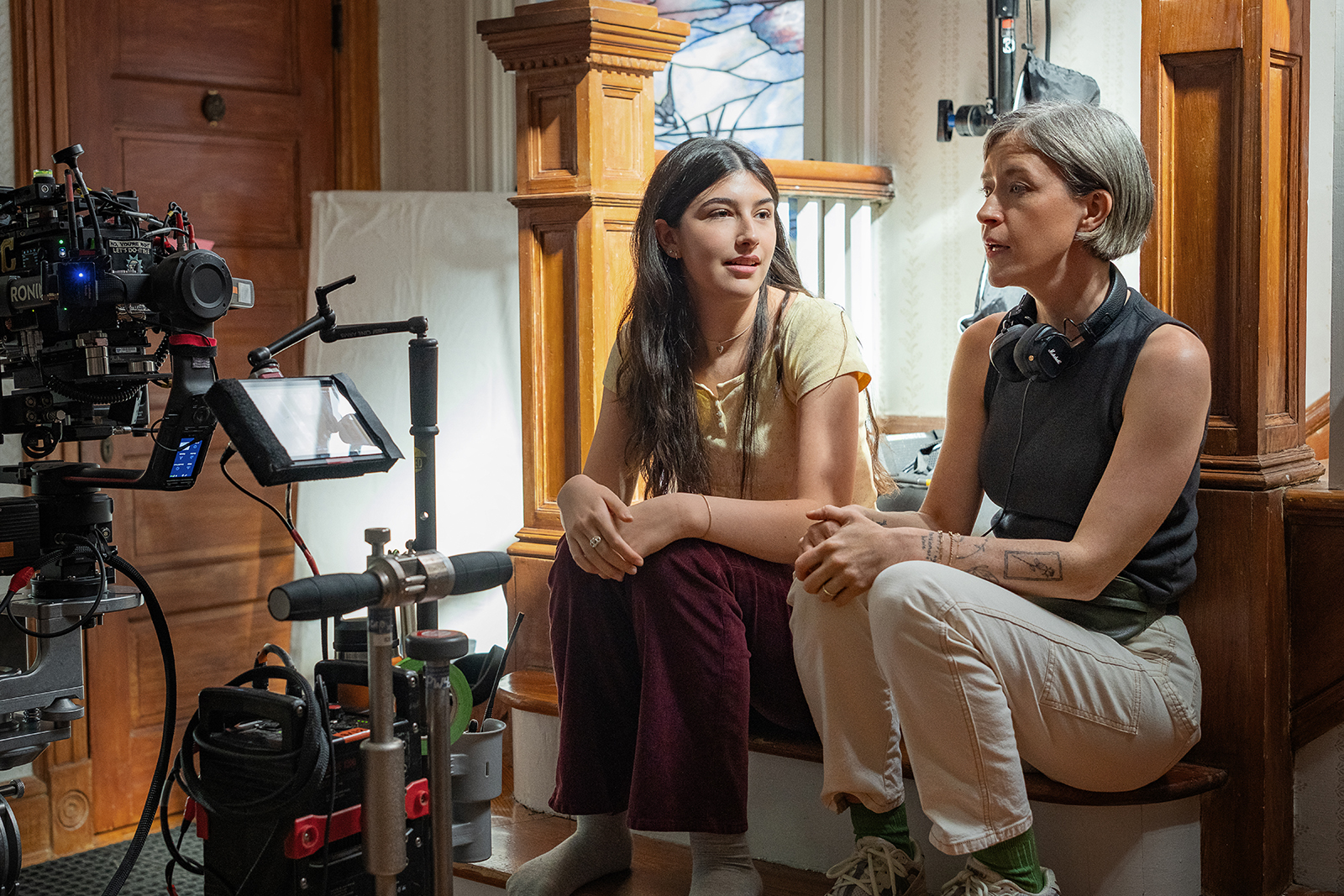
DON’T SAY GOOD LUCK. (L to R) Sunny Sandler as Sophie and Director Julia Hart on the set of Don’t Say Good Luck. Cr. Jaclyn Martinez/Netflix © 2026.
I’ll just say everyone I know who’s seen that movie really likes it or loves it.
That’s cool. I appreciate that. Again, that’s another one where I’m like, “I did this movie,” and they’ve never heard of it. I feel like it’s kind of a common theme with most things I do, but so it goes.
Hey, you worked on Portlandia for a long time. Lots of people still watch that show.
No, Portlandia is cool. I had a moment where I had finished a movie in LA and I wrapped, and it was Thanksgiving, and my family was all off, and it was kind of nice to have a solo Thanksgiving. I know it may sound sad on paper, but I kind of loved it.
And I just turned on Amazon Prime, and there’s a thumbnail from Portlandia, and it was like, oh, it’s an IFC channel. I was like, “Nope, 24 hours a day, seven days a week, Portlandia.” I was like, “Oh my God, we have our own channel? That’s wild.” That’s a special one.
So when you became a cinematographer, what were the hopes and dreams?
I think most film students, you think you’re going to be hot shit and you think you’re going to be something special. I mean, look, when I was in school, I fucking committed to cinematography. I took every cinematography class that I could, even graduate cinematography. I TA’d in cinematography classes. I shot 20 or 30 films as an undergraduate. I was like, “Boom, I am committed. I won this school’s award for cinematography.” And I was like, “I’m a fucking badass.”
And then again, in the real world, no one gives a shit. That was a really, very humbling thing.
My success in my career and the things that I do are important to me, and I’ve made peace with that over the years to put less stake in that and to be more along for the ride. I went out and I was like, “This is not what I thought at all,” and it scared me, and I actually walked away from film. I worked as a financial analyst for three and a half years after I graduated, which is really strange.
Every journey is different, but that’s very different.
I had grand schemes of being in my 20s and shooting big features and all this other stuff and being a massive success, and the reality hasn’t matched that.
I never really had any expectations other than being successful. Then as life goes on, you reach some of these successes. I remember Ingrid Goes West, it goes to Sundance and has its premiere at the ArcLight and this huge poster. It’s those things that you’d think would’ve mattered, but they don’t at all.
It’s been an interesting journey. Again, I think it’s easier to understand big-picture stuff. You understand success and Oscars and all this other shit, and then you’re like, “But I actually got into this for a reason beyond just that.”
So it’s been fun to come back and then to find that I’m just happy making movies. I have a living, I can sustain myself being a cinematographer, but then I think it’s super fun to be open to stuff. The fact that I did Professor Marston and the Wonder Women and Portlandia, they couldn’t be more different.
And there’s another project lots of people saw, Ingrid Goes West. That movie really connected with people.
It did. I mean, that was 2016. I shot Marston and Ingrid. That was a big year. A big year. I also shot the pilot for The Tickfor Wally Pfister. Same year too, which is a random connection. It was funny because Wally just happened to be a fan of Portlandia, and so he’s doing this show called Flaked, which is another one that no one’s ever heard of or seen.
For Netflix, too.
Yeah. I’m really proud of the work on that. He reached out to me out of the blue and asked me to shoot it for him, and I was like, “Am I being pranked? Wally Pfister’s asking me to be his DP.” Sure enough, it was Wally. So 2016, I did The Tick, and I did Ingrid, and I did Professor Marston, and that was a year. That was a year.