

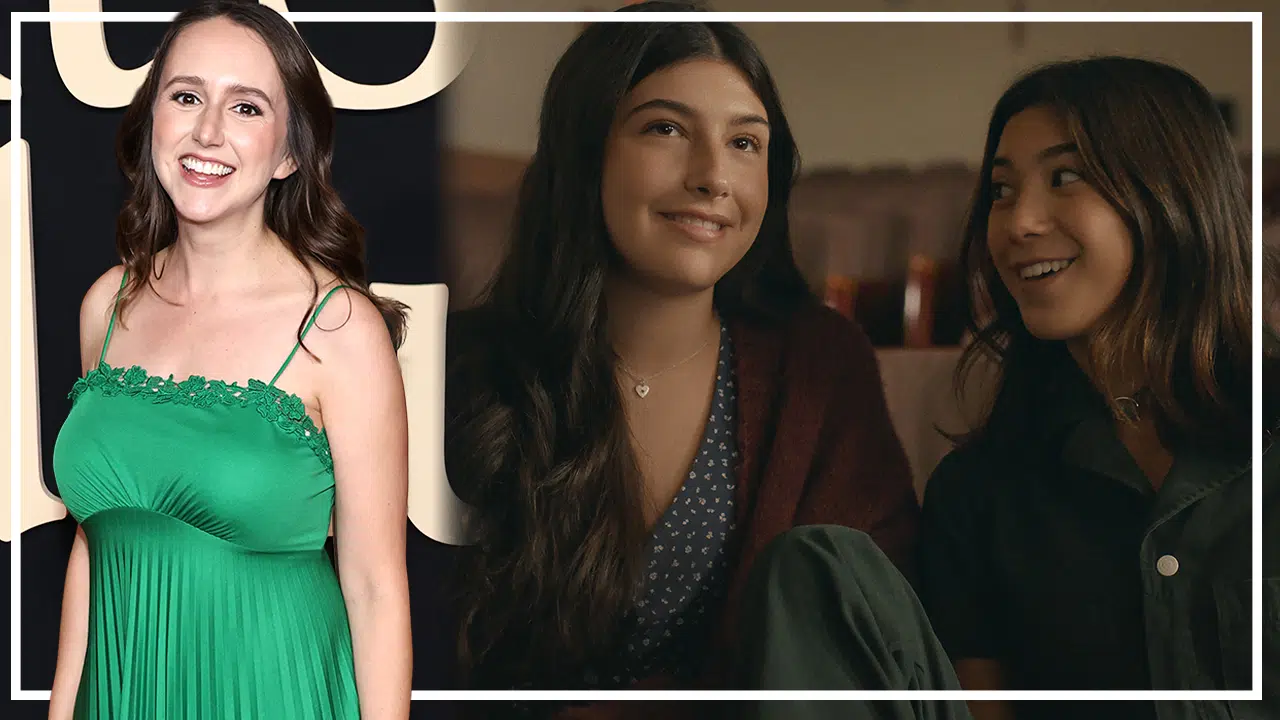
Picture Credits: Getty Images / Netflix
Laura Hankin is an actor, novelist, and screenwriter. The former theater kid is the writer behind “One Star Romance” and now her first produced feature film, Don’t Say Good Luck. From director Julia Hart, the High School dramedy is about Sophie (Sunny Sandler) starring in the school play while her mother is ill.
Hankin, whose new novel comes out next spring, Don’t Say Good Luck is a personal story that she’s proud to see connecting in the way she hoped. “The movie was on this scale that I have never experienced before,” Hankin told What’s On Netflix. “I would say my books reach thousands of people, and this movie has reached millions, and it’s just like, whoa, that’s different. It’s different to log onto TikTok and my algorithm just serves me up videos of people crying and having an intense emotional experience to this movie that I wrote and being like, ‘Adam Sandler, why did you do this to me?’”
How has the response been? How satisfying has it been for you?
Incredible. I think about it because this is inspired by a time in my own life when I was in high school and I got the lead in my school musical at the same time that my mom was very sick. I think about high school Laura and what she would think of what’s happening right now, because back then, I felt very lonely in it.
As well-meaning as so many people in my life were, nobody else really understood what was going on. But since the movie has come out, I’ve had so many people reaching out to me to tell me, “I’m going through the same thing,” or, “I went through the same thing, and this has really helped, and it’s made me feel less alone.”
It’s a very beautiful thing in a way to think of how high school Laura didn’t realize that so many other people were going through it, but years later would find out that they are.
It’s also a beautiful thing for any writer to take something painful, be truthful about it, and then make others feel comforted by that truth.
That was very much the goal. Just try to capture this experience as honestly as I can, while also hopefully making the movie feel like a warm hug for the people who are going through something similar.
And also very funny. You handle tone well.
Thank you. It was so important to me to have the humor be there. Thank God for Trista [Hoyt] as customer number three.
When you began writing and reflecting about this time in your life, were there any unexpected revelations for you?
100%. I think in high school, I did not think I was very interesting. I think many teen girls perhaps do not have as much confidence as an outside observer might think that they do. And I was one of them. I just felt like I wasn’t interesting unless I was saying lines that somebody else had written for me, which is part of why I loved theater so much.
Going back and thinking about that period of time caused me to realize, wow, you actually were going through something incredibly intense and handling it as well as you could have at the age that you were and given what was going on. So it gave me a lot more love and respect for my 16-year-old self, in a way.
Also, it made me think about my mom in a different way, too, because when you’re a teenager, sometimes it’s hard to see your parents as full people. You’re like, “You’re my mom, you’re my dad.” And so, obviously, my mom and I were just jumping-off points for the script. Ultimately, these characters are totally fictionalized, but it caused me to sit down and think about who she was, in a fuller way, and really try to remember things about her and find out more about her, too.
Even though, like you said, it’s a jumping-off point, were there any details, maybe the littlest of things about your mom or yourself, where you thought, “This little nugget of truth will make this fictional film more authentic?”
Well, the whole thing about your second-grade concert. Melanie Lynskey talks about how she saw Sophie sing in her second-grade concert, and it made her cry because she knew that she had a passion. That is something that my mom wrote to me in a letter before she died. She saw me sing “A Holiday Is Coming” at my holiday concert in second grade, and it made her cry.
That, and vomiting in a piano bench at a party.
[Laughs] Wonderful. This is your first produced feature film, correct?
It is, yes.
How rewarding is that?
Oh, I feel so lucky that it is this story that I am so passionate about and that I 100% stand behind. My husband talks about this sometimes. On our first date – well, we dated when we were much younger, and then we got back together, which is a whole other story.
A whole other movie.
Exactly. The second time around, we were talking about my creative work, and I told him that the thing that I most wanted to make was something about my high school experience and my mom, because I had just started thinking about the movie then. And so, the fact that it actually came to fruition after many years of trying, I feel so lucky.
I wrote the first draft of it back in 2020, and it didn’t come out until 2026, and there were a lot of moments in there where I was like, “It’s never gonna happen. And if I can’t get this thing made that I care about so deeply, how can I get anything else made?” So it feels really good.
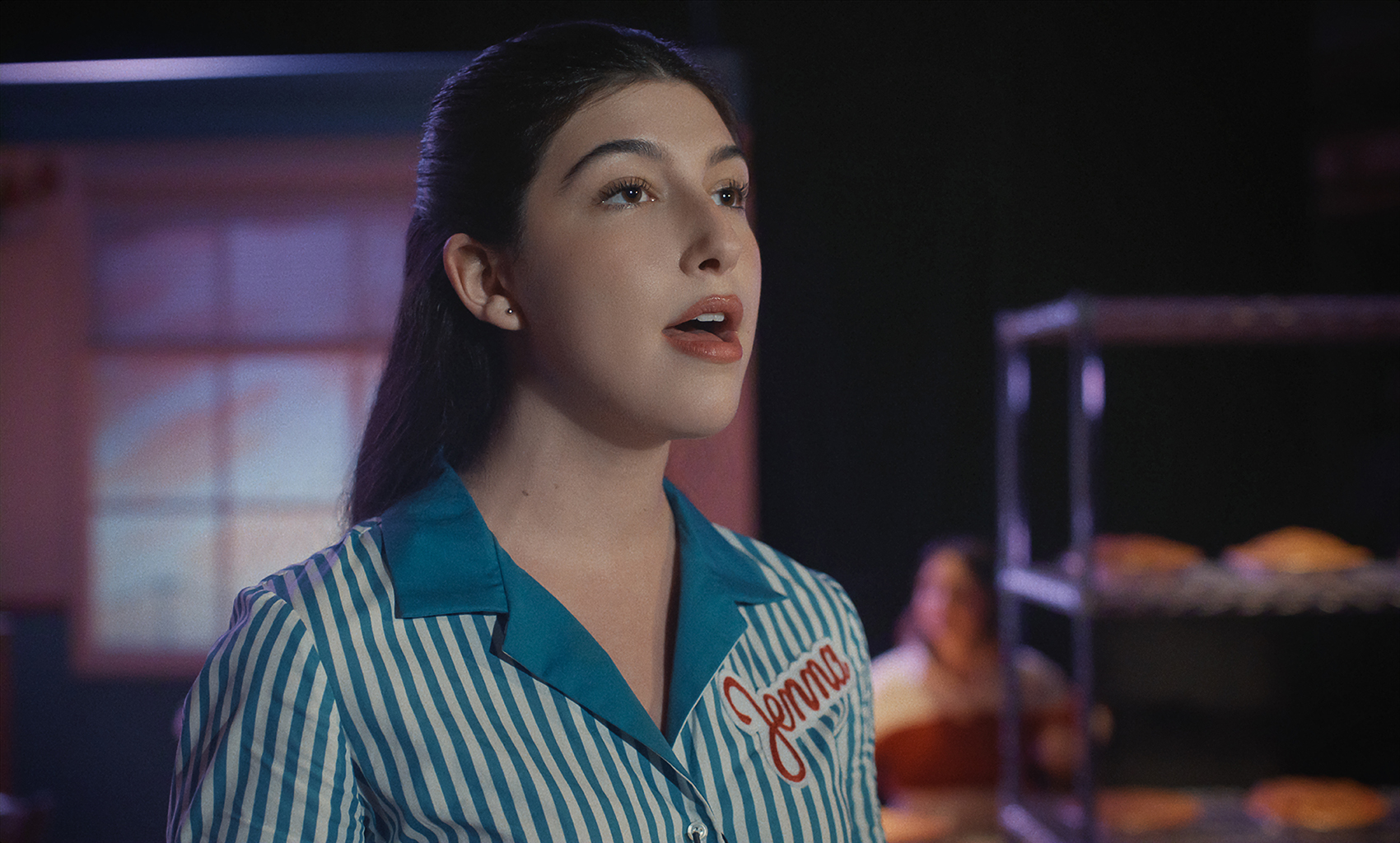
DON’T SAY GOOD LUCK. Sunny Sandler as Sophie in Don’t Say Good Luck. Cr. Courtesy of Netflix © 2026.
2020, of course, a brutal year. Did you start writing during lockdown?
I started it before COVID hit. I remember I showed bits of it to my writing group probably in February. But then I definitely finished it when I was actually at my childhood home because, in COVID, sometimes you go back to your childhood home.
There was something very meaningful about working on this on the same couch that my mom and I had sat on together. One of our favorite things to do was just sit on the couch and talk for hours. If I’m remembering correctly, my now-husband read the first draft of the screenplay while we were both sitting on that couch together.
That’s a full-circle moment. Was there anything about your mom’s voice or those conversations on the couch you wanted to capture?
I really wanted to capture the ease between the mother and the daughter and the way that they’re almost best friends. Obviously, the daughter has her own age-appropriate best friend at school. But I wanted to capture that relationship and that, yeah, there are times where it gets contentious or they’re not telling each other everything, but at the end of the day, they just love each other so deeply and they love being around each other.
And then also, I think my mom was somebody who, on the surface, I think it was very easy for people to be like, “Oh, you’re so sweet.” And she was a sweet, kind person. But I think she also had a real steel backbone to her, and I think Melanie captures that so beautifully, too.
You also made a positive portrait of theater kids.
I was like, “Justice for the theater kids. We’re not just the stereotype.”
Was it a good opportunity to send out a positive message about that community and its members?
Exactly. But it was such a nice opportunity to sort of sit back and remember, what were all the rituals that we would do when I was in high school theater? The painting or drawing your name on the wall—that is something that we always did every year, and you would go backstage at my auditorium and just see all the markings of the casts that came before.
I think the theater community can be very dramatic and full of big personalities, for sure, but also, it’s often full of the most supportive, wonderful people you’ve ever met in your life. I wanted to show that, too. Julia was also a theater kid.
And a high school teacher. What a journey, too.
A teacher, I know. And then we cast real theater kids, too. There was a really fun day on set where the scene as written was something like, “The theater kids play some warm-up game that is the most fun thing ever to a theater kid and totally incomprehensible to anyone outside of it.” But that was the only direction that we had in the script.
Julia was like, “All right, everybody. We got this group of theater people. Everybody say your favorite theater game.” We just filmed a bunch of them and then chose which ones to use in the final version. But it was like, “Yes, this is real theater nerddom happening right here.”
Did you have a good theater director in school, too, like the one played by Stephanie Beatriz?
I was thinking a lot about my own theater directors. The one that did my middle school plays and my high school plays, she was the same director all the way through, Ms. Bronstein. I really got to know her.
I think she really took a chance on me in an incredible way. I don’t know if she should have given the lead role to a girl whose mom was dying of cancer, because my mom died three weeks after the show, and she very much could have died sooner. I was a bit of a wild card. And I’m not sure how much information she had during the casting about that. I didn’t keep anything secret, and my family didn’t keep anything secret in the same way that Sophie’s family does in the script.
But I think she could have been like, “Let’s just put Laura in the chorus to be safe.” But she didn’t, and she was really there for me.
And then I was also thinking a lot about my high school English teacher, Mr. Reiner, who was very involved in the theater at the school as well. He really stepped up. He even founded a little group of kids who’d lost their parents. He would take us to dinner after school some days so we could all just talk to each other and so that we knew that other people were going through it, too. Obviously, it wasn’t a big group, but he found the kids.
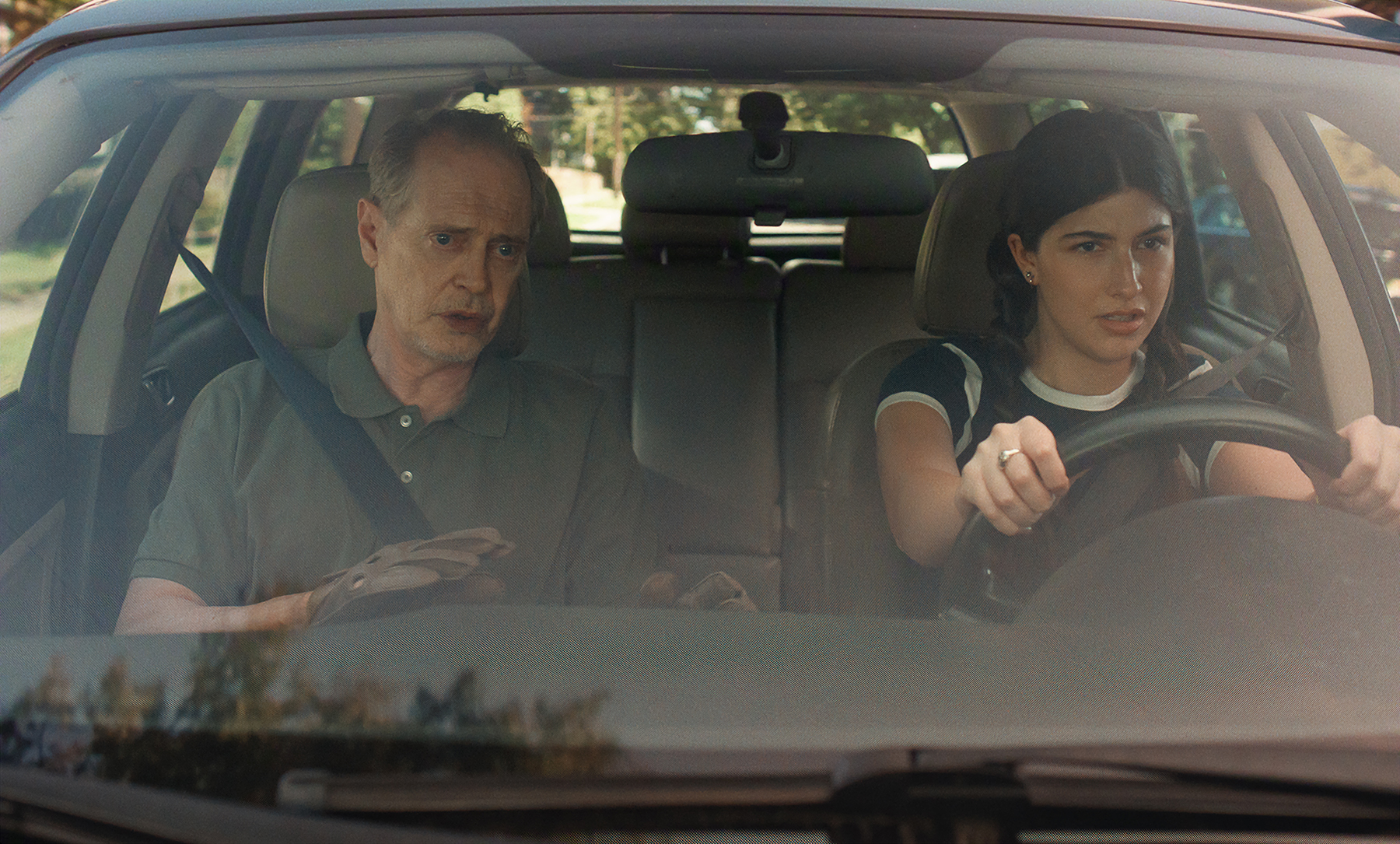
DON’T SAY GOOD LUCK. (L to R) Steve Buscemi as Dale and Sunny Sandler as Sophie in Don’t Say Good Luck. Cr. Courtesy of Netflix © 2026.
That’s very kind. Did you ever get a chance, years later, to ask that director, “Hey, why did you cast me at this time?”
No. Maybe I should email her, though. Maybe I just want to believe it’s because I was such a beacon of talent rising above the rest [Laughs].
[Laughs] See, you already know the answer.
Nobody else could’ve played Ishmael in Moby Dick! The Musical.
[Laughs] Did you play Ishmael in Moby Dick! The Musical?
That was one of the most fun shows I’ve ever done, actually, because it’s not a straightforward production of Moby Dick. It’s a show within a show about a Catholic girls’ school that’s putting on a student-written production of Moby Dick. It was insane and very fun.
You continued acting, doing plays in New York, but when did writing enter the picture for you?
In my mid-20s, I was auditioning in New York, and I was working all these random day jobs to stay afloat. I would go stand in line at 5:00 a.m. for three hours so I could sing my 16 bars of a song. And then I would go babysit a kid who was playing soccer with his friends in the park for two hours while I sat on a bench.
I was just like, “I need something creative that I can be thinking about that is within my control, because otherwise, I’m just sitting on this bench refreshing my email and refreshing my email to see if I got a callback. Why don’t I just try writing a novel?”
I got a bunch of books out of the library, like “Novel Writing for Dummies” and books about story structure. Some of them were actually screenwriting books. Over a period of about 10 years, I would say it went from, “I am mostly acting with a little bit of writing,” to, “I am mostly writing with a little bit of acting.” It’s nice to just be able to tell the stories.
Some screenwriters really encourage others to try acting classes, to just know what it’s like to perform what’s on the page.
I think that my acting background really helped with the writing, too, because you know the feeling when you’re playing a character that makes sense, right? A good, juicy role. When you’re writing, you can kind of think about that and be like, “What made that particular acting role feel so great? And how can I put some of that in here?”
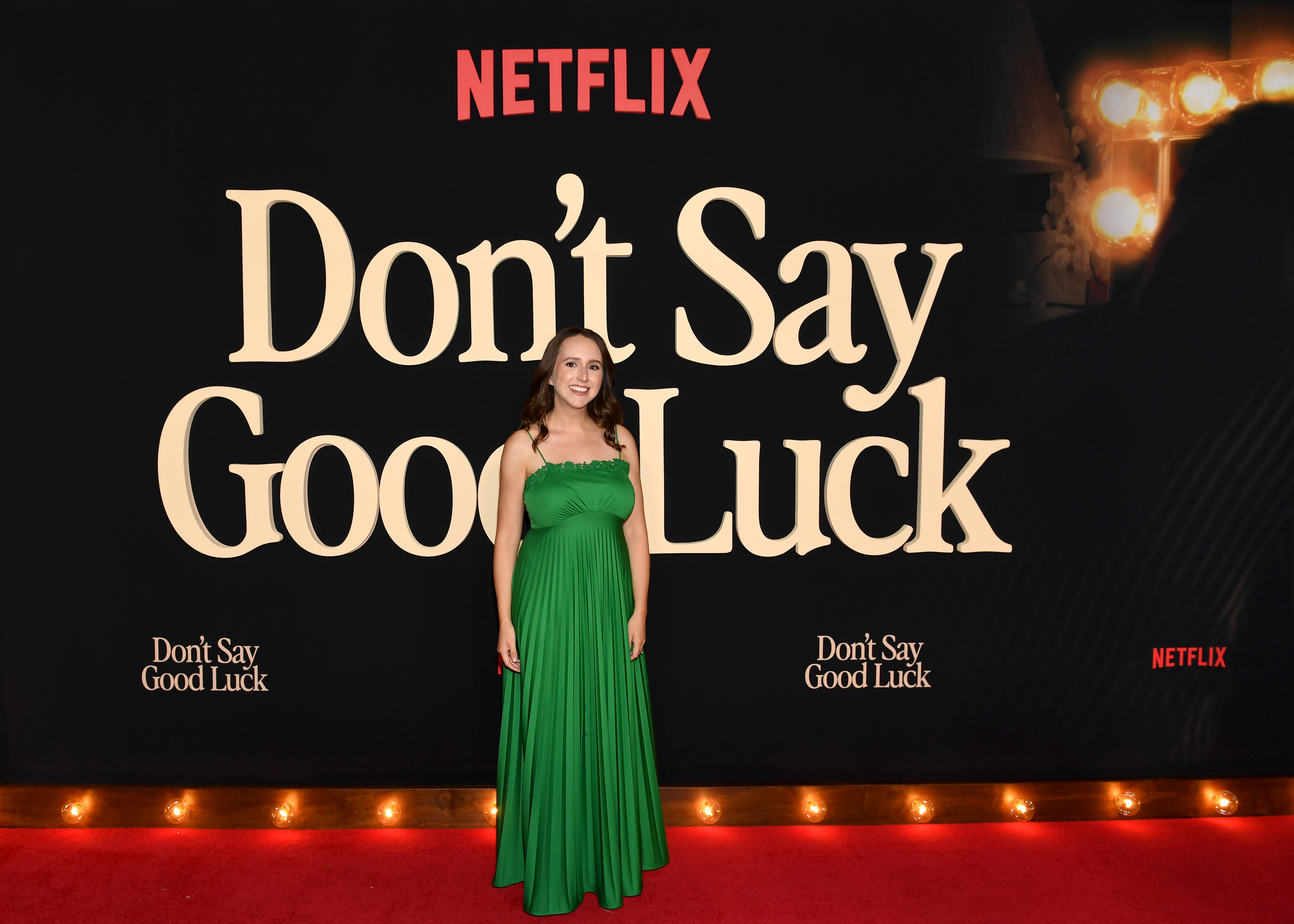
NEW YORK, NEW YORK – AUGUST 10: Laura Hankin attends the “Don’t Say Good Luck” Premiere on August 10, 2026 in New York City. (Photo by Noam Galai/Getty Images for Netflix)
You’ve got “The Sidekick” coming out next spring, right? Great logline, by the way.
Oh, thank you. Really, justice for all those rom-com sidekicks who never got to have a love story of their own. Emotionally, I would say it’s a little lighter than this.
Looking ahead, what kind of stories do you want to keep telling?
I would love to move forward having a mix of novel writing and screenwriting. What’s really interesting to me is when characters feel real, when they feel like people that you know, and when there’s a mix of humor and some more emotional stuff, too.
I really love a story where I laugh and I cry, and at the end of the day, I feel like maybe I’ve just had a good long talk with my best friend or somebody I really care about.