

Cr. Eduardo Castaldo/Netflix © 2026
Netflix’s Italian teen drama Minerva Academy takes viewers inside a military high school in Naples, where discipline, hierarchy and tradition collide with everything that normally comes with being a teenager. What begins as a fairly familiar school drama becomes considerably more interesting, and darker, across its eight episodes.
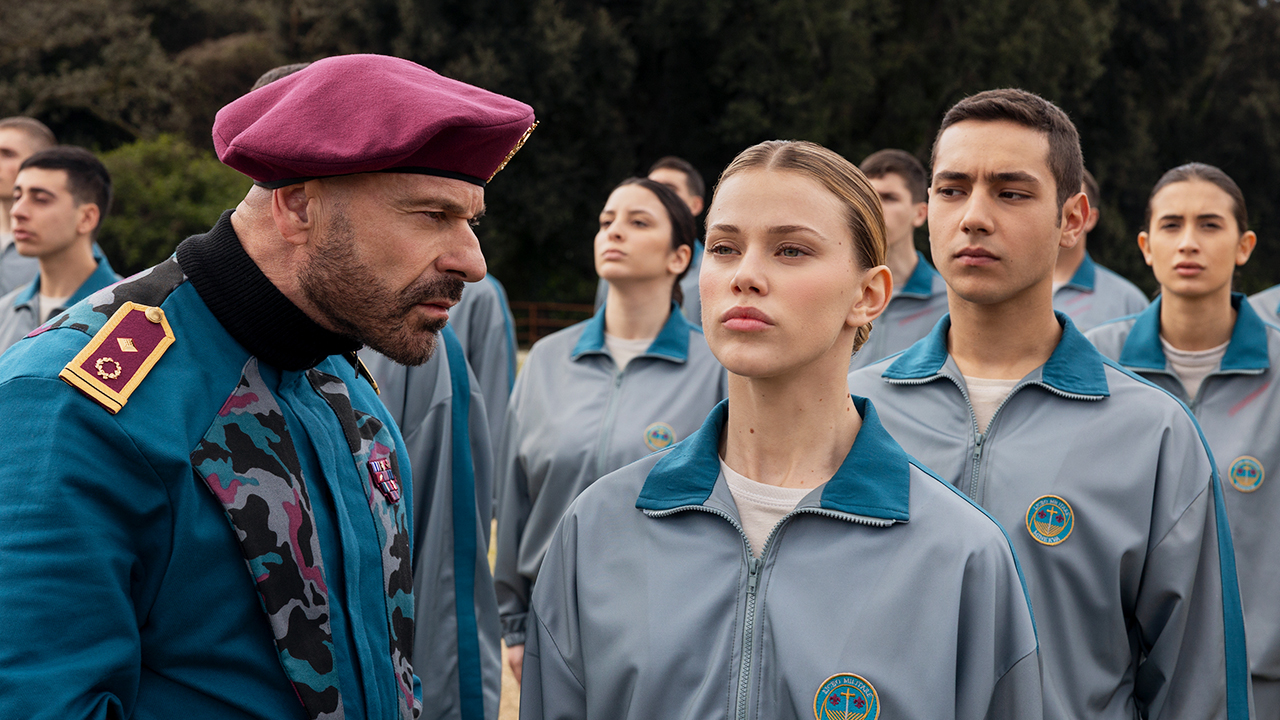
Military schools make an almost perfect setting for a teen drama. Take teenagers already trying to understand who they are, put them inside an institution built around discipline, hierarchy, and obedience, then tell them when to wake up, what to wear, and how to behave. Relationships between students in different years are forbidden, phones and civilian clothes are gone, and mistakes can carry serious consequences.
Minerva Academy has plenty of material to work with before its mystery even begins.
The fictional Minerva is a military high school in Naples, inspired by a very small part of the Italian education system. Italy has four military high schools, where students complete the final three years of secondary school alongside military training and discipline. The writers researched these institutions through interviews and field research while developing the series.
At first, Minerva makes good use of everything we expect from this environment. Punishing exercises, fencing, competitions, inspections, senior cadets exercising power over new arrivals, and traditions that nobody is particularly encouraged to question fill the halls.
There is also “nonnismo,” the hazing culture that can emerge when hierarchy gives older students power over younger ones. The series explores the line between discipline and humiliation, and between building resilience and demanding obedience simply because that is how things have always been done. The Minerva’s respect for hierarchy can turn into hazing and its sense of belonging into something more dangerous.
And then someone arrives who is very willing to question it.
Cristiana Capotondi plays Laura Canali, the new History and Philosophy teacher, a civilian who seems almost comically misplaced inside the Minerva. She listens to the students, challenges decisions, and doesn’t accept tradition as a good enough reason to keep doing something.
Cr. Eduardo Castaldo/Netflix © 2026
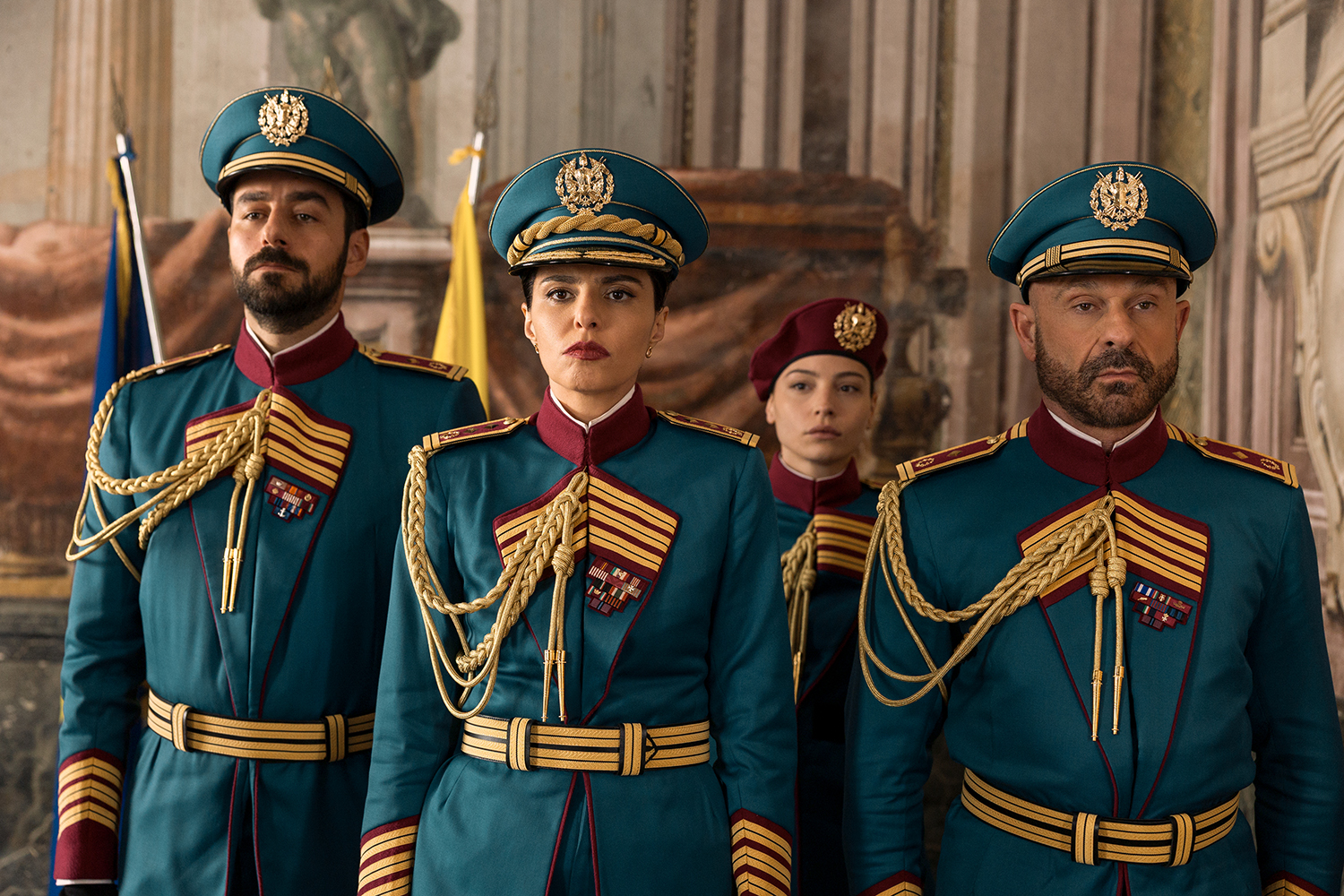
Canali isn’t the only woman pushing against the old Minerva. Major Teresa Bonaiuto (Irene Maiorino), the school’s deputy commander, respects its rules but wants to leave behind traditions that keep the school trapped in its past. She and Canali challenge the institution in very different ways.
But at its core, Minerva is a teen drama. We see the school largely through three first-year cadets: Salvo (Ciro Minopoli), Vincenzo (Biagio Venditti), and Camilla (Margherita Buoncristiani).
Salvo has the biggest reason for being there. He grew up in a group home, where Francesco was essentially his older brother. Francesco entered Minerva hoping to build a better future, then disappeared. Nobody seems able to give Salvo the answers he needs, so he follows him into the school to find them himself.
That mystery runs across the eight episodes. What happened to Francesco? Why did he disappear? And how much does Minerva know?
The mystery gives the season a continuing story while individual episodes revolve around the rhythms and challenges of school life, from War Day and fencing to competitions and weekly leave.
Camilla arrives for completely different reasons. She’s the familiar rich, rebellious teenager whose father sends her somewhere that might “straighten her out.” On paper, she’s one of the show’s biggest stereotypes, but her strength and values gradually emerge beneath that initial attitude.
Vincenzo actually wants to be there, following in his father’s footsteps; his father also attended the Minerva. His story becomes more emotional as his father’s cancer worsens, while he begins a relationship with Paola (Beatrice Savignani), Commander Giordano’s rebellious daughter.
Cadets also fall in love, despite forbidden relationships, and another relationship crosses a far more troubling boundary involving a teacher and a student.
Had you asked me halfway through the season, I probably would have said Minerva Academy was simply a good teen drama. Entertaining, well-written, and easy to keep watching, but filled with characters and themes we have seen before. The rebellious rich girl, the troubled boy from a difficult background, the son crushed by his father’s expectations, the severe military institution, the teacher determined to change things; but then the second half goes deeper.
Cr. Eduardo Castaldo/Netflix © 2026
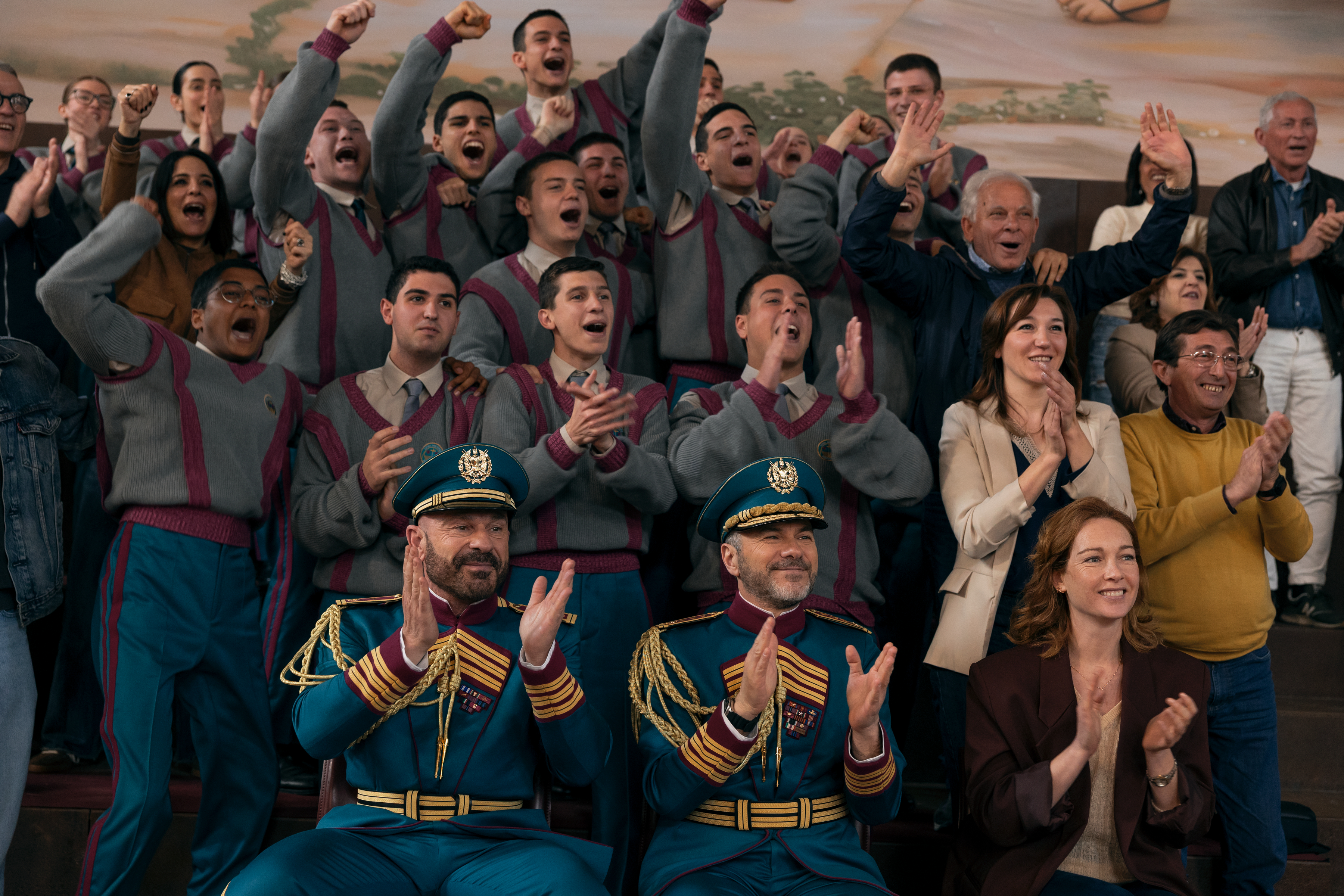
Some of those stereotypes start to look less like shortcuts as the series shows us where these behaviors come from. The problems become heavier and more real. Characters change across the eight episodes, sometimes for the better and sometimes because we finally understand something about them that wasn’t obvious at the beginning. That applies to the adults as much as the teenagers.
Commander Achille Giordano (Massimiliano Gallo) is probably the best example. He runs the Minerva with absolute belief in discipline and tradition, but he is also raising Diego and Paola after their mother abandoned the family. He served in Afghanistan when his children were very young, missing part of their childhood before eventually raising them himself.
His growing connection with Canali is easy to root for because she sees a side of him that doesn’t always appear when he’s Commander Giordano. At the same time, the series never makes it easy to forget how hard he can be on his own children, especially Diego.
Giordano believes toughness will protect his son and prepare him for the future. Watching that belief collide with what Diego actually needs becomes one of the strongest parts of the season. There are moments when you understand the father and still dislike what he is doing. Other times, his instinct to protect Diego clashes directly with the military values he spends so much time defending.
MVP: Massimiliano Gallo and Simone Secce
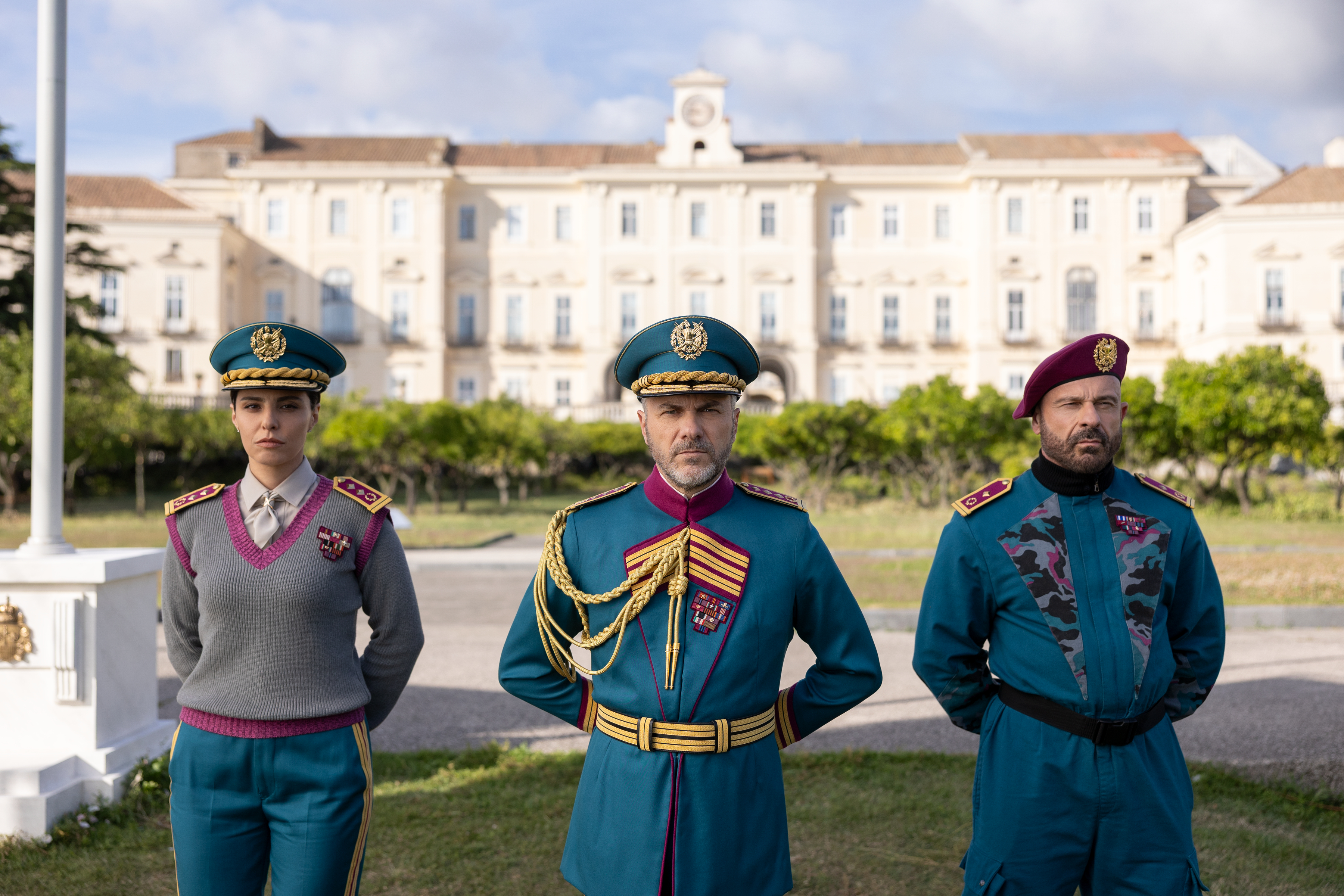
The strongest performances come from Massimiliano Gallo and Simone Secce as Achille and Diego Giordano.
Cr. Eduardo Castaldo/Netflix © 2026
Italian audiences will already know Gallo from everything from heavier dramas to lighter series such as Imma Tataranni – Sostituto procuratore and Vincenzo Malinconico, avvocato d’insuccesso. Here, he plays a man who is both a commander and a father, and the two roles don’t always fit together.
Secce has the more openly emotional side of that relationship. Diego is 18, confused about love, desperate for his father’s approval, and still carrying the effects of his mother’s abandonment.
Together, Gallo and Secce give Minerva its best relationship. You never doubt that Achille loves his son. The problem is that loving Diego doesn’t necessarily mean he understands him.
Minerva wants to turn teenagers into stronger versions of themselves. But who gets to decide what “stronger” means?
The writers deliberately built the series around that contradiction. The school teaches teamwork and can erase some socioeconomic differences between students, while also punishing weakness and limiting personal freedom. The teenagers are at an age when most people discover themselves by questioning authority, while Minerva asks them to do almost the opposite.
This is where Minerva Academy becomes much more interesting. It doesn’t need to tell us that every tradition is bad or that every act of discipline is cruel. It shows what happens when rules become more important than the people they are supposed to help.
Watch Minerva Academy on Netflix if you like
Mare Fuori (The Sea Beyond) is probably the most obvious comparison, particularly with Silvestrini behind the camera again.
Don’t go into this expecting something as light as Crew Girl, Never Have I Ever or My Life with the Walter Boys, either. There is romance and plenty of teen drama, but Minerva deals with sex, nudity, violence, hazing, grief, and abuse of power.
If I had to place it somewhere on the Netflix teen-drama spectrum, it sits much closer to the darker territory of 13 Reasons Why, although it never becomes quite as bleak. There’s still enough soapiness, romance, and traditional school drama to stop the season from becoming relentlessly heavy.
Verdict
Minerva Academy takes a little time to show what it really wants to be. The first few episodes are good but familiar, with characters and storylines we’ve seen in other teen dramas. But as the season goes on, it gets stronger and starts going deeper into those characters and their problems.
The mystery around Francesco gives you a reason to keep watching, but it isn’t the most interesting part of Minerva. The relationships are, especially the increasingly complicated one between Giordano and Diego.
Some characters start as stereotypes we’ve seen many times before, but Minerva Academy gets better as it goes on. The second half gets darker and deals with more serious issues, which keeps it from feeling like just another Netflix teen drama.