

The most high-profile French movie of the year is a modernized, revisited take on the legend of The Hunchback of Notre-Dame, claiming to profile the real life of the man who inspired Victor Hugo to write his classic take. But does this epic modernization from veteran Jean-François Richet soar to even greater heights than the original?
International audiences may know veteran French director Jean-François Richet for his nervous, off-the-cuff Hollywood action movies (most recently, Mutiny with Jason Statham), but his French career tells a different story. With his first few movies, more notably Ma 6-T Va Crack-er (1997) and two-part biopic Mesrine (2008), Richet told popular tales littered with social commentary and a sense for provocation. Therefore, his choice as a director (assisted by longtime collaborating screenwriter Éric Besnard, and Edgar Marie) for this project revisiting the legend of The Hunchback of Notre-Dame after 2010 reports that he may have existed and have been a sculpting artist in the cathedral, guarantees the result will be anything remotely Disney-fied.
Watch the trailer
There is a double, stated goal at the heart of The Hunchback, Soul Of Paris: first, Quasimodo will be hunted as a possible immune case to the sprawling cholera pandemic ravaging 1830 Paris. Then, provide a more grounded tale for the character, rooted in the class struggle of the time, dehumanization from the bourgeoisie, and a bubbling revolution to reinstate the Republic. But the result falls short of these lofty artistic objectives.
Something feels off from the first sequence, where the hunchback (Vincent Cassel, under heavy, impressive prosthetic work from the French team at Atelier 69) escapes from the Notre-Dieu hospital ridden with sick citizens; even though we discover a grandiose downtown Paris centered on the cathedral of Notre-Dame, the CGI feels like a cinematic from a videogame. Soon, it turns out that the hunt for Quasimodo is the least interesting or singular part of the operation – one of the highest budgets for a French film this year, with a reported €30 million for production.
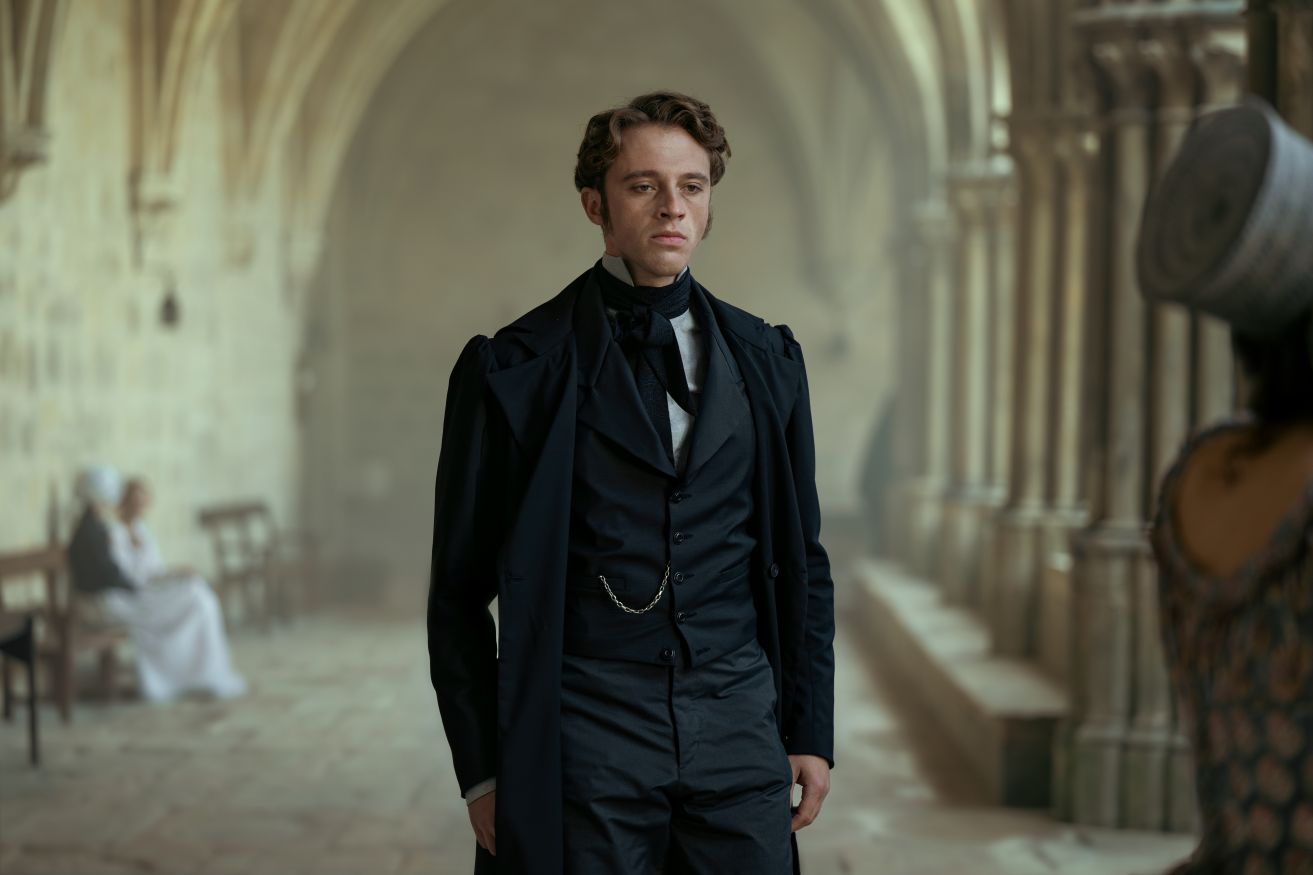
Benjamin Voisin as Tournier de Vaillac. Cr: Ulrich Lebeuf/Netflix.
The two characters, original creations, have different shades of grey to them: doctor and medicine pioneer Gaspard Tournier de Vaillac (Benjamin Voisin) sees human casualties in the name of medical progress and immunity from diseases as fair game; his personal views on the need to cure “deformities” harken back to the darker side of modern scientific history. The sacrifice of human lives seen as marginal or criminal can infuse this Hunchback with a glimpse of Gothic horror themes, in the vein of last year’s epic Frankenstein by Guillermo Del Toro. Alas, despite appropriate smugness from Voisin, the movie never explores these ideas in meaningful ways. Ditto Coco-Lacour, the police chief who is handsomely paid by Tournier de Vaillac to bring back Quasimodo alive. Usually excellent character actor Karim Leklou struggles to sell the character, his blank stares, cynicism and overall pragmatism in a shifting political environment never fully coming to life.
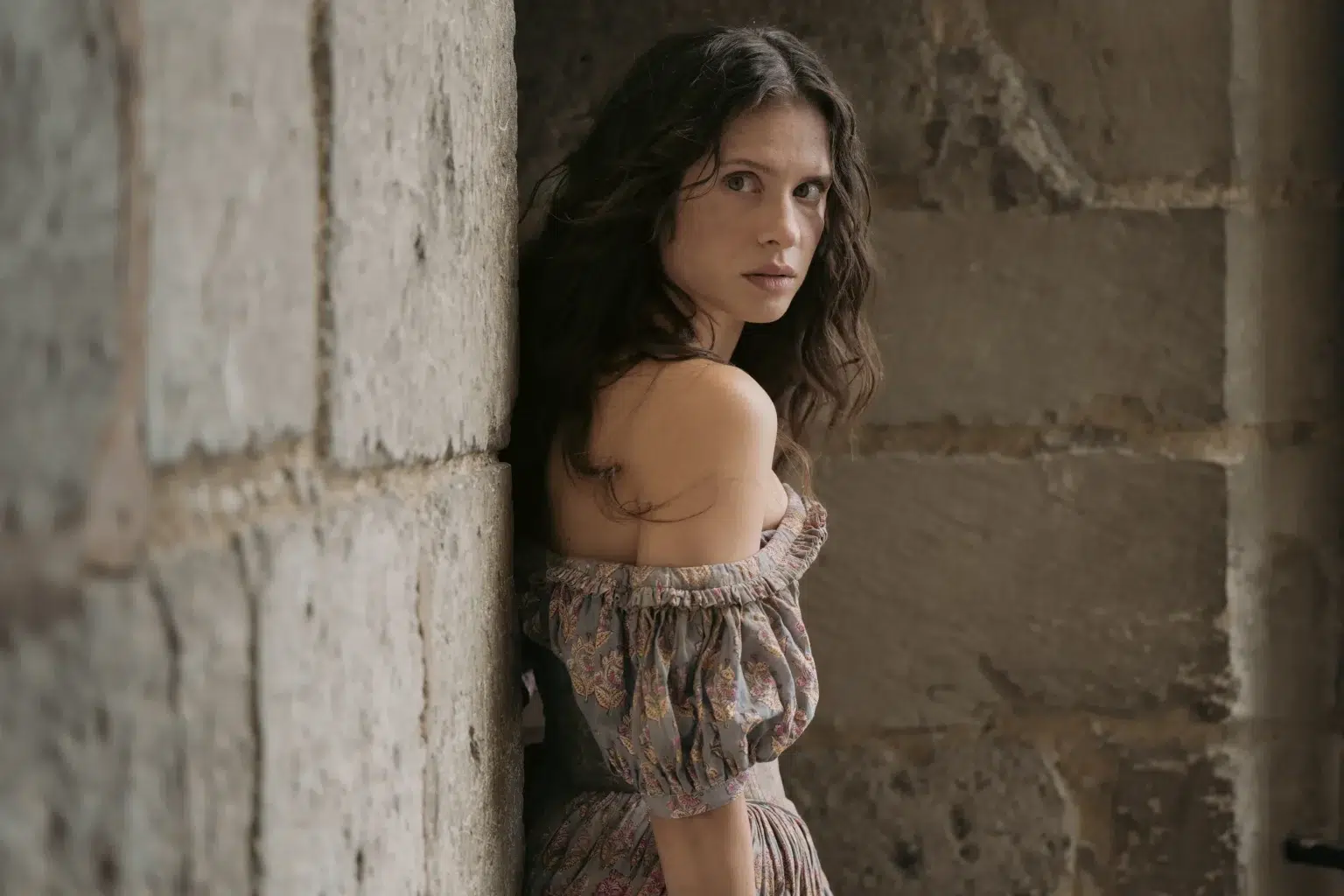
But things get more awkward as the movie goes on: even though Esmeralda does not appear in the movie, performer Agnes (Daphné Patakia) is the obvious counterpart, here turning heads on the popular stage as “The Egyptian” with her belly dancing routine. For a movie interested in grounding a Victor Hugo saga, it sure has an interest to iconize and find familiar beats from the legend when the hunchback eventually meets her. But this entire plot feels like a speedrun of familiar romantic beats: an extended sequence within the walls of Notre-Dame, while technically competent, fails to provide the necessary emotion to make the movie soar. Likewise, creative license tends to work against the spirit of the movie: the inclusion of another Victor Hugo character, while era-appropriate, in the story feels especially grating and insufferable.
Picture Credit: Netflix
The Paris from The Hunchback, while presented in sweeping camera shots and state-of-the-art costumes and sets, plays as stale and sanitized even though we see arbitrary arrests, popular-class Parisians and even rats running on screen. Once the climax of social unrest eventually hits, the emotional involvement fails to be there, due to disjointed sequences and dialogue that tells more than it shows (Agnes and a monologue in the first act is the main offender in that aspect). It also does not decide whether it wants to be an adventure/chase movie (action scenes are more low-key than one would expect from Richet in that regard), a monster movie with themes of dehumanization, or even a romance finding beauty in the ugly. More importantly, the Paris revolution plays as tone-deaf, even with obvious research work from the creative crew, and its characteristics are no better than what you would find at a history-centric theme park. For a movie that proposes to portray “the soul of Paris”, it seems like its heart is missing more than the care provided to immerse the audience.
Verdict
A few provocative ideas are distilled in a listless epic that is, at the end of the day, falling short of its lofty goals more than offending or dismissing the legacy of the Victor Hugo oeuvre.