

Harvard University professor and Psychiatric Clinic Director Henry Murray, portrayed by Russell Crowe in the new Netflix docudrama Unabomber, was the co-developer of the psychological test known as The TAT, where individuals look at ambiguous pictures and tell a story about them. The goal of the test is for people to project their own unconscious thoughts, hidden conflicts, and desires into the narrative.
If a group of individuals were to look at the life and crimes of infamous convicted serial bomber Ted Kaczynski a.k.a. The Unabomber, they may come out with different opinions as to what shaped his worldview in such a way that led to the deaths of three people and the maiming and disfiguring of dozens more.
One may read Kaczynski as a well-educated man who saw society as being corrupted by the advancement of technology and lucidly decided to take horrific action against some of those responsible for that corruption as a means of rebellion. Another may see a disturbed individual with severe mental illness who created a deluded opinion of society that he wrongly believed could only be fixed by taking out those that plagued it and acted upon it.
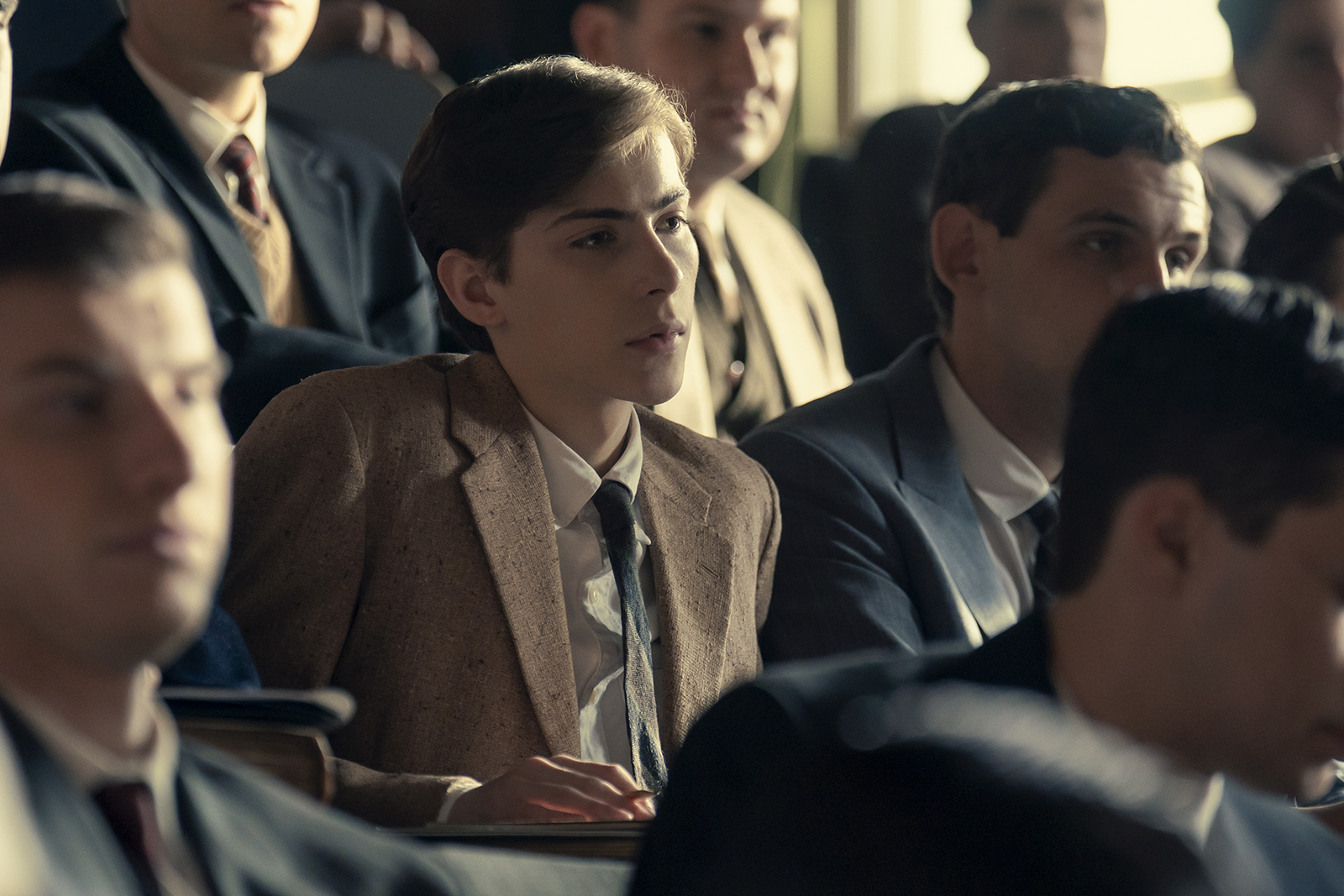
Unabomber. Jacob Tremblay as Ted Kaczynski in Unabomber. Cr. Philippe Bosse/Netflix ©2026
But during Kaczynski’s trial, another read on his life emerged from his defense team: a smart teenage Ted, while attending Harvard University, entered a psychological experiment under the direction of his professor Henry Murray that mentally broke him through intense interrogation tactics; setting him on a dark path that hardened his criticisms of the world, inflamed his early stages of schizophrenia, and ultimately led him to take his revenge on the architects and authority figures that were eroding his vision for society.
This latter defense and the experiment within seemed to catch the interest of screenwriters Sam Chalsen (The Flash, Sleepy Hollow) and Nelson Greaves (Sleepy Hollow, 24: Legacy) and director Janus Metz (All The Old Knives) as they made it the backbone of their new film, Unabomber; a story told in two timelines: the mid-1990s investigation and manhunt for the man they called “The Unabomber” and 16-year-old Kaczynski’s early years at Harvard University under the experimentation and potential mentorship of his psychology professor Henry Murray.
I’m going to use the term “potential” or hypothetical or the like a lot in this review because, while the film is “based on true events”, there seems to be some debate over what exactly happened in the years presented in the film.
While I am not a Unabomber scholar, criminal justice professional, or psychology expert, I have seen the docuseries Unabomber: In His Own Words and I have done some research into what Kaczynski’s life was like at Harvard, how he felt about those years, and what transpired on the surface of his life between college and moving to the woods for the remainder of his free life. In that limited experience, I have found that there are many reasons to not make a movie that draws a direct correlation from his experiences at Harvard (including the three years of experiments under Murray) to the serial bomber he became—with maybe the biggest reason being Kaczynski’s own downplay of what transpired and limited evidence that remained from that time to prove whether his recollections were false.
While causing damage to him in some way is very possible (including first-hand accounts of Kaczynski becoming more withdrawn socially to his friends on campus), even his own brother, who tried desperately to try to get him out of the death penalty, called it too “simplistic” to say that these experiments caused him to do what he did.
However, what we can do, as audience and critics, is determine what level of plausibility in the theory is presented (if at all) and the effectiveness of the presentation. Did the filmmakers connect the dots they wanted to connect? Did it give me something to think about? Did I lose myself in the thrills and mysterious dealings that transpired?
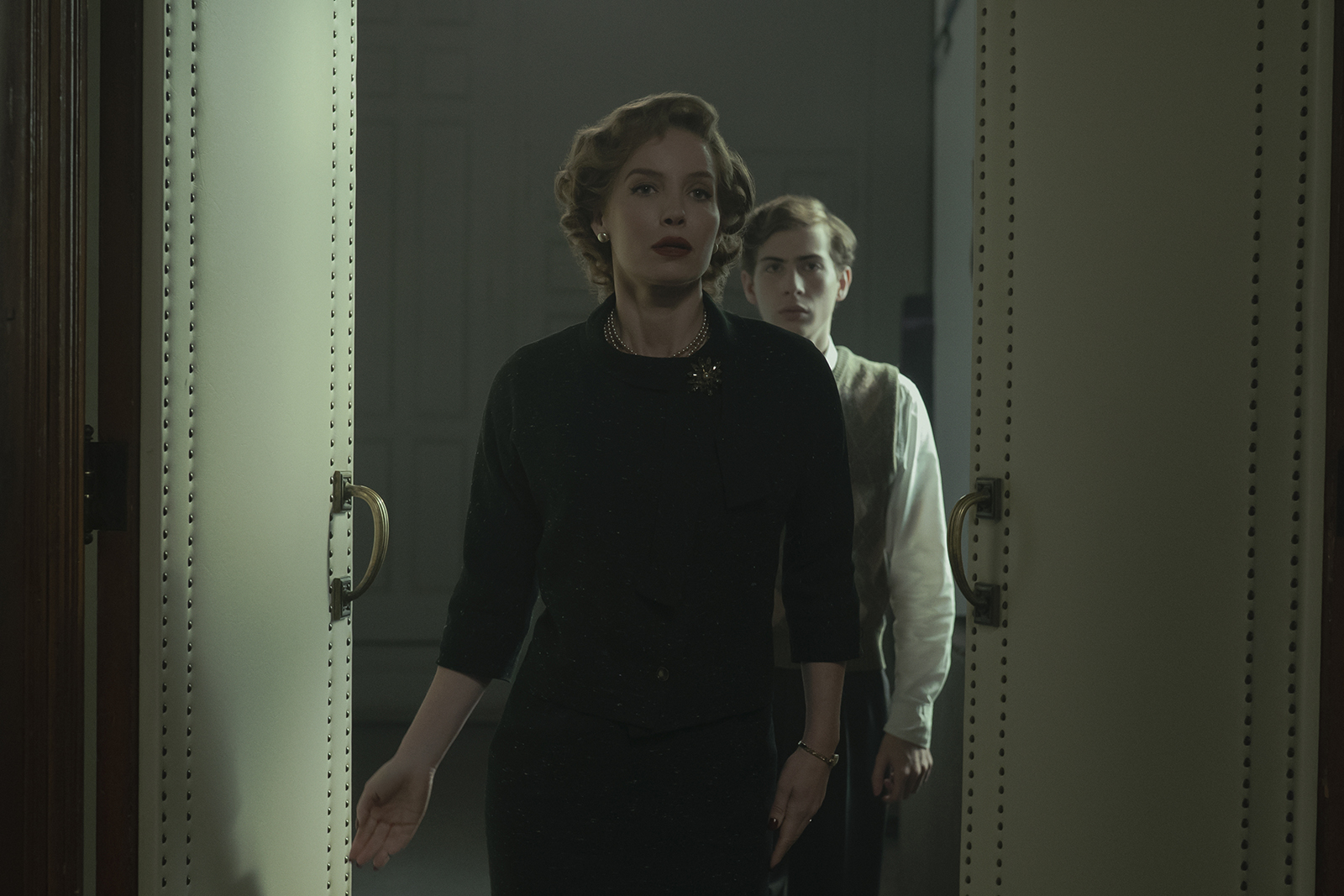
Unabomber. (L to R) Annabelle Wallis as Christiana Morgan and Jacob Tremblay as Ted Kaczynski in Unabomber. Cr. Philippe Bosse/Netflix ©2026
Even if you only knew the basics of who The Unabomber was and what he was convicted of, it’s hard to give this movie a pass for what it wants to achieve. In the less controversial side of the story, the FBI manhunt, the screenwriters created a fictional composite character in FBI agent Joanne Miller, played by Shailene Woodley (Paradise, To Catch A Killer), who defies orders and fights against internal opposition to create a new profile of The Unabomber based on the writings of the manifesto that was recently released to the public. Her analysis of the writing samples and her persistence with Kaczynski’s brother David led the team to an original draft of the manifesto and the warrant they needed to arrest Ted. While the creation of her character made for efficient storytelling, the dialogue and performance by Woodley felt so stereotypically wooden with tinges of petulance; which didn’t pair well with the short-fused, borderline chauvinistic caricature that was her often-partner played by Alexander Ludwig. The pursuit to catch Kaczynski felt less like a manhunt and more like one person slogging through procedure. Woodley’s Miller shedding a tear in her office after celebrating catching her man may be the most unearned scene in the whole movie.
As for the flashback timeline of young Kaczynski at Harvard, the saving grace is the casting and performances are much stronger than the ’90s manhunt. Russell Crowe captures an intellectual bravado and a hubris that blinds him to the perils of his study and the pushback from Ted; while Jacob Tremblay (The Life of Chuck) does an adequate job displaying the frustration and gradual decay of Ted’s “lawful” and optimistic outlook on life. The film’s main source of tension and intensity comes from the collision of the two egos as they measure, dissect, and betray each other as the sessions of the experiment come to a standoff conclusion.
However, the story doesn’t always match the performance as you can feel the creators trying desperately to create a straight line from Ted’s torturous and confrontational experiment days at Harvard to his future as a serial bomber. Played like a tamer version of a comic book villain origin story, the film’s conclusions are based on a defiant, more aggressive Ted leaving Harvard broken and angry to leave the world behind and take his revenge. They force a narrative of his “Experiment #1” of deceiving his mentor, creating false letters, and making a “package” as a gateway to writing further experiments with creating new ways to make bombs and send them as packages in the mail. On top of this, the writers also create a confrontation where Professor Murray diagnoses Ted with schizophrenia, something he was not officially diagnosed as having until a court-appointed psychiatrist did so before his 1998 trial. While it can manifest itself around that age, especially under stressful conditions, I can’t imagine Murray’s parting manipulation would be a smug summation of a mental condition created under his watch.
The film feels content being right in the conclusions they’ve created more than earning those findings with more evidence and more powerfully written scenes. What can also be asked is: Why does this exist? What is the aim of its creators? Do we want to see this as a warning to future generations to not trust in the intentions of our teachers and mentors? Should we not trust the motives of psychologists? Should we feel empathy for Ted Kaczynski and not hold him responsible? Is it simply that the “truth” must be presented to a larger audience? Genuinely and respectfully, I truly don’t know that answer.
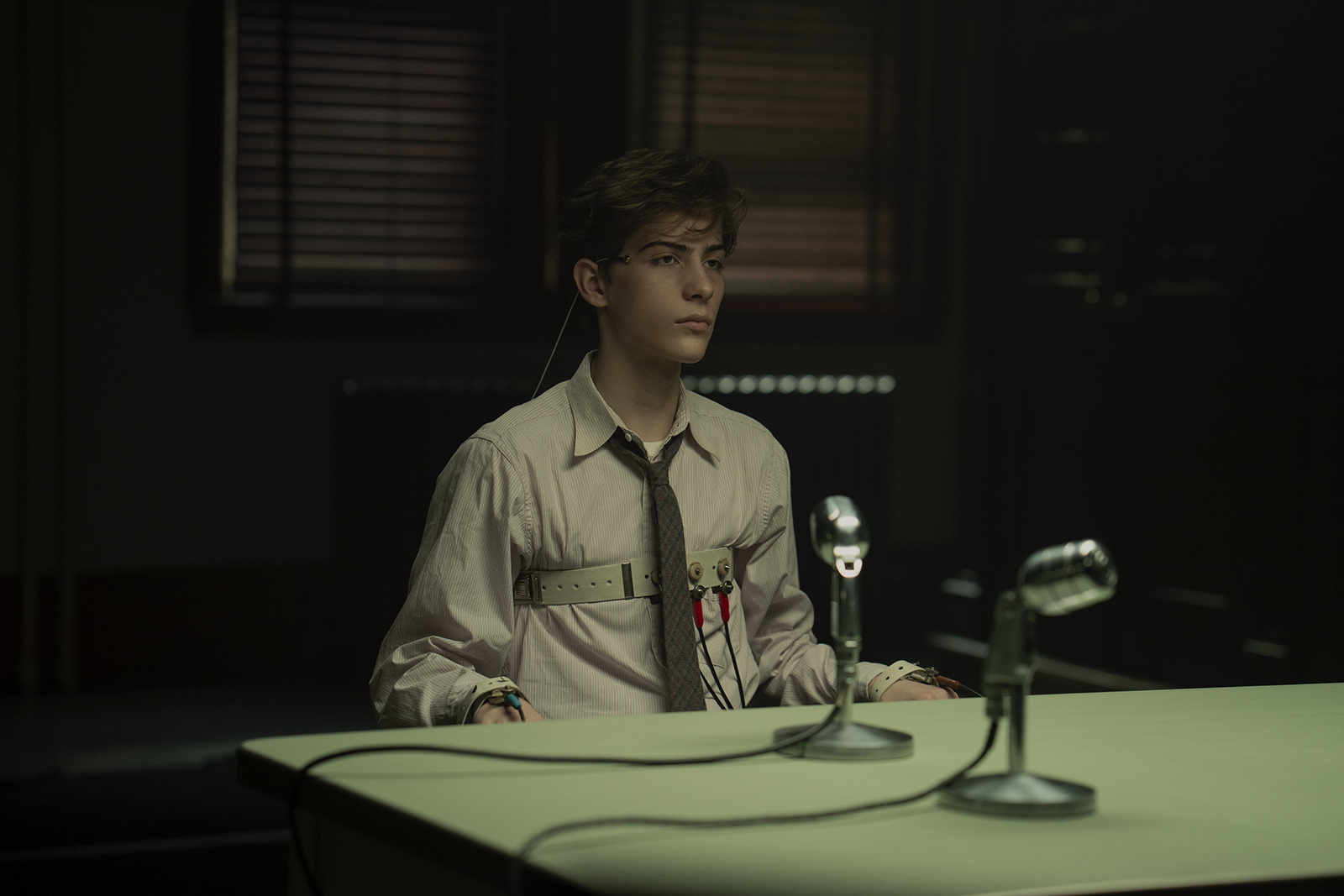
Unabomber. Jacob Tremblay as Ted Kaczynski in Unabomber. Cr. Philippe Bosse/Netflix ©2026
All I do know is I watched this film before watching any documentary or conducting any research on The Unabomber and found it to be an uneven, sometimes engrossing / sometimes eye-rolling portrayal of a young, impressionable mind betrayed by the intellectuals he so desperately wanted to impress, eventually leading to horrific actions later in life. I also came away with a strong preference for the flashback storyline and the characters and performances within it as opposed to the manhunt “present”. As I did multiple forms of research and watched again, the script really falls apart with so much attributed to invention, speculation, and wringing the audio evidence presented at his trial completely dry.
In a movie that ends with Kaczynski’s words from a prison interview in which he states that “(his) personal preference is to be depicted truthfully”, it’s hard to not find the irony of watching composite characters and invented manipulations be the centerpiece of this version of the Unabomber story.
WATCH UNABOMBER IF YOU LIKED:
- Unabomber: In His Own Words
- Extremely Wicked, Shockingly Evil and Vile
- Manhunt: Unabomber
- Monster” TV series
MVP
Russell Crowe as Professor Henry Murray
The three-time Oscar nominee doesn’t need someone to champion his accolades as he was one of the biggest, most impressive actors for a decade following his U.S. breakout role of Bud White in 1997’s L.A. Confidential.
But the last decade has been less kind to Crowe as he takes much larger risks with smaller roles than he was accustomed to at one point in his celebrated career. However, his quality of performance, especially in the last couple of years, has not fallen off with age.
His biggest attribute, something he demonstrates in Unabomber as Professor Murray, is a command and a presence that can hardly be matched by his contemporaries. An imposing figure that can range anywhere between brute force of nature and charming intellectual with a smile that dazzles you or terrifies you all the same. With Murray, he can be the life of the party, a master manipulator, or an insightful leader. Crowe can make you believe in all of it, even when the writing doesn’t always come to his cause.
In the world of Ryan Murphy’s Monster success, Janus Metz’s Unabomber attempts to explain the horror by drawing lines between his tortured past and his unspeakable future actions. Tremblay and Crowe can be captivating at times as teenage Kaczynski and his mentor/puppet master Professor Murray, but the result is an inconsistent “based on true events” villain origin story that strains to find relevance in an already well-tapped source.