

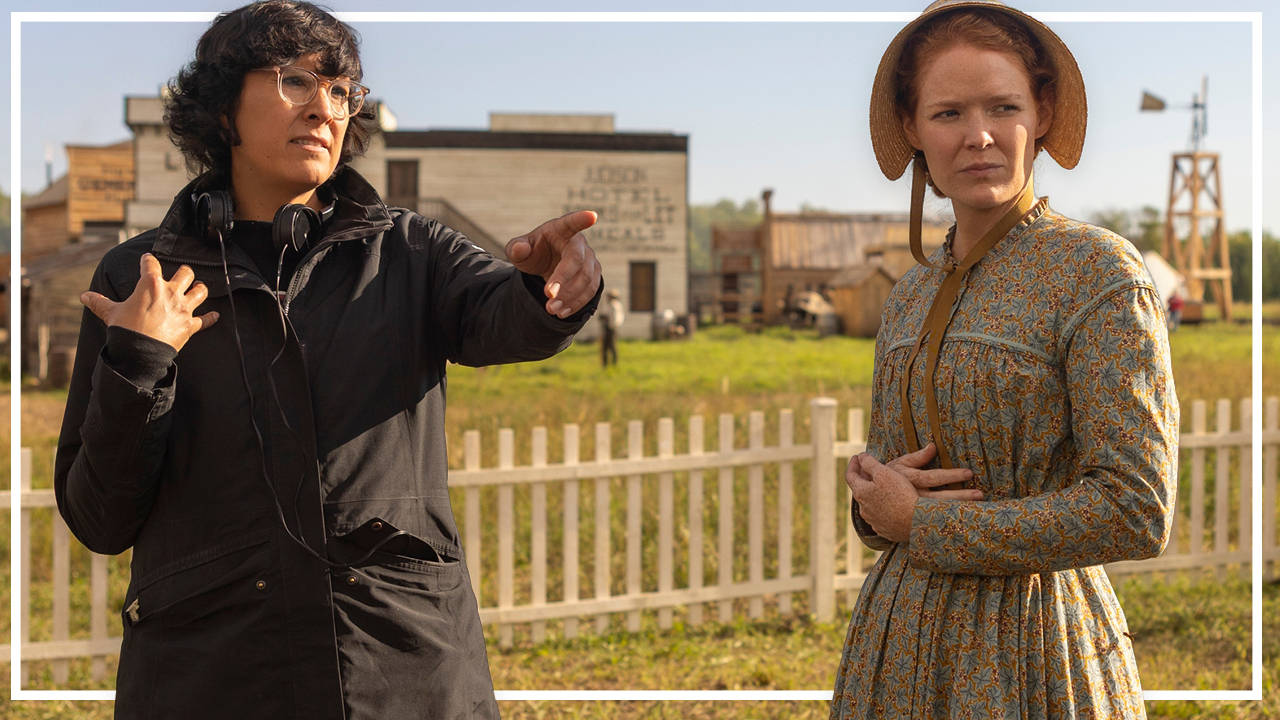
Cr. Eric Zachanowich/Netflix © 2026
Sydney Freeland helps end Little House on the Prairie on a majestic note. The filmmaker shot the penultimate episode and the finale. The last shot of season one is packed to the brim with grandeur: the Ingalls family in their wagon, once again moving ahead, with the sun setting.
It’s a personal moment for Freeland, who tapped into her upbringing in New Mexico for the series. The director made her debut with Drunktown’s Finest, went on to direct Rez Ball for Netflix, and became a go-to director for high-profile TV shows. Freeland has worked on Reservation Dogs, Star Trek: Strange New Worlds, and Echo, to name a few.
Before she went off to shoot some of season two of Little House on the Prairie, the filmmaker spoke with What’s on Netflix about her career and the series.
You end the season with a lovely final shot. How’d that image come together?
It was with [cinematographer] C. Kim Miles, who’s a great collaborator, along with my AD, Richard Duffy. It took a village. It always takes a village, right? It was a lot of planning, a lot of coordinating, a lot of finding out what time. We did sunset for sunrise. We thought, we’ll probably get one bite at this apple, maybe two. But then you’re dealing with a lot of wild cards. You’ve got dogs, you’ve got horses, you’ve got kids, you’ve got camera stuff and so on and so forth. Thankfully it worked out. It doesn’t always land like that, but in this case it did.
It did. What feeling did you want that shot to leave audiences with?
I think a lot of it just starts from the script. There’s this undercurrent of this sense of hope and optimism in Rebecca Sonnenshine’s scripts. And I think Adam Starks’ script was fun, but there’s this undercurrent of hope and optimism.
I go to movies and watch television shows to escape reality. And so for myself, I wanted to try to find a way to embody that visually. We wanted to show off the plains, the possibility that’s just beyond the horizon, things of that nature. Hopefully, it came across.
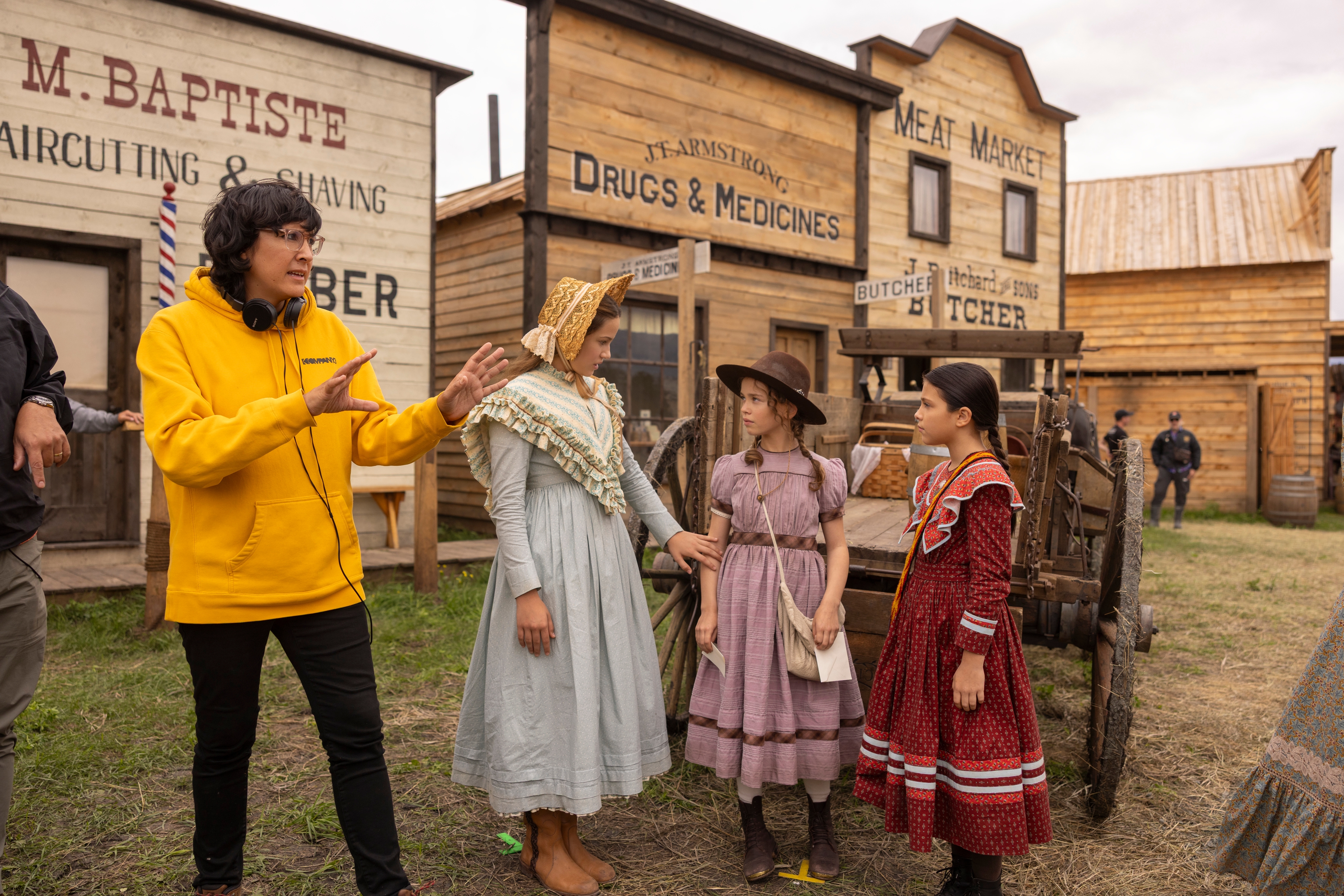
Little House on the Prairie. (L to R) Director Sydney Freeland, Skywalker Hughes as Mary Ingalls, Alice Halsey as Laura Ingalls, Wren Zhawenim Gotts as Good Eagle in episode 107 of Little House on the Prairie. Cr. Eric Zachanowich/Netflix © 2026
You do a classic windmill shot in the series. The camera is high, the windmill turns, and land burns in the distance. It’s very Western-y, but how’d you want the land to really be a part of the story in your episodes?
The windmill is interesting because in the script, the windmill wasn’t in the script, but the way it was written, it was the winds coming in from one direction and then they’re fighting it off, fighting it off. And then they realize they can’t, and so they retreat and they back off and then the winds start to shift around. I thought, “Well, we need something visually to show because you can’t just show wind.”
It’s difficult to show wind. And so, we were scouting the town location where we’re looking at and I was, “Well, do we need a fire blowing one way, fire blowing the other way?” And then I think it was actually my DP, C. Kim Miles, who had said, “We have that windmill up there. We hardly used it.” And then we did some scouting and we had a drone with us and so we did some rough plates and everything. I was like, “Oh, the place of this windmill is actually perfect and we can work around it and the windmill can be our barometer for how things move and change throughout the scene.” And then it sort of grew and evolved from there and kind of became an anchor point for the entire sequence.
Were westerns on your mind here? How else did the land in Little House on the Prairie connect with you?
I grew up in the Southwest, and I think the further I’ve been able to travel away from the West, as it were, the more I’ve come to appreciate where I grew up. And there’s something about this open landscape, and it can feel… When you can see an unlimited horizon and you can see a sky that never ends, there’s an element where there can be both the sense of unlimited possibility and potential, but it can also feel very isolating and it can feel very lonely depending on how you portray it. In addition to my father’s love of Westerns, I grew up watching. I think the Encore Westerns channel was always on in my house. Encore had that Western channel. Always, always, always watching.
Encore. What a flashback.
Yeah. Being a fan of westerns, it was just trying to tap into that visual aesthetic that I associate with where I grew up. And so, as I said, it can feel both hopeful, but also very isolating. In this case, it was, how can we insert a sense of hope into this? I think there’s another shot where it was Laura and Pa sitting on a stump. It was a nice shot and Kim is like, “Can we get more sky?” We tilt once up. It’s, “No, keep going, keep going, keep going. Let’s swap the lens, go wider, go wider, more sky, more sky. We want to feel these two small people, just these two small people against the world.” I would say it was trying to tap into my own personal experiences of where I grew up.
What were some of the Westerns that really stand out that you were growing up with? What were some of the filmmakers that really inspired you?
Unforgiven was a big one, just had a big impression on me. I think one of my favorite films of all time is The Assassination of Jesse James. I’m trying to think.
I just watched Unforgiven last week too.
Oh, really? Does it hold up?
It holds up perfectly.
Great. I think growing up, Young Guns, that was such a touchstone of my childhood.
Really?
I was a kid when it came out. I’m also Native American, I’m Navajo. And so, there was no representation in TV and movies. There’s that character Chavez in Young Guns, played by Lou Diamond Phillips. He’s half Navajo. And I remember I didn’t understand how the film industry worked. I didn’t understand how actors worked or something. As a kid, I watched that and he became, there’s a Navajo actor out there. There’s a Navajo actor in movies. I didn’t understand that you can have people who aren’t necessarily what they say they are playing other ethnicities or so on and so forth. And so, there’s also sort of a role model character, and then he was in La Bamba too. Why is a Navajo guy playing Ritchie Valens? I don’t understand. But that was just my ignorance.
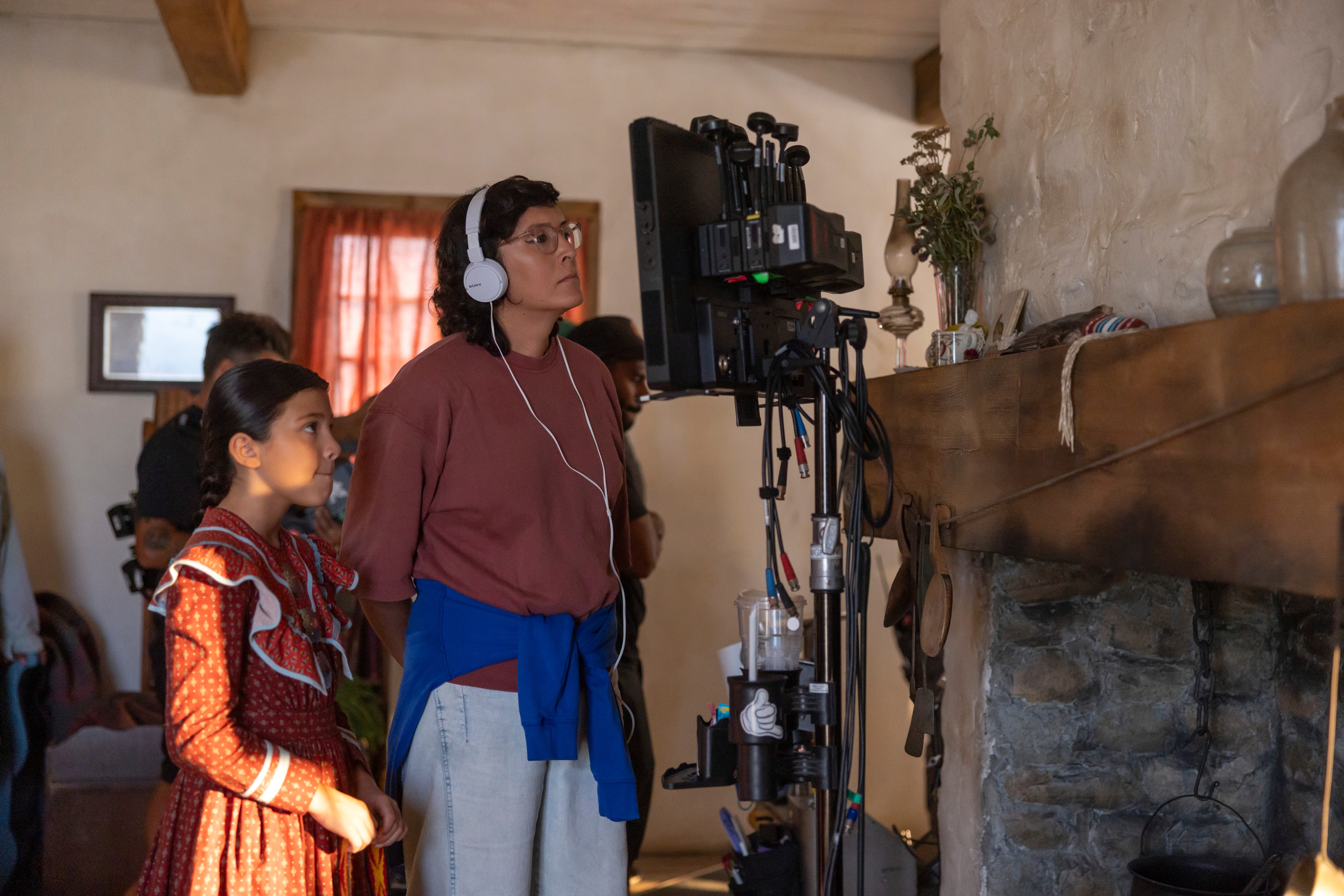
Little House on the Prairie. (L to R) Wren Zhawenim Gotts as Good Eagle, Director Sydney Freeland in episode 107 of Little House on the Prairie. Cr. Eric Zachanowich/Netflix © 2026
You’ve done Star Trek, Reservation Dogs, Little House on the Prairie, and Echo. All very different worlds, but anything about those TV shows that represent the kind of shows you want to work on?
I just wanted to work in television. My first real episode of television – I’ve done a show called Heathers before that unfortunately didn’t air – but my first real episode of television was Grey’s Anatomy. A great experience. I loved it. But the way TV works is you do one thing and then, of course, you’re going to go meet on New Amsterdam or Chicago Med or things that are of that same kind of nature. And one of the things that my reps made a conscious effort to do was try to build an intentionally diverse resume. I didn’t want to be pigeonholed into the same thing over and over. Fortunately, I was able to get opportunities to work in different genres and mediums.
The one thing that I’m consistently attracted to are stories about people that operate on the margins or people that are outsiders or people that might be the minority in another story because that’s where I come from. I’m Native American, I’m transgender. I grew up seeing those types of characters as a special guest star or they were the B character or the D character, the E character on the sidelines. For myself, I want to know more about that person.
And so that, coupled with characters who are underdogs, those are the things that I personally find exciting and relatable. And if there’s maybe somebody who comes from a more mainstream background, I think that’s where I love being in that space and operating with people who live in the margins.
As someone who’s directed films, including Rez Ball for Netflix, what about the experience of jumping from these wildly different shows appeals to you as a director?
It’s interesting because I didn’t come from a real background. I didn’t grow up in the industry. I didn’t have family members that worked in film or anything like that. So when I was first starting out, I felt like I was starting from ground zero or below ground level. I just wanted to be on a film set. Beyond that, I just wanted to direct. I think the thing about directing is that there is no substitute for doing it.
You can read all the books, you can talk to all the people, you can watch all of the DVD commentary, but there is no substitute for actually doing it. And so when I actually had a chance to do it, I was like, “Oh wow, this is even better than what I imagined it to be.” It wasn’t that I fell in love with a specific movie and that really made me want to be a director.
I fell in love with the process. I fell in love with the collaboration of working with all these people. I love directing and I love being on a film set. Television is, to me, it’s a chance to exercise that muscle.
My first film was a 15-day shoot, but took seven years to make. The second film took three years to make, and that was 26 days. 41 days. So in 10 years, that was 41 days of actual directing. Not a lot. And then with television, it gives you a chance to actually grow and evolve and fail as a filmmaker.
I think one of the things I love about TV is you parachute into something and you go into Star Trek, you go into Grey’s Anatomy, you go into Reservation Dogs, and these all have their own kind of sandbox they like to play in. And so a lot of the time, sometimes you create freedom, but a lot of times you come in, it’s not your job to impose yourself on the production. It’s, how can you find a way to put your stamp on this, but staying within the sandbox?
How do you do that?
That’s a really exciting challenge and I love doing that because it’s by intentionally putting constraints on yourself, it forces you to do things that you wouldn’t normally do. And so for myself, that’s how I feel like I’m able to grow as a filmmaker. Along the way, you get these tools for your toolbox, and then when something else comes around, another feature, it’s you’ve got these extra kinds of tools to work with.
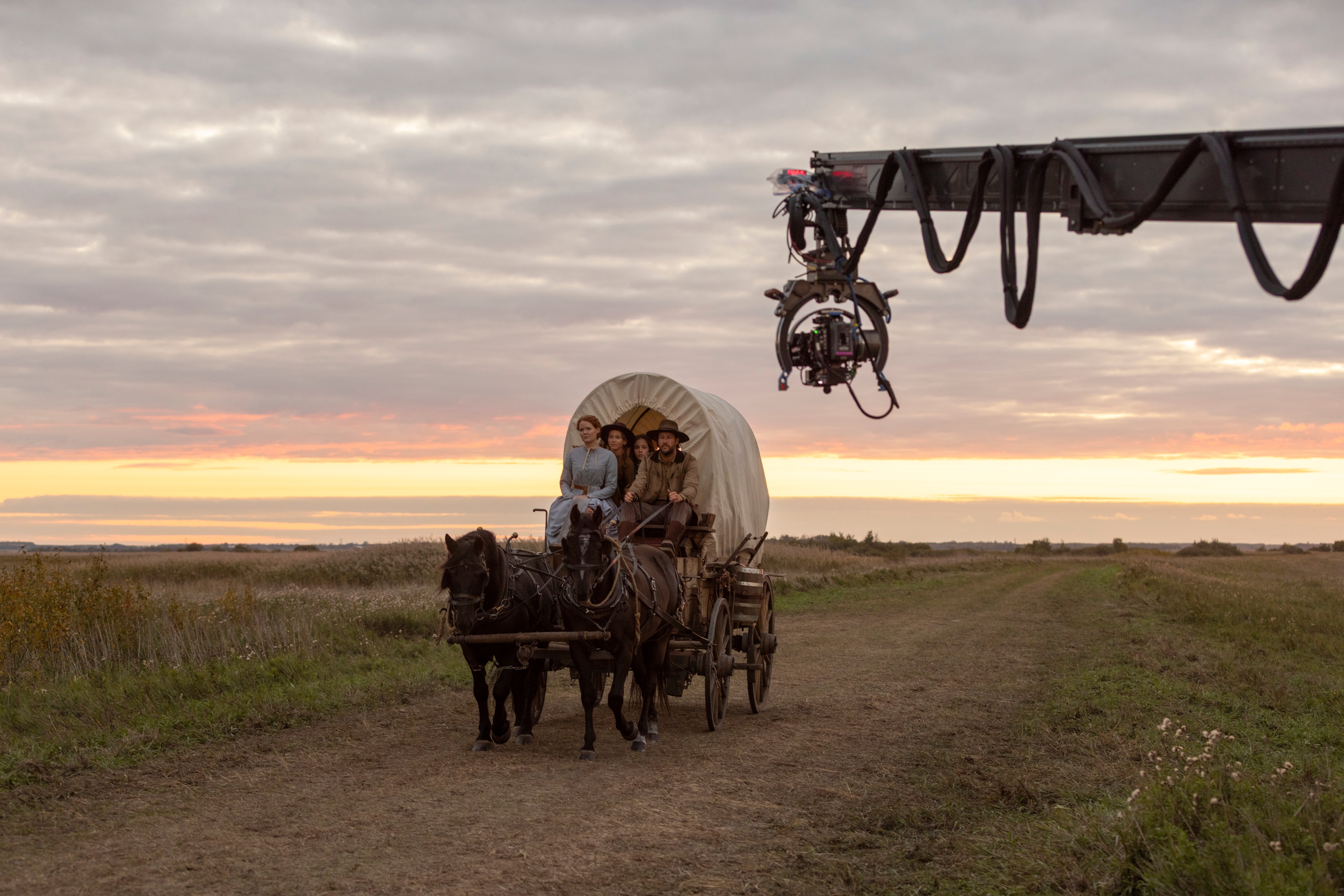
Little House on the Prairie. (L to R) Crosby Fitzgerald as Caroline Ingalls, Alice Halsey as Laura Ingalls, Skywalker Hughes as Mary Ingalls, Luke Bracey as Charles Ingalls in episode 108 of Little House on the Prairie. Cr. Eric Zachanowich/Netflix © 2026
What do you want to make next?
Genre. I want to do something in a sci-fi space or Western, a full-on Western, for sure.
Weren’t you working on a time travel story at one point?
Yeah, yeah. That was going to be the second movie that I was going to write and direct and everything. I would say the closest comp to that… it had the DNA of Tenet, but done much, much worse than Christopher Nolan did [Laughs].
[Laughs] When you say much worse, do you just mean a smaller scale?
Oh yeah. Also, it’s fucking Christopher Nolan, right? Yeah, just his execution of it. It was a similar-ish concept, but yeah, he just did it so much better.
Did you see The Odyssey?
Oh my gosh, yeah.
What’d you think?
It was sufficiently epic, right? What I love about it is that it was very tactile. It felt like whatever the opposite of AI is. It’s a true manifestation of cinema and movies and all that. The Cyclops sequence, I thought, was awesome, but it just felt so real and grounded and tactile. Even the visual design and aesthetic of Cyclops, I thought it was just chef’s kiss. Multiple times I’m, “I don’t know how they did that. I don’t know how they did that.” And that’s great because then it allows you to disappear into the film’s story.