

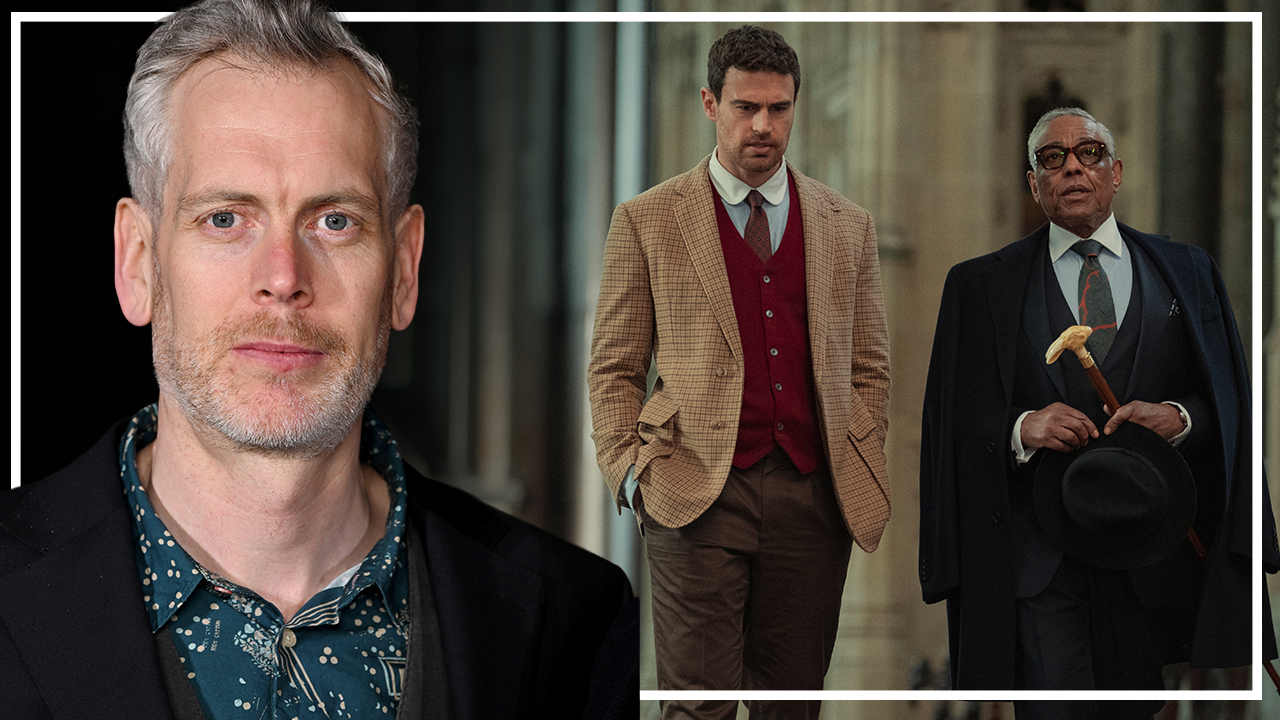
Picture Credit: Getty Images / Netflix
Christopher Benstead is Guy Ritchie’s go-to composer. The Covenant, Fountain of Youth, The Ministry of Ungentlemanly Warfare, and Wrath of Man—Benstead is an integral voice in the filmmaker’s body of work. The musician either contrasts or matches the high energy on display. In the case of The Gentlemen, both the film and the series, Benstead’s music ranges from the classy to the absurd.
It’s a tone he relishes scoring. “There’s a lot to play with,” Benstead told What’s on Netflix. “It’s just so great. I love scoring it. I just love it. There’s so much in the characters, and it’s humorous, dark, dangerous, and quirky.” Season two of the series called for a slightly different tone, though – digging into darker depths of Eddie’s (Theo James) soul. Recently, the composer spoke with us about the next sound of The Gentlemen.
What was the main goal for the score in season two?
Guy wanted to try something slightly different from the season one music, so it’s a slightly different approach in music. It’s the same kind of world, it’s the same sonic world, but the story changes and morphs and the characters develop. He wanted the music not just to follow the series one kind of rubric, but to have its own identity to some extent, which was sort of a surprise to me. I thought we’d got something. Everyone seemed to respond pretty well to the series one music because it was quite bold and quite over the top at times. Guy loved it, too, at the time. But I think what he shot in the first few episodes of series two was just a slightly different tone. It’s still funny, it’s still crazy, it’s still amazing, but it needed a slightly different kind of paintbrush on it, if you see what I mean.
What did it require?
I don’t want to give too much away, but less choral in general. It’s a little bit more introspective at times and a bit moodier, I’d say. It’s just a bit more depth. I don’t want to say the series one music didn’t have depth – it did – but, yeah, just digging into some of the darker themes more.
You do get to know these characters more this season, especially at their lowest. Did you feel that way, like you’re getting closer to the characters with the music?
Totally. Eddie is a different person from when we met him at the start of series one. It’s important to mark that in the music. I think his body count’s rising, isn’t it? Let’s face it, since we met him. So I think digging into that darkness and those sort of monkeys on his back, as it were – ghosts and regret. There’s more regret in it. There you go.
It’s maybe a bit more cinematic in its approach, but still orchestral, still lots of melodies everywhere, still lots of beautiful – hopefully beautiful – sounds and phrases that come and go and give it this air of regality in this kind of world.
Like you said, The Gentlemen does allow you to go over the top at times. What are the bolder choices you make for the wilder choices on the show?
Sometimes Guy wants that. Other times, in other films or projects, he wants the music to be really kind of background. That said, in general, he does say to me that he likes the music to be a really strong character, to raise its head, and to draw attention to itself.
In fact, on this series, there were times when he said not to do that. He said, “Actually, I think these performances are so great – which they are – that we can sit back here.” So when the music flourishes, it has a chance to blossom and bloom because, at other times, it is very tense and subdued.
Some of the music’s still super quirky, which I love. How do you achieve that? How do you bend that to these different characters that come and go? How do we give them a unique little slant, for example? It’s always fun.
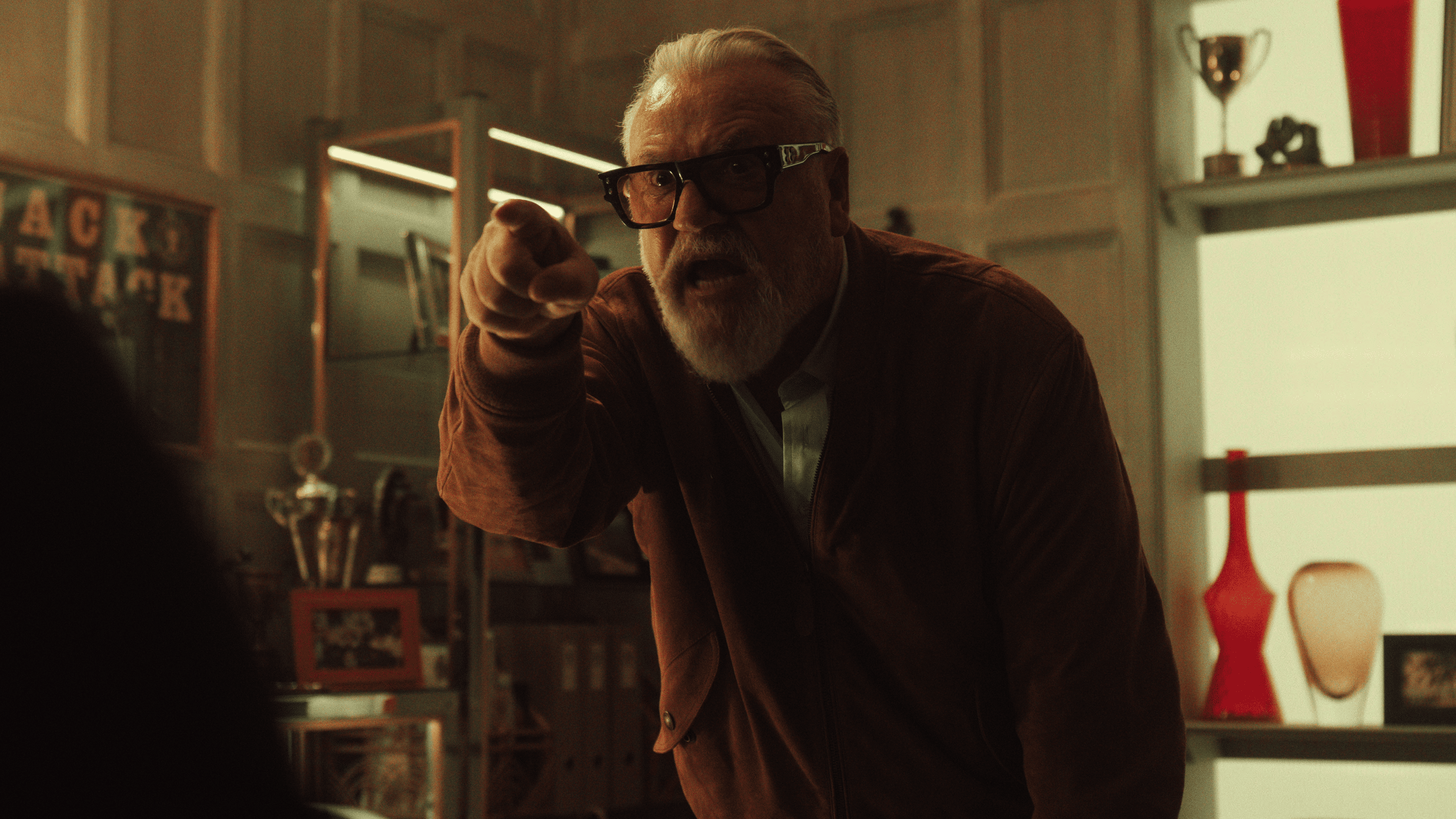
When you’ve got Ray Winstone towering on-screen, how do you want to score his performance?
He’s such a strong, potent character. We know he’s a dangerous guy, so you want to let that come through in the music, too. But, yeah, later in the series, there are some properly scary bits where you’re like, “Bloody hell, this is it.” In certain scenes, you can sit back and let him do the work – let the actors do the work at times – because they don’t need my help. That’s what I think.
What about when, as you said, Guy wants music more in the background? How do you still want to create a strong mood when the score is more quiet?
I think there’s a skill to having the music be less foregrounded but still distinctive – which is very difficult – and giving it its own character. That has a lot to do with the chords, harmonies, and musical touches that I’m employing to hopefully bring that together and keep it cohesive.
Even from series one, I think you could still hear one of the more expressive cues and go, “Yeah, that’s definitely The Gentlemen,” even if there’s no choir in that cue, for example. It’s also about experimenting with weird sounds, fiddling around in my studio, and seeing what I can get out of my cello on any given day.
What were some of those weird sounds where you were just experimenting and then thought, “Oh, I like this”?
Some things are pure accidents, especially when you’re playing a stringed instrument. There are so many overtones. It’s so easy for it to be weird and gnarly, which I like. If you play the same thing right near the bridge, you get super-weird harmonics pinging around. It’s cool. It allows for a lot of fun.
Are those happy accidents some of the best moments as a film composer, just experimenting like a mad scientist in your studio?
Absolutely. Like the mad scientist, when you’re coming up with a new formula and it feels really great, that’s amazing. But sometimes, when you’re a bit stumped, it’s tricky to break through that. You know what I mean? You can’t find that little chemical reaction that makes the scene work or makes the episode work. Certainly, when I started on series two, I had to realign my brain to Guy’s new world order of trying something within the world but giving it its own identity. It was bringing in new themes, new melodies, and new approaches, even for certain characters. It did take me a minute to realign with that. So, the mad scientist was a bit confused.
[Laughs] What were some of the light-bulb moments for new melodies?
I did loads of versions of the opening scene. I tried loads of different vibes on that, and then there was one that Guy just latched onto, which is the one that’s in there. It becomes a sort of recurring motif throughout the piece. He loved the inevitability and the repetitiveness, which is interesting. Once I got that piece under my belt, the rest kind of came, to be honest.
It was just: What is Eddie’s new sound?
Once we cracked that, we were cool. Even when we see Freddie, he’s changed. He’s different. He’s in an even stranger place mentally. So, hopefully, the music goes even more religious at times. With Susie, I was still using her theme a lot, which I love. Guy was like, “Oh, why are we still doing some of these themes?”
But interestingly, as the series wore on, he started responding to it more. I think we just needed to have a little break, rediscover the characters, and then be like, “Do you know what? We’ve earned this theme again,” which is cool.
So, to be fair, even in that very first cue, I peppered it in there. It’s woven in a bit cleverly. But, yeah, it was a tricky adjustment period. Some of the later episodes were just an absolute joy. Which episode did you say you got to?
I’m on episode five.
I won’t give anything away, but there’s one episode with less dialogue. You probably noticed that, and there’s quite a long action sequence. So that was awesome because the music’s properly front-footed. It doesn’t mean the music’s going ape. Sometimes it’s super tense and minimal, but it’s very much the dominant sound and character there, whereas in a Guy Ritchie film or series, particularly The Gentlemen, that tends to be the dialogue. The dialogue’s kind of the main instrument. It’s the frontman of the rock band, and I’m behind there going, “Ooh, there’s a bit of cello,” or, “Here are some woodwinds,” or, “Nice waltz.” In that episode, I was able to drive it a bit more.
Guy Ritchie’s and this writing staff’s dialogue is very colorful, sometimes playfully dense. What is the proper dance between the dialogue and your music?
Well, I’ve done quite a lot of it over the last – what is it? – six years that I’ve been working with him. He tends to like pieces of music that grow and build. Even during a small dialogue scene, if you enter big and become too obtrusive, he often reacts against that. I’ve learned this style that I think he likes, which is to always ease in and see what we can get through without it interfering.
Interestingly, he does like the music to have propulsion. He’s not a big fan of very stagnant, slow, maybe synthy or even orchestral pieces. He likes stuff with a little pulse and breath in it. I think maybe that’s it: Give a bit of breath to the dialogue and choose when it needs amplifying and when it doesn’t.
Sometimes, if it’s part of an intercut sequence, for example, then I’m gelling that all together, so I need to keep going. Maybe there the music’s slightly more driving than you’d expect over a dialogue scene because there’s quite a bit of intercutting in The Gentlemen. But, yeah, there are no hard-and-fast rules for it.
Different every time too?
Yeah. Even though I said he sometimes doesn’t like the more languid, dronier stuff, the odd time he will. So then I’m like, “Oh, okay. I didn’t realise I could just do a drone.”
You score propulsion really well. I love the Wrath of Man score; it adds so much speed to that movie. What’s your general approach to pacing a film or series’ score?
I think it’s about reading the tempo of the scene as well. Sometimes, if you’ve got really quick music and there’s a slower dialogue scene, it almost has the opposite effect. The beats per minute of that piece could be too quick, such that, because not a lot’s going on, it draws attention to itself and can be subtractive in a way. It’s knowing your tempos, which sounds a bit crazy, but it’s true. The pulse of the piece has a massive effect, and it’s about knowing when to ramp that up and down.
Sometimes, it’s counterintuitive. If it’s a really frenetic scene, don’t do frenetic music and do something really slow. Guy’s leaning into that more and more as we work together. There are other films we’ve worked on recently where we’ve really dug into that. We’ve gone completely the other way with not the music you’d expect for an action scene. For me, it’s all about rhythm. I’m very conscious of how much and how little pulse and propulsion is in there.