
Picture Credit: Netflix
Netflix’s Creative Asia film summit returned for its third year running at the Busan International Film Festival. Run in partnership with the festival, the programming was developed alongside BIFF, the Asian Film Commissions Network (AFCNet) and the Motion Picture Association (MPA), taking place at the Dongseo University Centum Campus in Busan, with a lot of its events catering to new and aspiring filmmakers.
So of course, there was also a session by young and upcoming Korean filmmakers, in a session called “New Voices in Filmmaking: What’s Ahead”. With moderation from BIFF programmer Jeong Jihye, the panelists included the director Namkoong Sun (Love Untangled, Time to be Strong) as well as Wi Eun-kyoung and Son Gwang-min, co-directors of the short film My Aunt (which recently won the Grand Prize at Korea’s Mise-en-scène Short Film Festival).
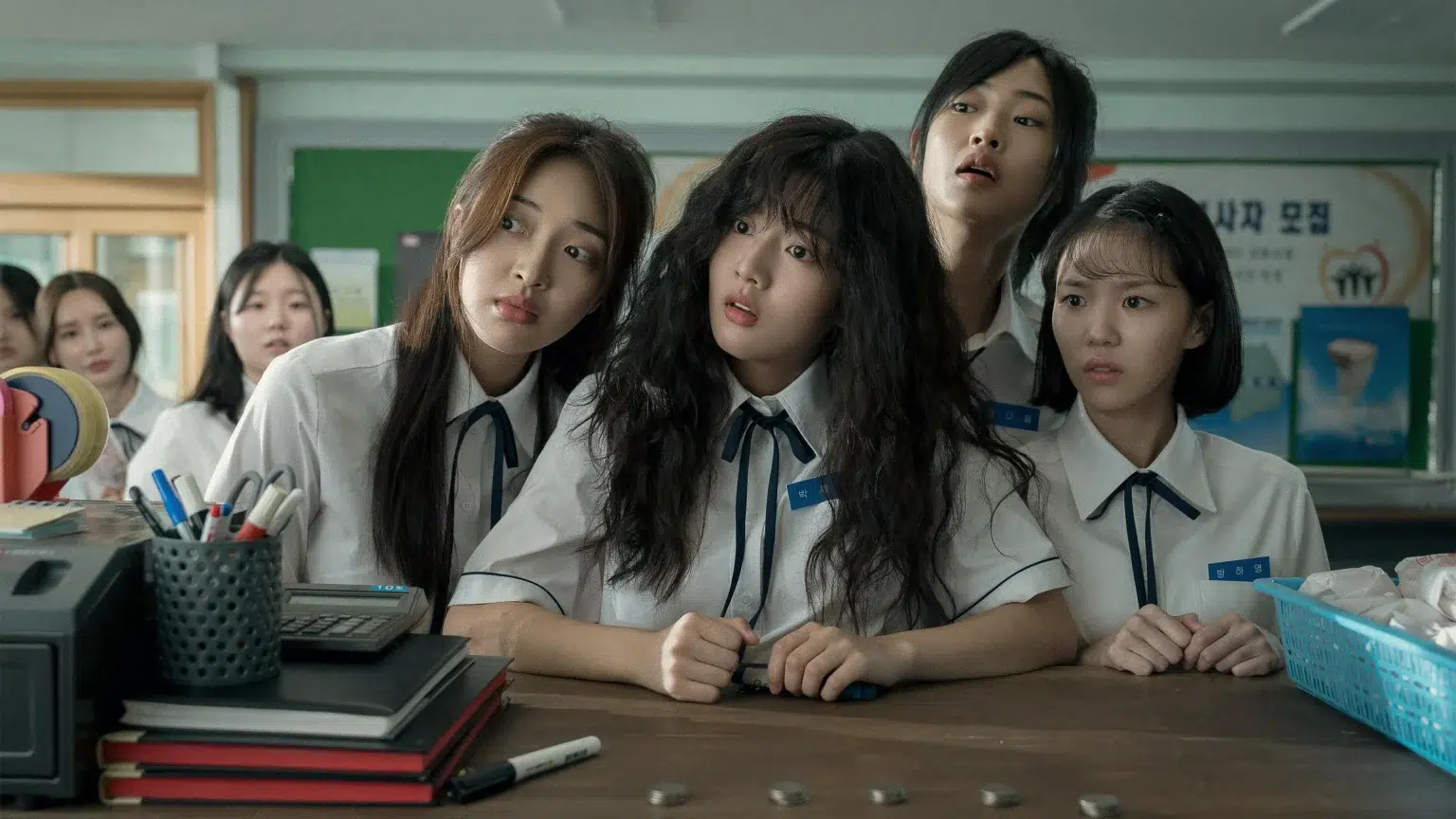
The three filmmakers discussed their path to working on their latest projects, as well as how their working relationship with Netflix and distribution of their films on the platform has affected their careers. Namkoong Sun opened, talking about how she had “been part of the independent film industry for a long time,” and goes on to talk about the releases of her previous films. Prior to Love Untangled, her latest film which was released on Netflix, her films like Time to Be Strong and Ten Months had theatrical releases, though one of them was during the “make-or-break” moment of COVID-19. “I was grateful that we still got to release my film,” the director says, “and there was no choice but to adapt to the pandemic.” The ill fortune followed her next theatrical release however: Time to Be Strong was released during the declaration of martial law in 2024 in the attempted coup by former president Yoon Suk Yeol.
“Some things are out of one’s control,” the director says in rather darkly comic understatement – but it does make a point of the safety net of distribution via Netflix, guaranteeing some level of global viewership and broader audiences compared to those last two strokes of bad luck.
Namkoong also saw the opportunity to make something a little more lighthearted. “I wanted to create a movie that was more pleasurable, delightful,” she says, looking for a crowdpleaser after her previous releases. Though taking a more commercial angle, she says that the process was “pretty much the same,” highlighting a need for speed and flexibility in filming. In an audience Q&A later in the session, she adds, “once production had the green light all we had to do was focus on making the film.”
With the location being in the midst of a film festival, a burning question around these Netflix partnerships was of course about the theatrical experience. The directors answered candidly, Namkoong acknowledging that there is something of a trade-off in the face-to-face element of a theatrical audience in favour of potential ‘worldwide engagement’. “The festivity was also there,” she adds, “it was a different kind of festive atmosphere”.
Wi Eun-kyoung also spoke on the distribution of the short she co-directs (and stars in), My Aunt (which should be said is only available on Netflix in Korea). The short film is about an aunt taking care of an abandoned dog, when one day the niece she raised returns home. The basic premise is more or less autofiction, based on her own aunt – which is why Director Wi took things further and starred in the film herself (while her husband, Son Gwang-min, stepped in as co-director).
“If you look at today, anyone can put up their film on YouTube,” Wi says, but also notes that it’s great that Netflix took a more curatorial angle in picking films from the MSFF selection.
“The fact that My Aunt is released is something I hadn’t imagined,” the director adds, “it’s very difficult to get access to short films, the fact that you can on Netflix has opened up new opportunities.”
Son Gwang-min stepped in with his own thoughts on this approach. “It used to be that there was a feeling and texture you could only get in theatres,” he says, admitting that he has mixed feelings as an aesthete about releasing on Netflix. But there is trade-off, and benefit: “before, we only got feedback from 15 people,” he says, noting that now it’s “hundreds”.
Seeking a wider audience by no means has meant artistic compromise, in the eyes of the filmmakers, however. Each reiterated their commitment to simply making something good in the hopes that this quality will on its own bring people to it. “I was just doing my work,” says Wi Eun-kyoung, “once you set your mind on making a good movie, I think that will take care of the rest.”
Son Gwang-min also clarified how he felt about reaching more people. “Even at this point I do not have a clear idea of what filmmaking is,” he says. “I would continue to explore and continue to ask questions, and I want to share [these questions] with the audience.”
The three were asked by the audience about the challenges which faced indie filmmakers in today’s industry, and the answers were fairly frank.
“Budget,” says Namkoong Sun. “But also we’re not very certain about the future of a film after release,” as she highlights theatrical infrastructure and exhibition still being crucial. Wi Eun-kyoung concurs, saying that budget was also the major challenge for herself, saying she used her own money on producing My Aunt, which she notes is also unsustainable.
“I could not always guarantee my films would be [embraced] by an audience,” she says, continuing to say, “these have been ongoing concerns and I think they will continue to be.”