

Some Apple TV shows walk in, say exactly what they need to say, and leave before you even think of asking for more. I respect that kind of discipline.
Having said that, when Apple TV first barged into the streaming arena, I didn’t expect it to find its footing with such startling alacrity.
It felt like the new kid trying to find a seat at an already crowded table, but now it sits there like it belongs.

What really caught me off guard is how effortlessly it handles shorter stories.
They’re compact, but never small, and if anything, they hit harder because they don’t wander; they just lock in and deliver.
So, if you’re in the mood for something that delivers without dragging its feet, these Apple TV limited series are well worth your attention.
7. Manhunt
If Manhunt is on your watchlist and you think you already know the story, I get it.
Most of us learned the basics of Abraham Lincoln’s assassination and then moved on, treating it like a closed chapter that didn’t need revisiting.

This show doesn’t treat it that way, because it stays in the aftermath, where everything is still unsteady, and nobody quite knows how to hold the country together.
You follow Edwin Stanton, played by Tobias Menzies, and he shoulders most of the emotional weight because he’s grieving, yet there’s no room for him to slow down.
There’s pressure coming from every direction, and at the same time, he’s leading the effort to track down John Wilkes Booth.
It feels tense in a grounded, almost suffocating way, where every decision carries more weight than it should, and nothing feels safe to get wrong.
Booth, played by Anthony Boyle, isn’t presented as some calm planner. He’s impulsive and increasingly unstable, and that makes the chase feel unpredictable.

You’re watching someone on the run who believes in what he’s done, even as things start slipping out of his control.
And then there’s Abraham Lincoln, portrayed by Hamish Linklater. His presence is limited but adds a quiet sense of loss that hangs over everything Stanton does.
If you like historical dramas that don’t feel stiff or over-polished, this one is worth your time, because it stays focused and quietly intense throughout.
6. Black Bird
Black Bird got under my skin in a way most crime shows don’t, and if you’ve seen your fair share of true crime, you’ll know how rare that is.
You start off thinking it’ll follow a familiar path. Guy messes up his life, gets caught, and tries to find a way out.

Jimmy Keene, played by Taron Egerton, fits that mold at first.
He had everything going for him, threw it away, and now he’s staring down a long prison sentence with no escape hatch.
Then the deal comes in, and this is where you start to sit up and take notice.
The FBI, through Lauren McCauley, played by Sepideh Moafi, offers him a way out, but it’s not clean or simple.
He has to go inside a maximum-security prison and get close to Larry Hall, played by Paul Walter Hauser, and somehow pull a confession out of him.

That setup alone is tense, but what really makes the show stick is how uncomfortable it lets things get.
Larry is quiet, awkward, almost childlike at times, and that’s exactly what makes him so unsettling.
The way Hauser plays him (the voice, the posture, the little pauses in conversation) it all feels off in a way you can’t escape.
And the prison setting doesn’t give you a moment to breathe either, because it feels claustrophobic, like the walls are inching in just a little too close.
Every interaction has an edge to it, even the ones that seem harmless at first.

I also didn’t expect how emotionally impactful Ray Liotta would be as Jimmy’s dad.
There’s something about those scenes that grounds the whole story. They’re heavy, tense, and yeah, it’ll probably stick with you longer than you’d care to admit.
But that’s also why it’s so good.
5. The Shrink Next Door
The Shrink Next Door is a weird watch, and I mean that in a good way.
You see Paul Rudd and Will Ferrell on the poster, and your brain kind of auto-fills the vibe.

You expect something light, maybe a little chaotic, something you can throw on and relax with. That’s not really what this show is doing.
Rudd plays Isaac Herschkopf, better known here as Dr. Ike, and Ferrell is Marty Markowitz, his patient.
At first, their dynamic feels harmless, even a little comforting. Marty is anxious and unsure of himself, and Dr. Ike steps in like someone who finally understands him.
But then things start to shift, slowly enough that you almost question yourself. That’s what makes it uncomfortable in a very specific way.
Dr. Ike doesn’t storm into Marty’s life and take over overnight. He inches his way in, decision by decision, boundary by boundary, until suddenly he’s everywhere.

And the frustrating part is you can see it happening, but Marty can’t.
Or maybe he can, but he doesn’t know how to push back. Well, watching Will Ferrell play someone this vulnerable caught me off guard.
He dials everything down, and there’s this quiet sadness to Marty that sticks with you.
Meanwhile, Paul Rudd leans into his natural charm and twists it just enough to make it unsettling.
You understand why people trust him, which makes what he’s doing feel even worse.

And yeah, knowing it’s based on a real story involving Isaac Herschkopf makes it hit differently.
So if you’re curious to see Rudd and Ferrell step way outside their usual lanes, this one’s worth a shot.
Just don’t go in expecting easy laughs.
4. The Last Days of Ptolemy Grey
Trust me, The Last Days of Ptolemy Grey is one of those shows that doesn’t really shout for attention.
And maybe that’s exactly why it hits harder than you expect once you sit with it.

You’ve got Tulsa King star Samuel L. Jackson playing Ptolemy Grey, an elderly man whose mind drifts in and out of clarity, and the way the story handles that feels far more tender than I expected.
It doesn’t treat his memory loss like a plot device to speed things up.
It feels more like being inside someone’s mind while it flickers between present and past, sometimes sharp, sometimes completely gone.
Then Dominique Fishback shows up as Robyn, and the whole thing starts to breathe differently. Their relationship isn’t flashy or overly sentimental.
It grows in these small, careful moments, like two people who don’t fully trust the world but somehow start trusting each other anyway.

That’s where the show really finds its emotional weight. What surprised me most is how much warmth exists inside a story that could easily have leaned only into sadness.
There’s pain here, especially as Ptolemy pieces together his past and sees what’s been lost or buried, but there’s also a quiet connection that keeps it from feeling draining.
Walton Goggins as Dr. Rubin adds another layer of tension without taking over the story.
He’s not just a background figure either, because his presence makes you question what this experiment really costs and whether anyone involved is telling the whole truth.
What stayed with me after finishing it wasn’t any big twist or dramatic moment.

It was the feeling of watching two people, both carrying their own kind of loneliness, slowly meet in the middle and try to make sense of what they still had left.
Ergo, if you’re in the mood for something that actually takes its time with its characters, this one is worth sitting with.
3. Disclaimer
Disclaimer feels like one of those shows that knows exactly how to get under your skin without ever raising its voice.
You’ve got Cate Blanchett at the center as Catherine Ravenscroft, and she plays her with this calm precision that almost makes you trust her too quickly.
That’s part of the trick here, as nothing is loud or showy, yet everything feels loaded, like even the smallest glance might be saying more than you can decode.
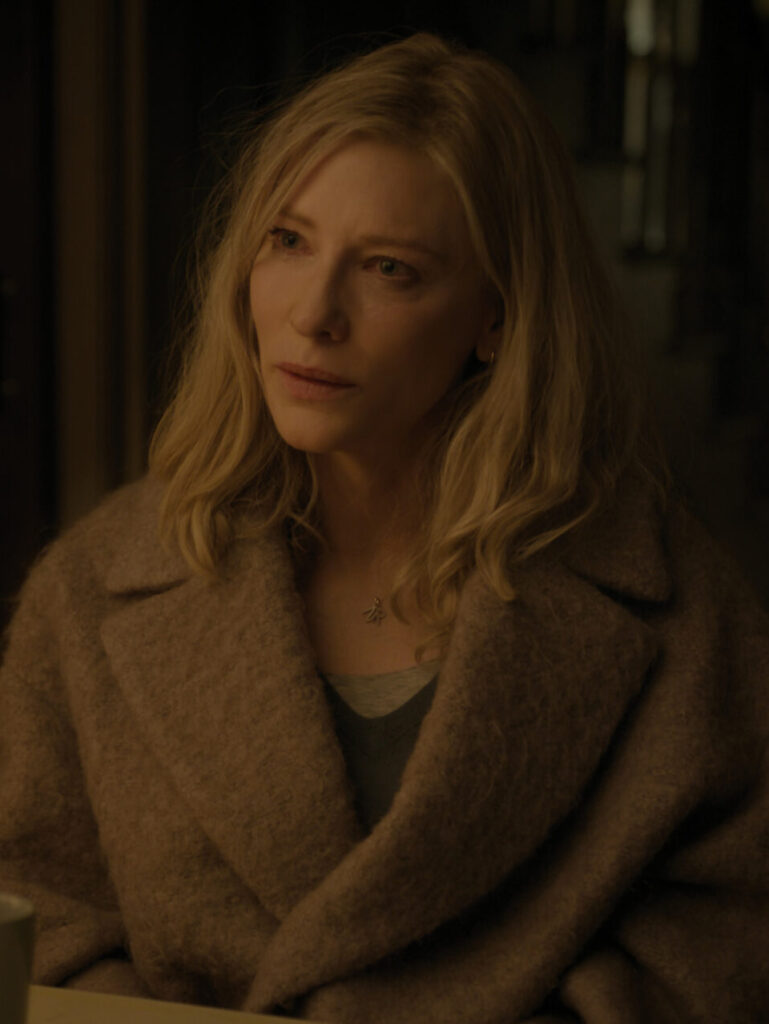
Then the story drops in this strange book, The Perfect Stranger, and suddenly her life stops feeling stable.
It’s not just that someone is writing about her; it’s that the book starts peeling back a version of her past she’s carefully kept out of sight.
That’s where things start to tilt, and what I liked is how the show keeps shifting your footing just when you think you’ve found it.
One moment, you’re watching Catherine in the present, trying to figure out who is targeting her.
Next, you’re pulled into reconstructed memories of the past, with Kevin Kline as Stephen Brigstocke, a man convinced she’s responsible for something irreversible that happened years ago.
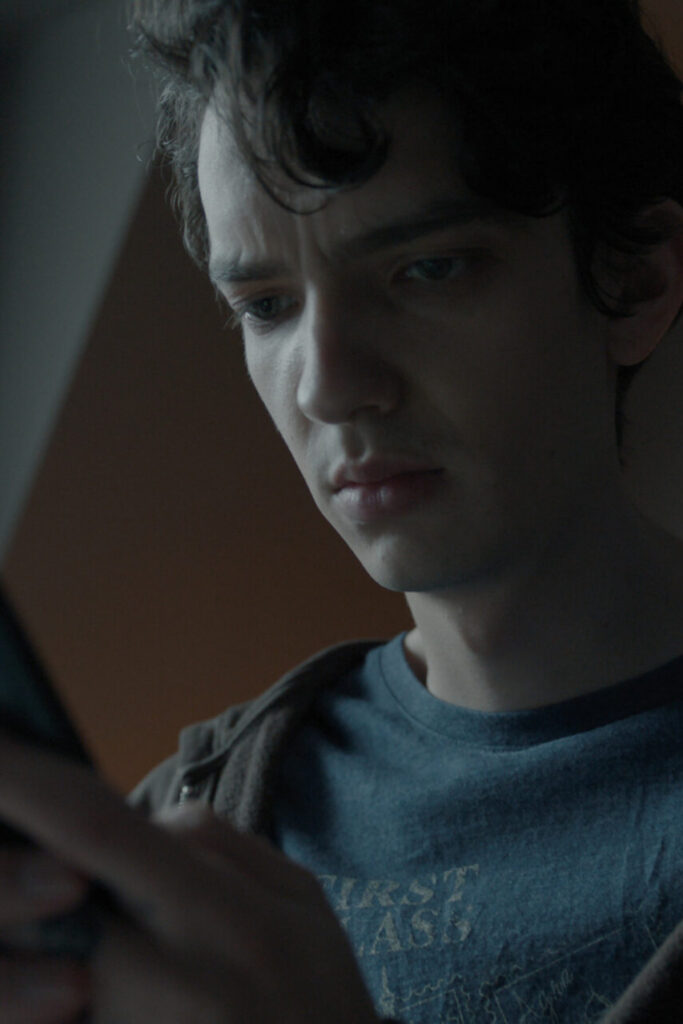
And then there’s the way it handles truth, or at least the idea of it.
You never fully settle into one version of events, as the story keeps nudging you to question what you’ve just seen, and it does so with intent, not confusion.
The supporting cast adds more texture, too. Sacha Baron Cohen and Hoyeon Jung both bring a grounded intensity that helps keep the story from drifting too far into abstraction.
Indeed, if you like psychological thrillers that don’t hand you answers quickly and instead make you sit with uncertainty, this one delivers that in a very polished, very confident way.
2. Defending Jacob
Apple TV clearly plays a big game with Defending Jacob.

They actually have collecting big names: The Morning Show‘s Jennifer Aniston, Oprah Winfrey, Steven Spielberg, and then dropping Chris Evans into a role that strips away the superhero shine.
Evans plays Andy Barber, a district attorney who believes, almost stubbornly, that truth and justice will eventually shake hands.
But his son Jacob becomes the center of a murder accusation, and suddenly the family is dealing with doubt and the kind of judgment that spreads faster than facts.
What I liked is how the show doesn’t rush to hand you answers. It sits you down in discomfort and makes you live there.
Jacob himself is written in a way that keeps you guessing. One moment, he feels like a normal teenager, lost in his own world; the next, you’re questioning everything.

Michelle Dockery’s character, Laurie, brings in the emotional weight. Watching her is like watching someone hold a glass that’s already cracking in her hands.
You can feel that quiet question building inside her: what if love isn’t enough to blind you?
And that’s where the show really hits because it stops being about guilt or innocence and starts being about how far a parent can bend before they break.
Well, if I had to sum it up, I’d say Defending Jacob isn’t a show you ‘solve’. Instead, it’s a show you sit with.
It asks uncomfortable questions and doesn’t hurry to comfort you afterward.

1. Lessons in Chemistry
I thought I’d just watch a few minutes and move on, but Lessons in Chemistry got me emotionally involved without even noticing when it happened.
The story follows Elizabeth Zott, played by Brie Larson, who is brilliant in chemistry, sharper than most of the men around her, but every step forward comes with someone trying to push her back.
Her relationship with Calvin Evans is one of the few places where the show actually lets you breathe.
It doesn’t rush them into anything. It just lets them talk, observe each other, and slowly build something that feels real.
And I remember thinking while watching them that this is what respect looks like before anything else gets involved.

It felt calm in a world that otherwise keeps trying to shake her.
But when she’s forced out of the academic space and later ends up in a completely different role on television, it feels almost unfair at first.
And yet, that’s where the show surprised me a bit. Instead of breaking her spirit, it shows her turning that new space into something powerful in her own way.
The cooking segments, which could have felt silly, actually become her way of speaking to other women who are also being underestimated.
I found myself unexpectedly smiling at those moments.

If I had to pick a personal favorite, Black Bird just edges ahead for me, as it unsettles you long after it ends, though The Last Days of Ptolemy Grey comes very close for its emotional depth.
Now I want to hear from you.
Do limited series actually hit harder than multi-season shows, or is the long-haul storytelling still the real heavyweight champ?
Drop your thoughts below: I’m genuinely curious where you stand on this, and I’m all ears.
-

7 Apple TV Shows That Don’t Need Multiple Seasons to Impress
Seven Apple TV shows that prove limited series can hit hard fast, delivering powerful stories without needing multiple seasons to shine.
-

Characters of the Week: Shrinking, NCIS: Origins & More Bring the Love, the Humanity & One Very Good Boy
We have a full list that needs reading because our Characters of the Week span broadcast, streaming, and cable, from Outlander and Shrinking to NCIS: Origins!
-

7 Shows Ghosted Us, and We’re Not Getting Over It Anytime Soon
Doesn’t it hurt when you find a good show, only to realize that its future remains a mystery years later? Well, these seven shows did that exact thing to us.
The post 7 Apple TV Shows That Don’t Need Multiple Seasons to Impress appeared first on TV Fanatic.