

We have another season of Chicago PD under our belts, and that’s a bittersweet development.
But it’s hard to celebrate some of the season’s wins because a frustrating issue casts a long shadow over the series. The unavoidable restructuring of the series.
Chicago PD has relied heavily on character-centric storytelling as a workaround to the tightening purse strings crippling broadcast TV. But unfortunately, it’s also destroying the series.

Intelligence no longer feels like a functioning team, character arcs lack meaningful continuity, and emotional moments disappear almost as quickly as they happen.
By now, we can come to accept that some changes are necessary evils if we still want to keep shows we love on the air. Scripted content has become something of a unicorn now.
Networks are trimming episode orders, reducing cast appearances, and stretching budgets however they can.
That’s how we got here.
What started as a technique the series utilized a few times a season has now become the show’s dominant structure. Every single episode this season fell into this category.
On paper, there’s nothing inherently wrong with character-centric episodes. They can be a great way to explore the characters we have and, when done right, expand on them in compelling ways.

The problem isn’t necessarily the format itself. It’s the way the series executes it.
Keeping that in mind, the call isn’t about eradicating a format that isn’t going away. But there are definitely ways in which they can improve it. Because presently, it’s completely ruining the series.
One of the biggest issues is how unevenly these episodes are distributed.
With Chicago PD‘s primary players, it would make sense for each of them to have roughly three episodes a season where they take the lead in some capacity.
With the primary members of Intelligence, it would make sense for everyone to get roughly the same number of spotlight episodes throughout a season.
That would still leave room for rare treats like a Trudy-centric hour and larger ensemble-heavy finales that actually let the whole unit operate together.

But the series rarely does that. And this season produced one of the most egregious executions of this structure yet.
A third of the episodes this season were either specifically devoted to or co-led by newbie Eva Imani. Ironically, despite all that screen time, we still don’t know nearly as much about her as one would think.
The season premiere opened with her introduction as she worked alongside Voight, and then, puzzlingly, the season’s final two episodes closed with an entire arc devoted to her, rounding her out with an average of seven episodes.
Voight got around five, Torres managed four, and the others got less.
But the bigger issue isn’t even the number of episodes each character receives. It’s what the series chooses to do with that time and whether it follows through afterward.
Atwater’s arc is probably the clearest example of where this format completely falls apart.
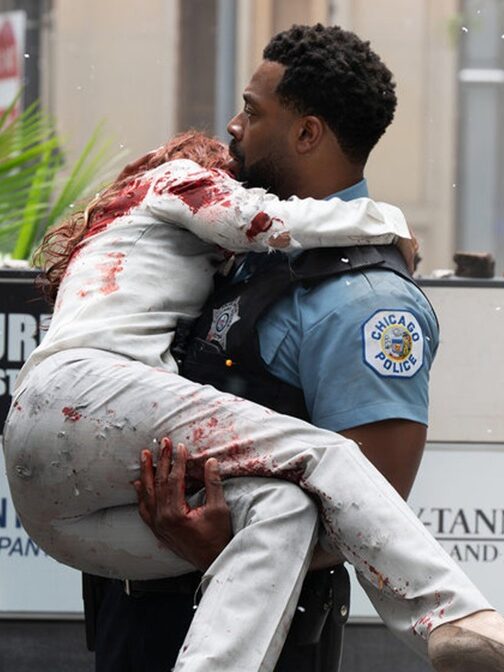
Imani and Voight were featured twice before we even got to him during Chicago PD Season 13 Episode 5.
The hour introduced Tasha Fox and set their romance in motion. Then the show waited six episodes before revisiting that storyline at all during Chicago PD Season 13 Episode 11, only to reveal that Atwater would be a father.
After that, we had to sit through a winter hiatus, and another seven episodes before the series meaningfully addressed that storyline again during Chicago PD Season 13 Episode 18, the news of his having a kid is revealed to only two other team members.
And that’s a prime example of how the character-centric structure begins to actively defy logic.
It already feels strange that the series only addresses ongoing arcs during a character’s designated “focus” episodes instead of naturally sprinkling updates throughout the season.
But Atwater becoming an expectant father isn’t the type of development that should disappear for half a damn season.

It literally makes no sense that he’d keep something that massive from Burgess and Ruzek for so long. They’re his best friends — his family.
Similarly, Torres may have had the most cohesive arc out of everyone, but it was also one of the most insular.
Nearly every Torres-heavy installment revolved around his faith journey and emotional spiral, yet most of those hours barely allowed him to interact with the rest of Intelligence.
The material itself was compelling, but it rarely felt like anyone else on the team was emotionally invested in what he was going through.
This leads to the biggest issues overall: Intelligence barely feels like a team anymore.
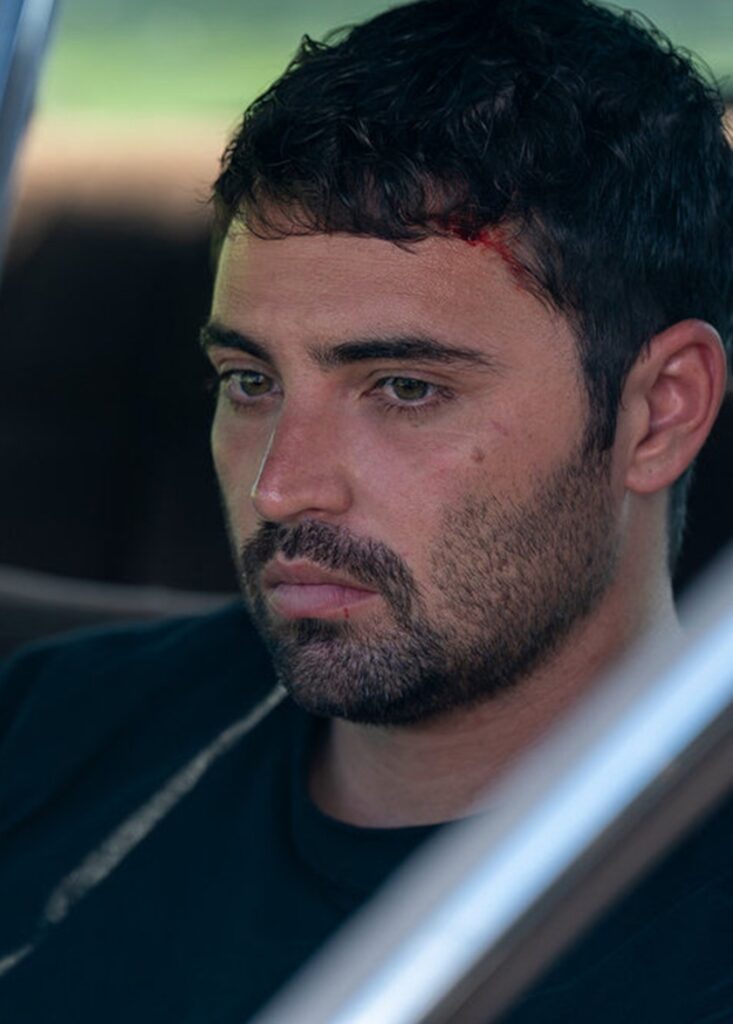

Calling them a “unit” these days is generous at best.
Characters disappear for episodes at a time, interactions are minimal, and many installments operate like standalones instead of parts of a larger season.
Even when characters are physically present, the writing rarely gives them meaningful material unless they’re the designated lead of the hour.
It’s not about how much time they have onscreen, but rather what they do with that time, and Chicago PD doesn’t do diddly-squat.
The series doesn’t take advantage of its characters and explore more than one dynamic.
All season long, Imani has practically been superglued to Voight’s side as if she’s not allowed to so much as interact with anyone else.

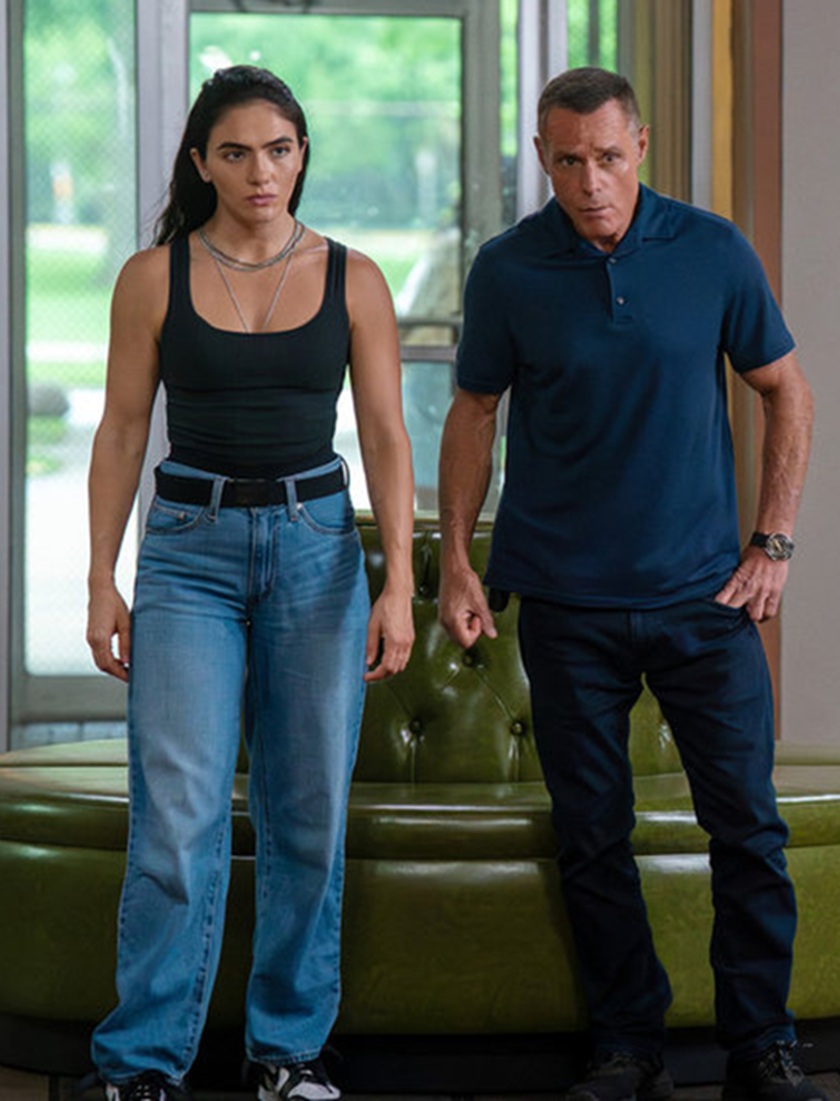
Then, late in the season, the series suddenly hinted at a connection forming between her and Torres that seemed to develop entirely offscreen.
The season leaned heavily on Imani completing the trifecta of “Voight’s Angels” as a redundant, daughter-like character alongside Lindsay and Upton. And as per usual, it comes at the expense of her establishing any real connection with the team.
Burgess has arguably been one of the biggest casualties of this format.
Despite supposedly stepping into the role of Voight’s second-in-command, the show rarely shows that on screen. Instead, she often feels sidelined while the series defaults back to the same dynamics with Imani/Voight.
And while the Burzek material is still enjoyable, the show has increasingly siloed them into their own bubble, both at home and in the field, rather than allowing them to engage with the larger group.
The redundancy in these pairings and how the show explores them, often at the expense of others, is another way in which the character-centric formatting fails.

It would be less noticeable that we aren’t getting nearly as much group screen time if the show dared to mix and match the pairings.
That level of unpredictability would make things more exciting, but more importantly, it would incentivize viewers to watch all of the installments.
We spent all season on self-contained episodes with no connective tissue, zero continuity, and little overarching plot.
It turned Chicago PD Season 13 into a “choose your own adventure”-style experience, where viewers could skip entire chunks of the season if they weren’t invested in a particular character and still lose almost nothing.
Atwater fans could essentially watch three installments and still understand his entire seasonal arc.
Burgess barely even had one.
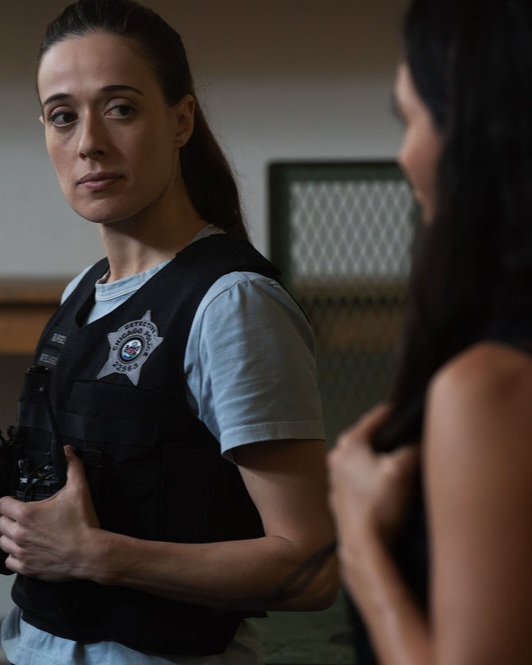
The conversations surrounding Mack and relocating barely resurfaced by the end of the season.
Voight’s storyline with Devlin also felt like wasted potential.
Early on, the series hinted at a deeper exploration of Voight’s childhood and psychological makeup through Devlin’s fixation on him, but the payoff ultimately felt anticlimactic and underdeveloped.
And Ruzek had a compelling hour in which he finally said goodbye to his ailing father. Chicago PD Season 13 Episode 19 was a heart-wrenching, evocative, and creative hour.
It closes with Disco Bob dying with Ruzek alone by his side. And then… that’s it.
A long-time member of this unit just lost his father, a character whom everyone knew, and there’s no acknowledgment at all after that episode. We didn’t even see Burgess helping him process it all.
It’s like it never happened.

Chicago PD sold us this concept of the team being a family.
They’ve spent over a decade exploring this, from fun interactions and moments to more serious ones where teammates would be willing to die, kill, or take the fall for each other.
But if this season didn’t do anything, it reveals how much the series has stripped that away.
Ironically, we started the season with Voight determined to bring his unit back together—the Brady Bunch, as Imani quipped.
And then we spent the entire season with the team feeling completely fractured, their lives disrupted, and episodes just operating as a series of standalones.
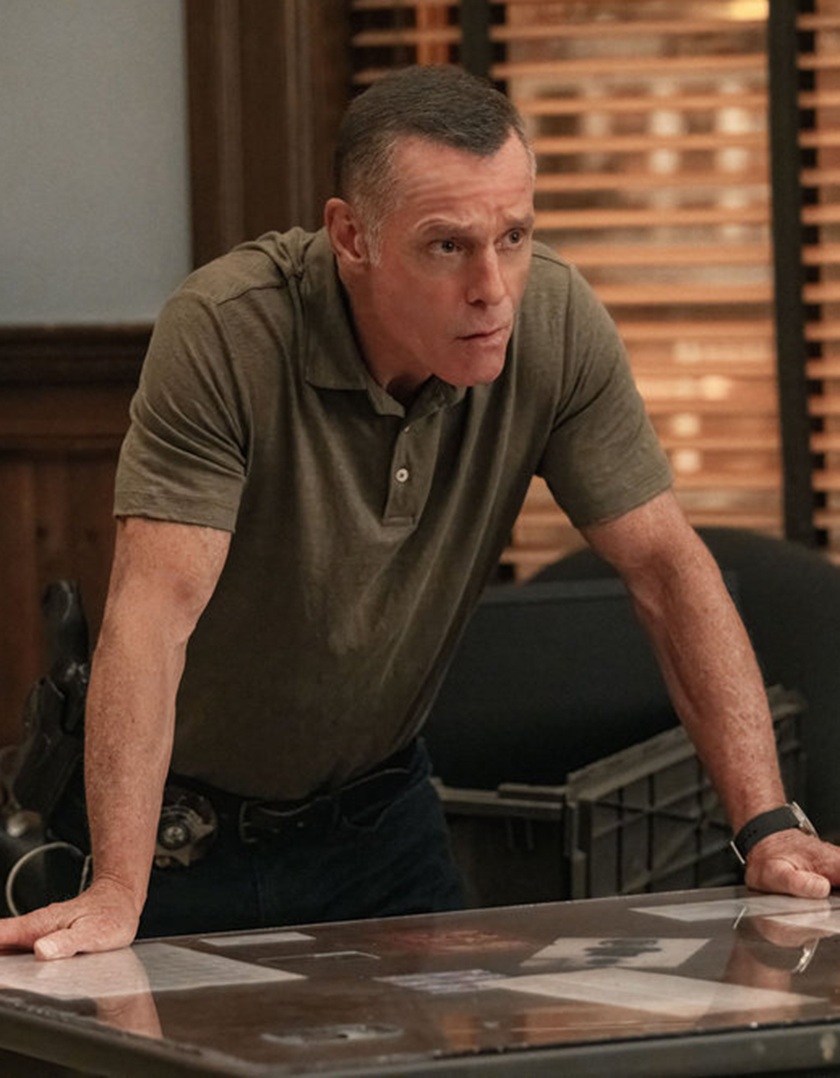
Character-centric episodes are not inherently the problem. The lack of continuity, balance, follow-through, and meaningful ensemble interaction is.
Because, as it stands, whether it’s new characters or established ones, it’s difficult to connect, and disconnection leads to disengagement altogether.
The series doesn’t have to completely overhaul its formatting, but it does need to find a balance that works. And at the very least, find a way to make the characters feel like a unit again.
Over to you, Chicago PD Fanatics. Are you sharing a similar frustration? Let’s discuss below!
-

Eva Imani has been the latest addition to Chicago PD, but will she be sticking around? We have some doubts.
-

No matter where you look in the Dick Wolf universe, it’s hard to find happy couples we want to root for. What’s the deal?
-

Chicago PD Seasons 12 and 13 have put a lot of focus on Torres’ crisis of faith. This focus is what Atwater deserved during Season 8.
-
One Chicago, FBI, CIA… Dick Wolf Universe is going a little crossover crazy, but at what cost?
-

It’s time to let a character go on Chicago PD. Kevin Atwater is the most underused character going, and there’s a story to write him out.
TV Fanatic is searching for passionate contributors to share their voices across various article types. Think you have what it takes to be a TV Fanatic? Click here for more information and next steps.