

The town in FROM feels like it’s currently engaged in a losing battle.
The Man in the Yellow Suit has inflicted a kind of terror unlike anything they’ve ever encountered, armed with knowledge they’ll never possess.
To top it all off, the townspeople aren’t even aware of just how close they are to their biggest foe yet.
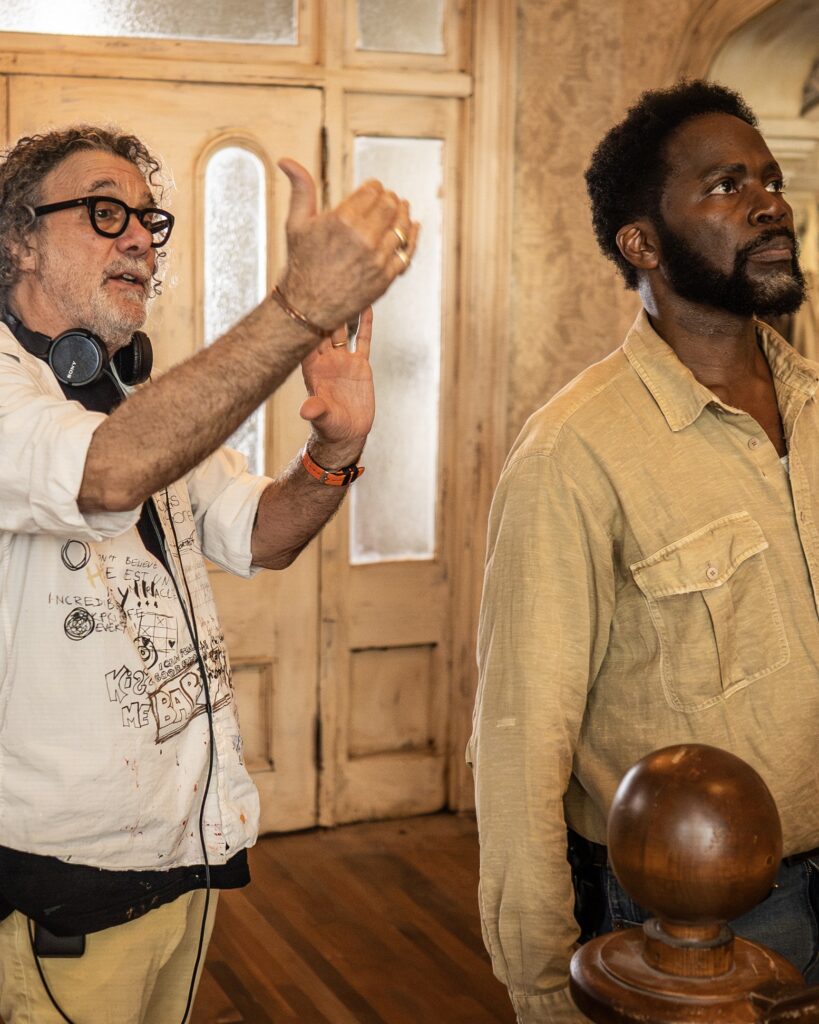

FROM Season 4 has been steadily building toward the townspeople making a big move in their quest to get home, and FROM Season 4 Episode 9 puts the mission to retrieve the children’s bones into action.
It’s an hour that also introduces some exciting truths — like the talisman reveal — while leaving many people in precarious positions as we head into the finale.
With FROM Season 5 confirmed as the final season, the endgame now feels even more consequential, setting the stage for what’s to come.
Its season finales have historically been devastating in one way or another.
We were delighted to catch up with the trio of executive producers Jeff Pinkner (Showrunner), John Griffin (Creator), and Jack Bender (Director), to talk about the season’s origins, Boyd’s trajectory, and the ongoing balance between revealing answers and withholding them.


As you know, we’re nearing the end of the season here. Which beats were most important to hit this season to grow the story and mythology and keep the audience engaged?
Jeff Pinkner: Wow, that is a specific question. I think, quite honestly, it would be hard to just point out a couple of beats that were important.
I think the headlines we got most excited about this season were the Man in Yellow taking the stage and becoming a character who wasn’t just in the background of the story but actually brought him into the foreground. That was very exciting.
Having the antagonist appear on screen was exciting for us. And obviously, the biggest move on the other side of the ledger is the decision and then the effort to retrieve the bones of the children buried in the tunnels beneath the town.
Jack Bender: And I will say, for me, the creation of the character of Sophia was the balance of finding the right actress and directing that actress, and working with her to be delighted when she needs to twist the knife.
She’s turning into everybody in that town, and not having it be a mustache-twirling cliché.


Not that it was ever written to be that, it wasn’t. But when I first read it and knew the character, it was “Okay, here we go.” And then finding that actress, it’s always that.
We have that blessing on the show to have a wonderful cast that we found from the beginning, but it was the nuance and the detail of how much to show her turning the screw and how much for the audience to think, “Oh my God, is she going to turn the screw?”
Then, of course, starting with the pilot of this season, where we actually see the story at the end of the pilot, which was a very bold choice that Jeff, John, and our writers made.
That was, “We’re going to show it to you at the end of the pilot,” as opposed to another way to tell the story would’ve been to drag her on and let the audience deliberate.
But that was a brilliant choice, and we had the right actress, and I think we pulled it off really well. But that, to me, was going to be tricky.
John Griffin: Yeah, I think Jeff and Jack pretty much hit on the core points.
I think that bringing the Man in Yellow into the fold of our community, oftentimes, we think, “Oh, we’ve met the villain at the end of FROM Season 3. Now he’s going to be doing big, villainy things that have our characters quaking in fear.”


But what if he just came into the town as an unassuming young pastor’s daughter, and then what would that be like?
What makes our FROM villain different from your typical villain? And is that the way he enjoys this phase of the game? And is that the way that he enjoys this part of the experience?
I think, overall, going back to something Jeff said, it was really important to make sure we were hitting the right beats.
These two seasons are very much a two-part season. And by the end of season four, it should really feel like we’ve crossed the Rubicon. We should no longer feel like we’re setting up or having our characters open the door.
By the time season four has ended, our characters have opened a door they may not be able to close, even if they wanted to. And that felt like the point we needed to hit to tell the season four finale and land the plane the way we had always intended.
Speaking of the Man in Yellow, that has to be tricky for you guys, because one of the challenges of a powerful antagonist is leaving the audience with hope.
The audience can still feel hopeful that they can beat them one day. And the Man in the Yellow Suit feels overwhelming.
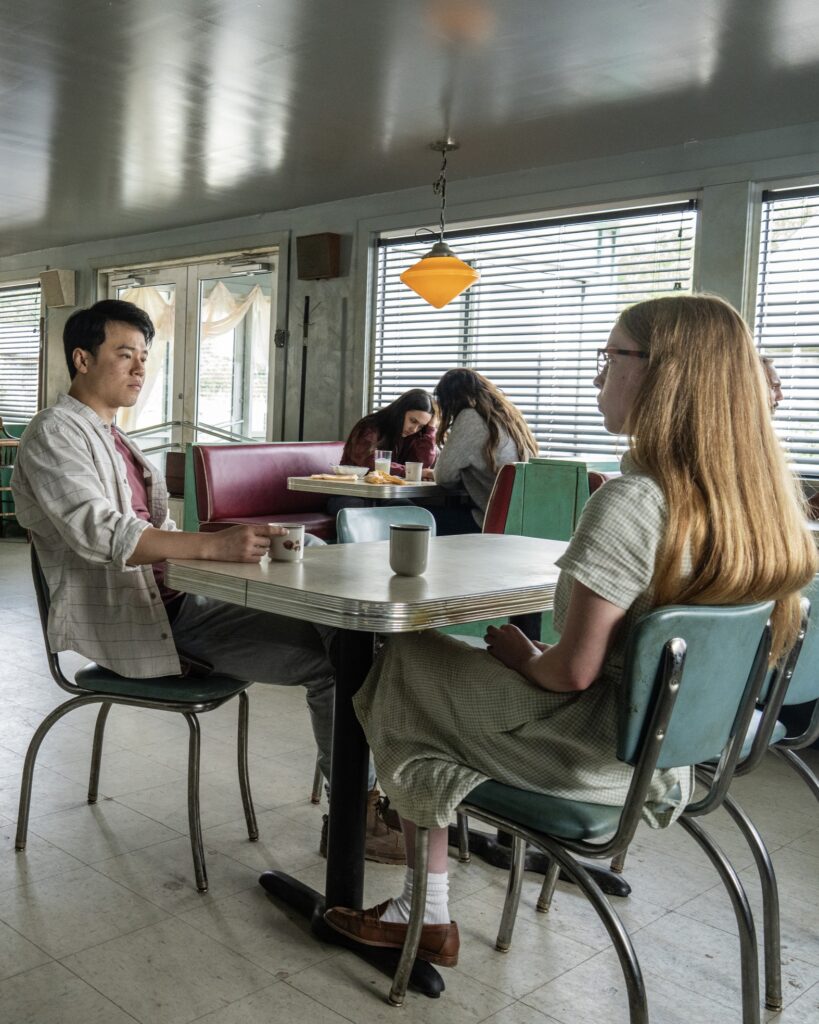

So, how do you also leave room for the possibility that the town can eventually overcome the Man in Yellow? Because he does seem like this force, where it becomes: how do they stop somebody like that?
Jeff Pinkner: Well, that is the trick, isn’t it? You want the bad guy to be as powerful as possible. And our bad guy specifically is entertaining to us because our bad guy thrives on suffering. He just wants our characters to suffer.
So the more hope our characters have of overcoming him, the more our bad guy delights in it.
You want a bad guy that’s as powerful as possible so that overcoming him feels like a real victory if our characters can, at the end of the day, overcome him. They may not be able to.
When Boyd started the season, he questioned how much longer he could bear the weight of the town and the constant losses. How important was it to push Boyd to that breaking point?
And what do you think the audience can learn about him, especially in this season, as he’s gone through those struggles?


John Griffin: I think the thing with Boyd…
And it’s so hard to separate Boyd from Harold at this point because Boyd is written to be a leader, and he’s written to be a leader that’s in over his head, but who leads with his humanity and with his heart and doesn’t always go in the right direction, but he’s doing the best that he can.
Harold just so exquisitely embodies that everyman quality. That guy who, no matter how beaten and how broken down he might be, is always going to get to his feet so that he can help lift you up.
And that, to me, is Boyd. He’s the guy who is always willing to put himself on the line to lay down so that other people can cross.
I think that the challenge of this season — and I think we’ve seen over the seasons how this place has made a point of breaking Boyd because, to a large degree, this place hinges — Tabitha and Jade are very important to the secret of this place, but Boyd is the spirit of this place.
I’m not sure there’s a limit to how much he’s willing to take to keep the people he loves and cares about safe.


FROM has always walked a fine line of answering questions only to create new ones. How do you guys decide when it’s time to give the answers?
When is the time to pull back? What is that process like for you guys when creating the show and making sure the audience stays engaged from beginning to end?
Jack Bender: Well, I will say that that starts with the writing. We kick it around. So, I would really pump that one back to you guys, who handle it so beautifully.
John Griffin: We always revert back to, in as best we can, how do we portray this as though it’s really happening?
How do we portray this as though it’s really happening to these people, that our characters are living in an actual experience, and how do we put the audience side by side with those characters?
And I feel like sometimes there is an expectation of like, “Oh, well, I’m going to get this answer by the end of this episode, and by the end of this season, they have to have wrapped this up.”


But I think that in terms of parsing out the information, Jeff said something to me in season one that always stuck with me and I thought was very, very smart.
He said, “Our characters don’t know they’re in a TV show. Our characters don’t know that there are certain answers that they’re supposed to get by certain points in the series.”
But at the same time, we want to make sure the audience, as you said, is engaged and feels the journey is rewarding.
So I think we try our best to thread that needle, giving the characters answers they’ve earned and not simply manufacturing answers to keep a certain timeline. Because at the end of the day, our characters have been dropped into this nightmare without a map.
And so they are doing the best they can, and this is a place that has been messing with their mind, so it’s a matter of even when we discover something, how can we trust it?
So, learning to trust their guts and learning to create this new calculus for this unknowable place, I think, is part of the journey for the characters and is part of the journey for the audience.


Obviously, at a certain point in the show, our characters start putting things together and realizing, “Oh, this is real, and this might not be, and this other thing has potential.”
And as our characters finally put the pieces together, our audience is doing the same. Hopefully, that’s been a rewarding journey.
Jack Bender: I think that it has to do with these moments that are sometimes ghastly but always try to be real. When we’re designing, what does it look like to have your eye gouged out by a screwdriver? And then what does it look like when it’s sewn up?
And occasionally people turn to me as we’re doing these things and going, “Whoa, is this too much?”
This comes to the editorial too, but we just make sure that we show enough rocks along the way.
Like walking over hot rocks to get out of something that you didn’t want to be in, but you have to step on the hot rocks along the way that are challenging and scary, which keep the characters from just focusing on survival while they’re focusing on the mystery.


Interviews like this take time and care — and we hope it shows.
If you liked hearing from me, please comment or share the article. That’s how we keep conversations like this going.
Stay tuned for more FROM coverage, interviews, and episode reviews.
You can watch FROM on Sundays at 9/8c on MGM+.
-

We spoke with the FROM EPs about the important beats for this season and the endgame for FROM Season 4. Come chat out our chat!
-

Elisabeth Röhm discusses her latest collaboration with Lifetime, Don’t Trust the Girls Upstairs, spotlighting Remy Ma, and women-forward projects.
-

We spoke with Jennifer Ehle and Sheila Atim about joining The Vampire Lestat and stepping into some iconic roles. Come check it out!