

Critic’s Rating: 4.5 / 5.0
4.5
Furious touches on the dark, terrifying beauty of female rage.
It’s not to say that a series wherein its two leads are so deeply traumatized that one has taken up a murder spree is inherently “beautiful” because obviously, that’s not the case.
But do you know what is beautiful? A series that dares to allow women, even victims, to be messy, ugly, and monstrous — something most media simply never affords female characters.

There’s an expository moment in Furious Season 1 Episode 1 where jaded, crass Nora sums up exactly what the series is trying to say with a raspy voice that truly scratches at an auditory pleasure zone in my brain because the delivery is just so damn perfect.
Drunkenly sitting at the bedside of a trafficking victim turned trafficker who isn’t even old enough to drive yet, she waxes poetic to Alice about what it really means to work in sex crimes and how society works.
And society likes its victimized women docile, lying on the floor, broken into pieces, vulnerable, exposed, and flinching.
There’s an idea that women who are victims can only look and be one way: submissive, broken beyond repair, and scared of their own shadow.
They’re not vengeful, powerful, volatile, or cruel — they’re a walking open wound with neon lights inviting pity or re-victimization.
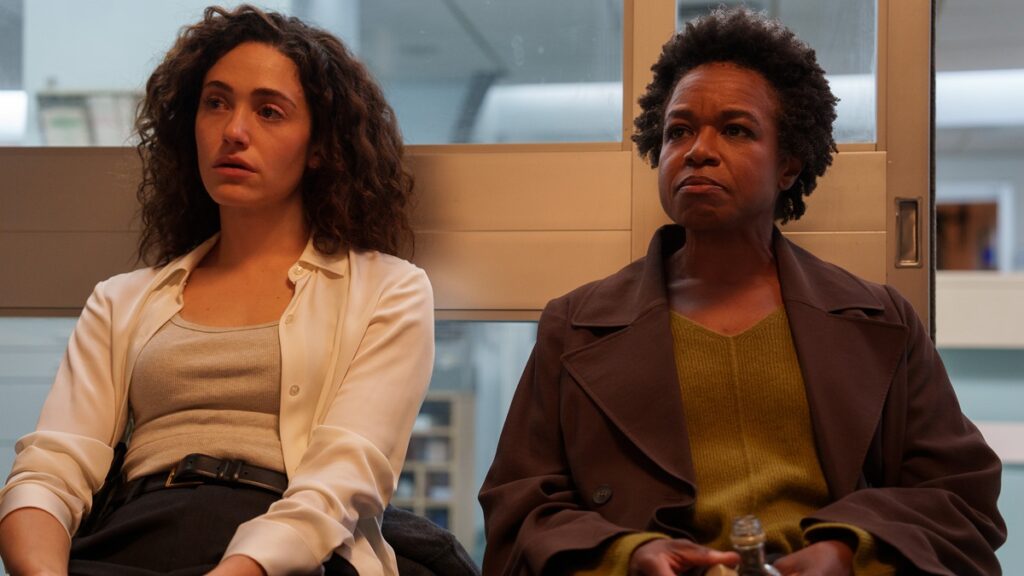

Women, as victims, are only ever interesting or worthwhile if they fuel some desire from others around them to save them, right?
So, it’s instantly refreshing for the queen that is Nora to cut through that sanitized version of victimhood in one brutal observation: “She’s a victim, but that doesn’t make her a good person. It turns her into a monster.”
And even more succinctly: “Victims of violence are the most violent.”
That’s what Furious gives us, a beautiful reminder of women having real agency, not just the idealistic version of it that strips them of the full gamut of emotions, instinct, and reactions that make them human.
Because we all know society rarely allows women access to the emotions and behaviors we ascribe to men, even victims and survivors of trauma. Anger, rage, fury, and violence are rarely on the table.

Through Catherine, we get an up-close-and-personal look at what happens when we create monsters. Is she a genuine psychopath or just a traumatized but vengeful victim?
Maybe the issue is that we always look at these things in binary terms. Like they can’t coexist, when clearly with Catherine, they can.
Because when we open with the flair that she takes with killing Easton, which is chilling and sets the perfect tone for what’s to come, it’s hard not to see that this woman is fundamentally broken.
Throughout the devourable first three episodes of the series, Furious isn’t reinventing the wheel here.
It’s combining so many elements from the equally broken law enforcement officer who serves as a foil to our antagonist, to navigating hot-button issues like misogyny, trafficking, and evil, powerful people doing terrible, horrible things.

Furious gives me the shades of the excellent and frustratingly short-lived Sweet/Vicious with a dash of Killing Eve to boot.
Emmy Rossum and Lola Petticrew are both captivating to watch, and with each passing episode, I’m eager to see what it’ll be like when they finally share the screen.
It’s fascinating to watch these two women battling their own respective traumas while on opposite sides. Alice is about justice and enforcing some form of law, and Catherine, well, it’s all revenge and disorder.
The two different sides of their story are such a subtle but rich dive into what trauma evokes in people, what it’s like when it’s still fresh and new versus how it is when it has taken root and poisoned a person.
We have Alice, who has ultimately changed her entire life because of an abusive relationship with fellow cop Marshall. Shifting from being a homicide cop to an FBI agent with a focus on Sex Crimes sounds noble, but given the bits we get of Alice’s past, it’s not exactly true.

It’s the little things like that which make her such a compelling lead, and Rossum, who was always remarkable in Shameless at capturing the layers and complexity of troubled women, does that well here, too.
Alice fleeing her position as a homicide detective feels more like running than a genuine desire to pursue something else. It’s part of why she always ends up back at crime scenes in the first place.
Shifting to the FBI feels like an absence of choice, and her desire to get into Sex Crimes specifically feels more as if it stems from her personal experiences with abuse than anything else.
Now that she’s been a victim, it’s like she finally sees them. It’s something Nora doesn’t shy away from pointing out, and it’s a great angle because it strips Alice of the idealistic notion that she got into this for altruistic reasons.
Alice is scarred, and she’s trying to channel that into good use while avoiding Marshall and his ilk, and that’s so much of the truth of it.

Her trauma still feels fresh — we see the heartbreaking moments of anxiety that hit her like a sledgehammer, typically at anything that reminds her of Marshall.
Throwing herself into work is how she’s coping, but it’s not a direct addressment of her problems. Her inability to shower is a prime example of that.
She’s carrying on trying to avoid triggers rather than working through them, and it’s clearly resulted in her shutting out important people in her life, like Amy and Danny.
Every interaction with Marshall typically results in trembling hands and panic attacks, and it’s evident to anyone who cares to notice that there’s truth to her claims no matter what the Blue Line bullcrap that iced her out says.
Alice hasn’t worked through her traumas and triggers. But Catherine is — just in the most violent and vengeful way imaginable.

That stark contrast is fascinating to watch, as is Lola Petticrew in general.
Alice hasn’t been able to move on, but in some ways, even with Catherine enacting this revenge spree, she can’t really move on either.
Catherine is terrifying because she’s learned to weaponize the skills from the same traumatic experience she endured. She reads people almost instantly, manipulates them with chilling ease, and understands exactly what others need to see to trust her.
Every wig, disguise, flirtation, and carefully orchestrated interaction feels like another reminder that years of exploitation taught her how to survive by becoming whatever someone else needed.
But what’s sad is that despite everything Catherine is doing, she’s eternally stuck as a teenager. She dresses and carries herself like one, does that youthful bound when she walks that reminds me of girls in high school.

The drugs she uses to kill these men who are connected to the death of Isabel — well, she carries them in a case covered in stickers and sparkles like a Lisa Franks trapkeeper.
When she steals Mari’s bag, wears her clothes and retainer, and dances around to dated pop music, it’s like she’s reliving her adolescence, or in that instance, trying to reinvent it with a version that feels normal and not a reflection of her experience as an underage trafficking victim.
Is Catherine a true psychopath or just stunted at an age where her prefrontal cortex wasn’t fully developed, and she’s riding on pure impulse and high emotions?
Her murder of Oliver was particularly telling. It seemed slightly more peaceful than Easton and presumably Murado when she lay there, and he told her that he didn’t know she was 15 when they had sex.
It was an admission that wasn’t enough to change anything, because he still did what he did, in her eyes, but it seemed like she let him slip away a bit easier with that newfound knowledge.

But there’s no real justice to admire when she also traumatizes a girl in the process. Keeping Mari around was shocking, and in passing moments, there was a genuine fear that she’d do something to the girl.
If there was ever a point where you could rationalize Catherine killing the men who caused her harm, it’s the collateral damage she destroys in the process that reminds us of how she’s undeniably wrong.
Mari sitting at the foot of her dead father’s bed, with her hair cut, after hearing about how her father abused a teenager — that’s going to screw that girl up beyond repair.
Catherine merely passes on more trauma while seeking vengeance for her own and Isabel’s.
And then there’s Becky. Catherine seduced her, likely saw her as just another person who took advantage of a power dynamic, and then she uses her up and kills her. Becky messed up, but she didn’t deserve death for it.
But what does it say about trauma when you have someone like Catherine working through it with affirmational videos and murder and someone like Alice who isn’t working through it at all?

These women are just so deliciously human.
The series hints at an unspoken link between them. Alice isn’t some profiler, but she does have an innate understanding of what Catherine is doing, even if the mostly male counterparts don’t seem to get it.
Of course they don’t get, though, right? It just highlights the usual workplace misogyny and chauvinism that has her boss sticking her on phones and Choi favoring Marshall’s opinion over hers.
No one wants to really entertain that their serial killer could be murdering powerful men that harmed her because most of them are too afraid of the powerful men in question, or they’re too sexist.

It sounds familiar, right? From the P. Diddy Case to the powerful cabal connected to the Epstein files, Furious couldn’t be more timely if it tried.
There’s a bit of idealism to Alice that still has her believing that tracking down Catherine will also include getting the powerful men who harmed her to pay as well. She’s a bit desperate in that regard, but her own complicated situation with Marshall likely drives it.
She can’t quite get him to pay, with other cops backing him; others would rather not know what he did.
Marshall himself feels that since he’s supposedly worked on himself and got his drinking under control, she should simply stop talking about the abuse she sustained or put an end to the “rumors” circulating so he can continue rising in his career.
Accountability is often a pipe dream rather than a reality, so it makes sense that Alice is clinging to some idea of it with this case.

Fortunately, she has at least two allies to help her navigate her personal and professional messiness. They’re also two of the best dynamics of the series thus far.
Nora is a great ally, but she is also jaded, hardened, and knows that Alice has to earn her bones; otherwise, the job will swallow her up alive.
Of all the dynamics on the Furious, Alice and Nora’s is the most intriguing. Even regarding the concept of solidarity and sisterhood in the workforce, there’s a tenuous nature to it.
It feels, for lack of a better phrase, more distinctly feminist in its depiction of their bond than any of the flowery “girls supporting girls” concepts we’re typically sold on. It’s honest and real.
You sense that Nora sees the makings of a great fit to the unit, ironically because Alice is so messy, broken, and maybe even “cold” rather than despite that.
And Danny is also a great addition.
As her former partner, there’s a loyalty and familiarity there that feels necessary to ground Alice as a character. But there’s enough friction and tension at times that still leaves Danny hard to place.
It’s clear he’s walking a tightrope as someone whose career was deeply affected by backing Alice, no questions asked. And while he’s loyal to Alice, he does read as resentful at times that he risked so much for her.
One of the most dynamic scenes in the first three installments was the two of them confronting what had happened to her.
Danny says he never asked Alice what truly happened because he figured she’d tell him when she was ready, which is a valid position to hold when you know someone has experienced abuse.
But two things can be true at once, and Alice was right to call him out on not asking her anything because, deep down, he really didn’t want to know what happened to her.

But seeing the effects and hearing bits from her sister, and even paying attention to the interactions between Marshall and Alice, have given him more context and seemingly shifted his approach to Alice in all of this.
One of the most powerful moments was when he figured out what she needed and how to deliver it for her — promising to sit outside the shower, simultaneously giving her privacy, dignity, and support.
He handled that perfectly, and that was a true act of love.
There is a sexual tension beneath their friendship and partnership, and maybe the series will take it further down the road, or maybe it won’t, but whatever they do with the pairing, they have such great chemistry.
However, just as Danny seems like a strong ally, his arc also could potentially lead somewhere disappointing, whether it’s a betrayal that’s distinctly and frustratingly a product of his maleness or a potential sacrificial lamb, I can’t decide.
But I’m equal parts intrigued by Danny and wary of him, which makes him a great character to watch.

Clearly, Alice is the one who can crack this case wide open, and with Danny and Nora on her side, we have an interesting ride ahead of us.
But more than the inevitable showdown between Catherine and Alice, I’m eager to see whether Furious stays committed to the messy humanity that makes it so compelling.
It refuses to reduce survivors to saints or villains, recognizing that trauma doesn’t erase agency or complexity.
In a television landscape that still too often demands women be inspirational to deserve empathy, that’s the boldest thing Furious has done, and I sincerely hope it doesn’t stray from that.
Thoughts and Things:

- I love how they weaved in the tale of Medusa. She’s become a powerful symbol for sexual assault survivors but a perfect depiction of how victims become monsters.
- Marshall’s discomfort at the DV shelter, having to face a depiction of what he did, was a great scene. It ultimately led to him manipulating Alice into talking to his mother and exposing that same penchant for violence, which was also poignant.
- Oliver making Catherine sign that NDA made me physically ill. How many women signed over their rights?
- I loved the shot of Catherine and Oliver standing in front of the bed. He towers over her by nearly a foot, which gives the illusion that he’s the one who has all the power, but we ultimately know that’s not the case.
- Not to get all Epstein Island again, but I have some theories about what happened to Isabel, and none of them are good. Something tells me that Catherine probably wasn’t supposed to survive the ordeal either.
- It’s heartbreaking that Alice didn’t have a mother, and now the woman who prided herself on being a maternal figure went all “Boy Mom” on her. The transactional approach that people take with traumatized individuals strikes again — she wanted gratitude and loyalty. Her love for Alice was clearly conditional.
- Coming off The Vampire Lestat, and an entire season devoted to touching upon sexual violence and trauma, I’m so deeply moved by the layers afforded to survivors onscreen these days.
Over to you, Furious Fanatics. It’s a long one, but I hope you enjoyed this review, and if you did, I’d love to hear your thoughts about this series.
How is it landing for you? I’ll see you below in the comments!
Furious will stream all-new weekly episodes, Mondays on Hulu.
-

While Lestat and Louis fight for their lives, Armand looks to make amends and receive them in The Vampire Lestat Season 1 Episode 7. Our review!
-

Is the pond a curse or a blessing? The Way Home Season 4 Episode 9 gets serious as many lives hang in the balance after a horrible explosion.
-

Black Sands ends with an emotional, beautifully layered finale that explores motherhood, trauma, and the enduring power of unconditional love.
-

Black Sands Season 2 Episodes 5 & 6 finally expose the horrifying truth behind Gullsander, and it gives us chills!
-

Half Man Season 1 Episode 5 is back with the physical and sexual violence as Niall and Ruben’s codependence takes another shape. Our review!