

Nothing beats an unexpected twist that leaves you breathless and eager as a pilot comes to a close, and Line of Fire delivers one that changes how you see everything you just watched.
From the brilliant mind of Joshua Safran (Gossip Girl, Quantico, Smash), Line of Fire delivers on its promise of intrigue, action, and messy family dynamics in its enigmatic debut.
What initially begins as a look into a messy family working in protective services quickly spirals into something much more complicated.
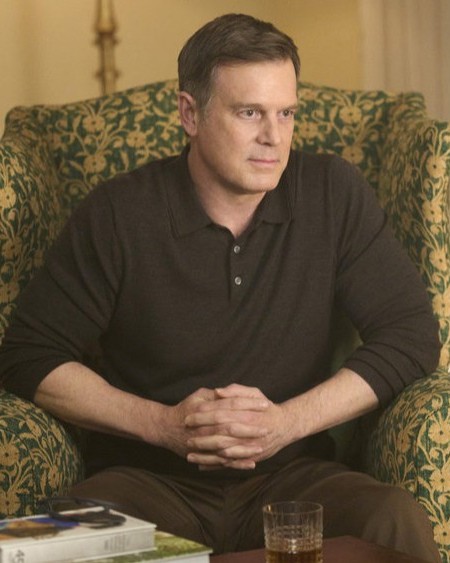
From the promotion alone, it was clear Line of Fire would be about family, mixed with law enforcement, crime, and everything nice, but the pilot does more than introduce the characters and central themes; it takes you on an intricate ride.
Getting to know the Hollingsworth family is only part of the fun. The pilot asks you to watch how these characters move, interpret their motives and dynamics, and piece together how everything works in this family, and what secrets may be festering amongst them.
For showrunner Safran, the real pitch for the series was something he couldn’t say publicly without spoiling the biggest reveal in Line of Fire Season 1 Episode 1.
“So, when I pitched this show, actually the pitch is not what I’ve been publicly saying because I can’t have said it, obviously. It was a family of law enforcement agents who have to deal with the fact that their biggest adversary is their own child or brother. And that was what the show was.”
With television veterans Peter Krause and Hope Davis at the helm of the Hollingsworth family, the series is rounded out by Kat Cunning, Tommy O’Brien, Taylor Bloom, and Charlie Barnett, all of whom bring something unique to the ensemble.
In this wonderful conversation about the new series, Safran gives insight into what we’ll see throughout the season (Thanksgiving episode! Family feels every week!), how the cast helped shape these characters, and how he’s bringing the procedural and family drama together.

I wanted to start at the end of the pilot and go from there because it was genuinely shocking in ways not every show can pull off. What I loved most is that it didn’t just introduce the mystery; it also changed the way you view the family even more.
What can you tell us about that Jack reveal? And was it always meant to be the endpoint when you were breaking the pilot?
Yes. So, when I pitched this show, actually the pitch is not what I’ve been publicly saying because I can’t have said it, obviously. It was a family of law enforcement agents who have to deal with the fact that their biggest adversary is their own child or brother. And that was what the show was.
Everybody heard that when I was pitching it, and I had to keep that quiet all along because what interested me was not just doing a show that could have been in the Dick Wolf Universe or Blue Bloods, a family of people who do this thing. Every family has one or more people that feel a little bit outside whatever the nucleus is.
My brother moved to Hawaii, and we all live in New York, and his life is incredibly different than ours. And for him, it’s a great life, but it’s very different, and I can’t understand it, and he can’t fully understand mine.
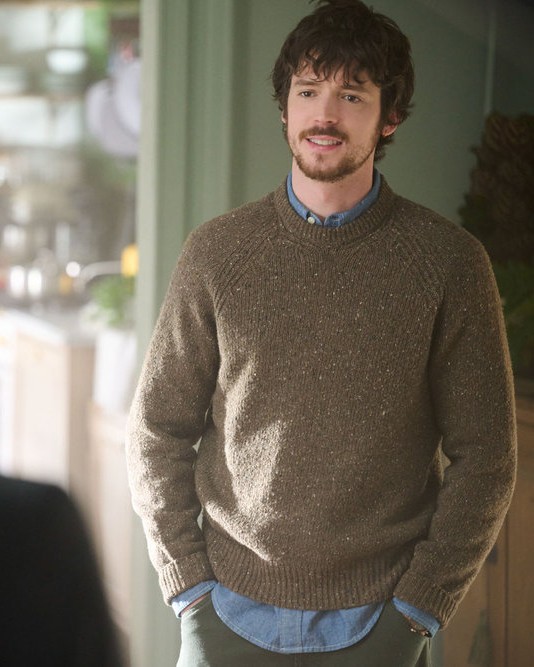
Every family has that. I was very interested in, okay, well, if you spent your entire life in a protective services position, what’s the worst thing that could happen inside your family that would really shake that?
And it’s somebody threatening the idea that you were ever safe, or could be kept safe, or could be made safe. But also, obviously, there’s more than meets the eye to Jack and what’s happening there. It’s not as kind of dry as in the pilot.
Only poor Charlie Barnett knows that. No one else does.
@media (max-width: 768px) {
.tvf-google-cta {
padding: 22px 14px !important;
}
.tvf-google-cta p {
font-size: 22px !important;
line-height: 1.25 !important;
margin-bottom: 16px !important;
}
.tvf-google-cta a {
font-size: 14px !important;
padding: 10px 18px !important;
border-radius: 34px !important;
line-height: 1.3 !important;
}
}
Add TV Fanatic as a Trusted Source on Google!
Get More of Our Coverage!
Of course. And in that vein, because we’re dropped into meeting everybody and everybody has so much history, are we going to get flashbacks or any glimpses into the family’s history that allow us to see the events that shape them?
So funny, we’re always in the writers’ room, I’d say every three episodes, we’re like, “let’s do a flashback structure where every act starts with a flashback.” And invariably there’s so much story in the present-day that we have to actually take it out, and it never makes it to the page.
There is, I think, frankly, if I hadn’t been blessed with such incredible actors who can play the past as they talk in the present, I might feel like we need it.
But I actually feel like you understand the dynamics between these family members so clearly that you almost don’t need it. And they talk about it a lot.
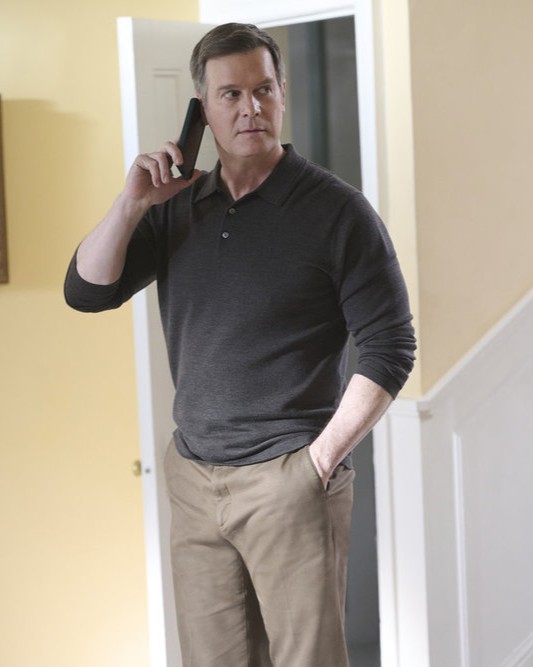
Jane and Mike talk about Jack in every episode moving forward, and they’re shifting their feelings about it and what it could mean, and other people talk about Jack too. So, you’re getting it; you’re just getting it through the present.
We’re doing the Thanksgiving episode now. I was like, damn it, I really wanted a flashback to Thanksgiving five years ago. But it didn’t fit. And frankly, when you watch it, I think you won’t need it. I think you’re like, “Okay, I understand this.”
And weirdly, seeing Charlie play Jack with the family would actually take away some of what Charlie is building or what the show is building.
It might honestly take some of the air out of the balloon because you’re watching.
You are an active participant, to be like, “Well, this member was with this family, this family member was part of his family, and they all loved him, and they all cared about him, and now he’s doing this other thing. How could that happen?”
If you see who he was, you’re not putting together your own sort of path to the past. I’m giving you A and C, so B is easier to find. So, I don’t know. It’s funny, you’re the first person to ask that, and thank you for that. We’ve been struggling with that, but I do believe this is the right choice for now.

You brought up the family dynamics, which are so great.
That’s something else that really struck me: the family feels really lived-in and like a real family, even though they have these really high-ranking and powerful positions, and the average family wouldn’t necessarily have those, right?
How much of that chemistry with the cast was established before they even got on set? And how much did they discover when filming the episodes?
Totally. I think this was the first show where, as I was writing the pilot, I was like, okay, I’m going to assign a word to each of the characters. And that word is the word that I feel like every scene needs to showcase. So, for Jane, it’s distrust.
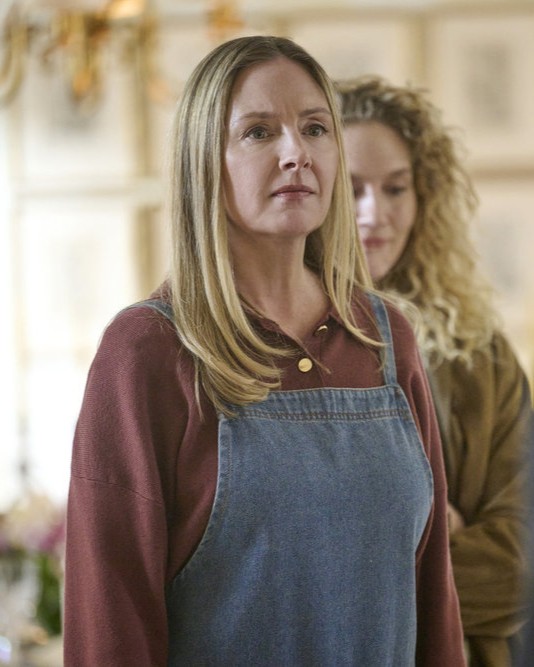
Jane walks around the room, and in the world, she can be very nice to be around, and you can have a great conversation with her, but she doesn’t trust anything happening around her. She is the moral center of every room that she is in, to herself.
I felt like, on the page, and I think that’s one of the things Hope first said to me, how clearly defined the parents and the kids were. She understood them completely. But then, of course, the actors come in.
I have the incredible honor…I can’t believe it. It’s beyond me that one of my casting directors won the Oscar, the first Oscar for casting, Cassandra Kulukundis.
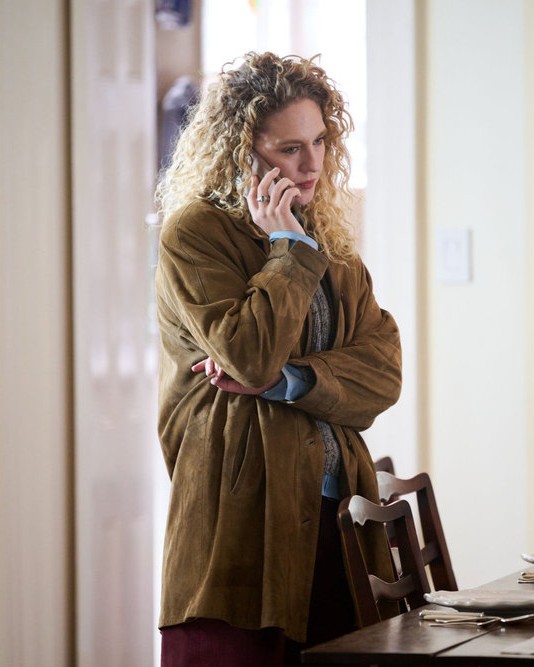
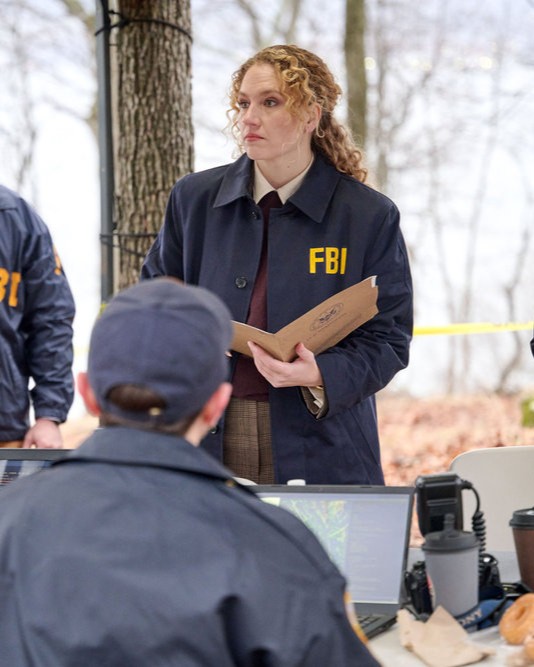
And I worked with Cassandra for several shows. And what Cassandra does is she knows how to find the vibe, even if it’s a little different than what I wrote. Like Kat is not somebody that I knew beforehand, but then when Cassandra brought Kat, I was like, “Well, that’s Claire.”
And Becca Thomas, the director of the pilot, who directed episode two and is also directing episode eight, we were separately in our rooms, and we texted each other, “Have you seen Kat?” I honestly don’t know if I thought Claire would be as soft as what Kat brings in.
I kind of always thought of Claire as a Clarice Starling type, very sort of like she grew up with her mother who doesn’t trust anything, so she grew up in a household where she didn’t feel trusted, so she was kind of guarded.
But Kat has such vulnerability and softness and openness that it added a layer. And now I love the fact that Jane’s protectiveness allowed Claire to actually be vulnerable because she’s like, well, Mom has it. Mom will protect me.
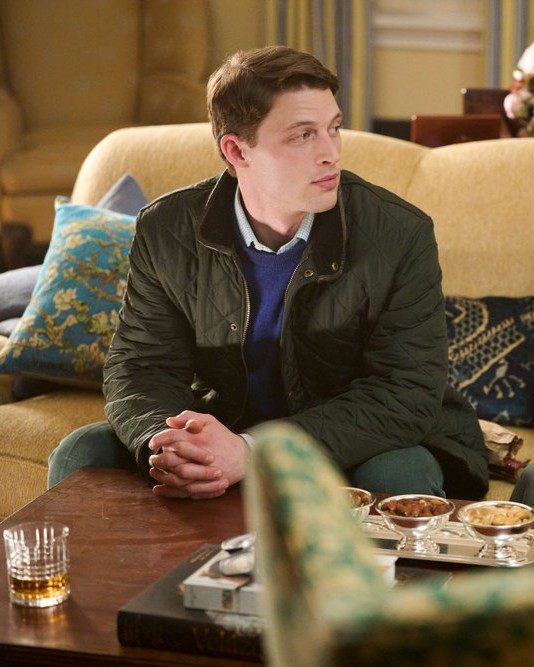
There’s also a little bit of ‘Mom hasn’t protected me’ now that they’re older. As we all grow up, we see our parents as more human and less as these figureheads, right? You said you have a kid yourself, so do I. So we all know that’s coming for us.
And I think for Claire, she’s like, wait, my mom wasn’t protecting me, and now she has those issues. So, they did bring a lot, all of them.
I can’t believe how much Taylor has influenced Ross. He was a server in a restaurant near my house. I didn’t know that until after we cast him. He’d done a couple of days on American Horror Story, but that’s it.
And he showed up with these veteran actors like Hope and Pete on day one and just got into the river with them and went down the stream with them, and it’s as if he’s always been there.
Then Tommy had tested for Gossip Girl for Cassandra and me. Even though he’s the same age as the actors we cast, he played older, but he was always in Cassandra’s head. And so, when I gave her this, she’s like, “Oh my God, Mike is Tommy.”
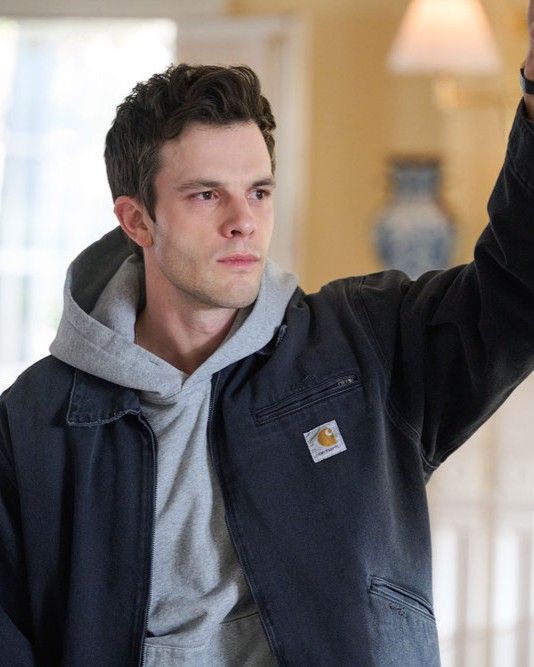
So, I’m saying it’s all there, and they definitely bring so much to them. Obviously, Hope and Pete are like titans of the industry.
Pete has this thing that Mike has, which is that he’s so kind, he’s so warm. You see him, you want to go up to him. Pete’s never somebody who’s not going to sit with you and talk to you for 10 minutes. And that’s Mike.
And Hope has done so many things in her life, so many different roles, indie films, stage, all these things. She has this air of the queens, you know what I mean? She just walks into a room, and you are somebody special. And that’s Jane.
She’s a federally appointed marshal. She was a US marshal, but she’s a government employee. She’s like a senator. Hope has that.
So, they bring these things, and then they get filtered through all of us. The best thing, too, is, of course, we’re shooting across the street. So the writers are all on set for their episodes.
This is old-school broadcast. It’s not screening where you turn in your script, you’re gone, and you’re not there. We all get to know them. Everything is a feedback loop.
You brought up Gossip Girl, and I saw that you said on Twitter that this is a procedural Gossip Girl. I got those vibes during the whole family sequence in the pilot, and even with that great musical drop at the end, when the big mystery is going on and the amazing song ‘In the Waiting Line’ is playing.
How do you approach balancing the case of the week, while also having the more serialized family drama and big mysteries on the other side?
That’s where the Gossip Girl thing comes in, or Quantico. Gossip Girl’s plot, the actual titular Gossip Girl plot, is a procedural.
She drops something in the beginning of the teaser that everyone is trying to get away with something, and they can’t, and that thing explodes, and they have to solve that thing, and they think they vanquished Gossip Girl, and then the next drop happens.
So weirdly, Gossip Girl is always a procedural. I’ve always said Gossip Girl is a procedural. Everybody always got to the same event. Everything always blew up at the event. It had the structure of: we got the arrest, and now we have to prosecute.

It’s the same thing as a procedural. So weirdly, the battles I’ve been doing forever; it’s just that it was more hidden in Gossip Girl.
Quantico is the same thing. The joke was that it was Grey’s Academy.
So, you had the things they were doing every week that they were learning in the academy, but then you had all of the soap.
It’s just in my bones now after 20 years of doing this. And I think what I love most about this show, which I wasn’t fully able to do in Quantico, for instance, is to play the dynamics of the family.
They’re looking over Libby’s body — Jane and Claire, the pilot — but she’s saying, “When do I meet your boyfriend?”
They’re able to talk about their family. The soap really is a layer on top of the case, as opposed to, “Now it’s time for the case. Now let’s get back to the soap. Now let’s go to the case again.” They really are intertwined.
One of the things I pitched about this show was that every episode, two or more family members will work together on a case, and that is true.

There’s never an episode where it’s just one person on a case, and it doesn’t impact their family in some way. You’re always going to get the soap layered on top of the procedural. You’re never going to just get straight Claire is on a case and not talking to anybody else.
There’s one episode now where Claire’s on a case, and yes, Jane’s not on all the time. She has to call Jane; she has to call Russ. She needs things from everybody. The balance becomes less important because it’s always intertwined.
It allows us more freedom and storytelling, whereas I think it would be harder if we did have to stop for case speeds and then, okay, let’s get back to that.
And the most fun thing in the world for me is the sequence in the pilot, the dinner sequence where all of the guns are loaded and they’re all pointed at each other, and then they all show up together like that. We try to do that.
Episode three has one of those as well where everybody gets together on a case, whether they want to or not. I live for those. They’re musical sequences to me. That’s the Smash and soundtrack side.
*************************************************************************************
Interviews like this take time and care — and we hope it shows.
If you liked hearing from me, please comment or share the article. That’s how we keep conversations like this going.
You can watch Line of Fire on Mondays at 10/9c on NBC.
-
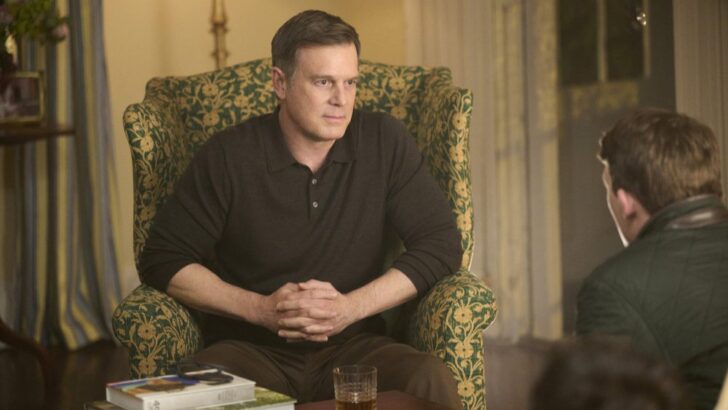
Showrunner Joshua Safran on Line of Fire, That Big Twist, and Why Family Comes First
Line of Fire is off to a wonderful start, and we spoke with showrunner Joshua Safran about the big twist and what’s ahead. Check it out!
-
Lioness Season 3 Interview: Dave Annable on Neal Being “Broken” and a Possible Yellowstone Return
TV Fanatic chats with Dave Annable about all things Lioness Season 3 and a potential Yellowstone franchise comeback.
-
Lioness: Laysla De Oliveira on Cruz’s Love Life, Her Evolving Bond With Joe, and Becoming a Super Spy
Laysla De Oliveira speaks with TV Fanatic about Lioness Season 3, including Cruz’s love life, her bond with Joe, and more!
The post Showrunner Joshua Safran on Line of Fire, That Big Twist, and Why Family Comes First appeared first on TV Fanatic.