

I’ve been watching Barnaby Jones on Prime Video lately.
First, don’t laugh at my choice of TV. Second, there is a point to this because, among other things, I have become intimately acquainted with a pond. A dirt road leads to it. There are dirt roads everywhere, actually.
They’re the kind of roads that apparently led to every remote corner of America in 1970s television, whether the characters were headed somewhere just outside Los Angeles or venturing into parts unknown.


I assume there was a perfectly practical reason for this.
Productions used what they had. Studio lots didn’t have an endless supply of paved roads, suburban neighborhoods, small towns, forests, farms, and whatever else that week’s script required, so Buddy Ebsen drove down the dirt road again.
And nobody cared. I certainly didn’t.
That’s the part I’ve been thinking about lately, especially after reading an UnHerd article lamenting the increasingly placeless nature of television.
The author focused much of his attention on Netflix, arguing that its shows increasingly exist in a borderless “Netflixland,” where places may have a general aesthetic but little actual identity.


Welcome to the party.
We talk about this at TV Fanatic all the time, and while Netflix certainly deserves its share of criticism for homogenizing television, I can’t blame the streamer for this one.
American television has been lying to us about where we are for as long as I’ve been watching it. The difference is that when I was a kid, I didn’t know it.
I grew up watching Westerns and dramas supposedly set throughout the United States, and if a story took place in Colorado, there were mountains. Obviously. Colorado had mountains.
When I moved there in the 1980s, I was stunned.


Denver wasn’t nestled between towering peaks. It sat on the high plains, flat as could be in most directions, with the mountains rising dramatically to the west. You could drive around for miles without encountering anything resembling the Colorado television had taught me to expect.
I had never been there before. There was no internet waiting to correct my assumptions. Television was one of the ways we saw places we had never visited.
And television had shown me a Colorado that largely didn’t exist.
Decades later, we have virtually unlimited access to the world, and television is still doing the same damn thing.
The excuses should be disappearing. Instead, we’ve gotten better at the deception.


Productions don’t have to stay on a Los Angeles backlot anymore. They travel all over the world. Unfortunately, they frequently travel somewhere interesting only to ask that interesting place to pretend to be somewhere else.
Toronto has apparently been elected mayor of every American city.
Vancouver has played so many places that I’m not entirely sure Vancouver is allowed to play Vancouver anymore.
Georgia’s massive production industry has allowed it to become anywhere a production needs it to be, while enormous portions of the actual United States remain almost entirely unexplored on television.
Even when Hollywood gets relatively close, it sometimes can’t quite bring itself to cross the finish line.


Everwood was explicitly set in a fictional Colorado town. Its pilot was filmed in Alberta, Canada, before production moved to Utah for the remainder of the series.
Utah!
You made it to the neighboring state. Keep going!
But the question isn’t really why Everwood didn’t film in Colorado. There are perfectly reasonable answers to that question, just as there are perfectly reasonable reasons that so many American productions film in Canada.
Money matters, as do tax incentives, established production facilities, and available crews. Nobody expects a television series to throw its budget out the window because I would like to see the correct shrubbery behind somebody’s head.


The more interesting question is why we keep traveling to real places and refusing to let them be themselves.
One of our writers recently had that experience watching The Agency.
Scenes set in the Central African Republic were filmed in Kenya, and because he is Kenyan, the illusion immediately collapsed. Kenyan brands hadn’t been completely covered. The flora was wrong. The buildings were wrong. Gas stations and shops were unmistakably Kenyan.
He joked that he had to double-check whether the Central African Republic had suddenly introduced Swahili into public life.
Most American viewers wouldn’t notice, but he did. And that’s precisely the point.


There’s something wonderful about recognizing your world on television. There’s also something uniquely disappointing about recognizing it only to discover that television is insisting it’s somewhere else.
Why?
If you’re going to Kenya, why aren’t more stories allowed to take place in Kenya? If you’re going to Ontario, why can’t Ontario occasionally be Ontario?
If you’re using a beautiful Canadian small town to represent an American small town, could someone perhaps write a story about the Canadian town you’ve already decided is beautiful enough to put on television?
We’re surrounded by places worth telling stories about, yet television seems strangely frightened of letting us know where we are.
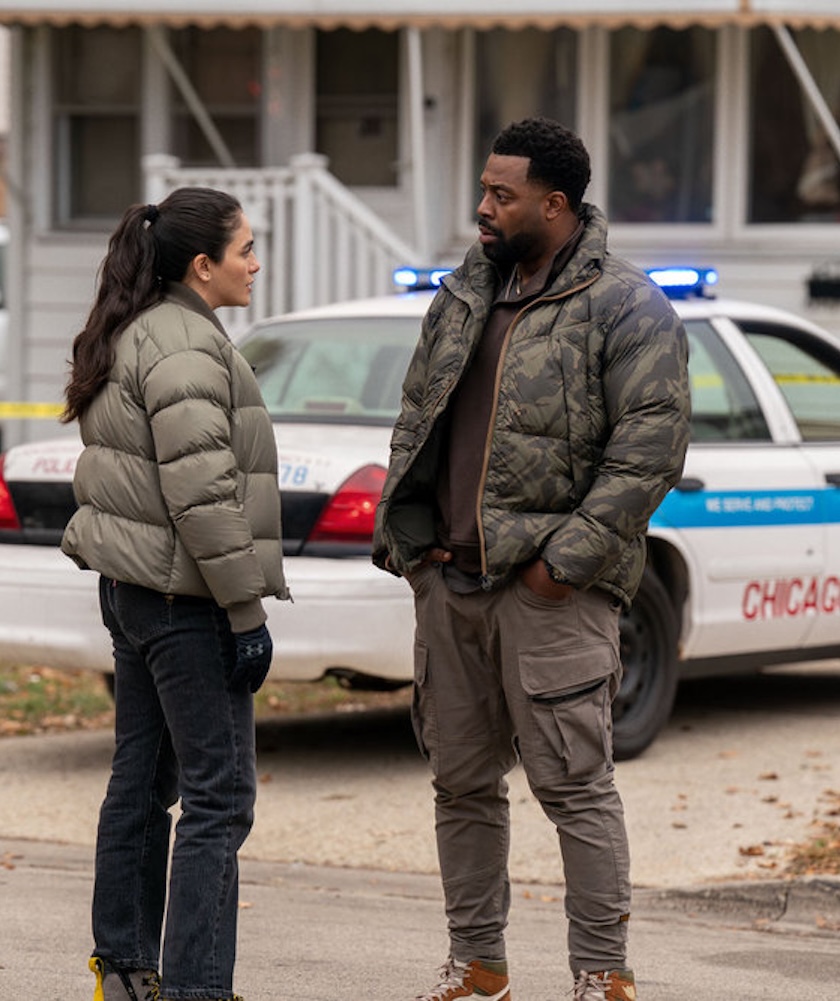
America alone is enormous. Its regions aren’t interchangeable. Its cities aren’t interchangeable, and neither are its suburbs. They look remarkably different from suburb to suburb, city to city, and state to state.
But you wouldn’t necessarily know that from watching television.
New York gets to be New York. Los Angeles gets to be Los Angeles. Chicago gets a respectable amount of screen time. Atlanta and parts of the Carolinas have become increasingly familiar. Florida is Florida. And apparently if you live anywhere in Texas, Taylor Sheridan has already scouted your backyard.
The rest of us? Good luck.
We’ve joked among the TV Fanatic staff that American television seems convinced the country consists of the coasts, Texas, a few major cities, and some mountains.

Even the suburbs, where a huge portion of Americans actually live, get strangely little authentic representation. When television needs one, a familiar studio street is always ready to play Generic American Suburb #436.
This doesn’t stop at the United States.
This is a world full of cities, towns, landscapes, architecture, customs, accents, weather, businesses, food, and people we rarely see. Production has become increasingly global while storytelling somehow keeps circling many of the same places.
That’s bizarre. It also matters more than I think we realize.
Place isn’t just a pretty establishing shot before we go inside and get on with the story. Place tells us who people are.

It’s the kind of house they can afford, whether or not they have a backyard, and what they call the convenience store down the street. It’s how far they’re willing to drive for dinner, the weather they complain about, and what people do for work.
It’s whether everybody knows everybody or nobody knows the person living across the hall.
It’s the architecture, vegetation, roads, accents, clothes, restaurants, schools, local traditions, and a thousand other things a production designer can try to reproduce but will never entirely control.
Those Kenyan gas stations weren’t production mistakes in Kenya. They were Kenya.
That’s what we lose when every location becomes raw material for someplace else. And when television does embrace place, you can feel the difference.


The Wire doesn’t merely happen to be set in Baltimore. Baltimore is woven into everything it wants to say.
Friday Night Lights needs Texas. Homicide: Life on the Street needs Baltimore, just like The Bear needs Chicago, Yellowstone needs Montana, and Sex and the City needs New York.
Take away those places, and you haven’t merely changed the scenery. You’ve changed the shows.
That’s probably why Taylor Sheridan came up repeatedly during our staff conversations about this.


Whatever complaints anyone may have about his work, his stories tend to know where they are. Montana isn’t interchangeable with Oklahoma, and neither is interchangeable with Texas. The land, the industries, the histories, and the people become part of the story.
Place is allowed to be a character.
Ironically, one of the television shows that probably taught viewers more about the Colorado I eventually came to know is South Park.
Yes. The cartoon.
The fictional town exists within an identifiable Colorado landscape and culture. Over the years, the series has incorporated actual Colorado places and references, including Casa Bonita, and its creators clearly understand the state they’re mercilessly making fun of.


Somehow Stan, Kyle, Cartman, and Kenny have a stronger geographic identity than countless live-action characters standing in front of actual mountains.
That’s quite an accomplishment.
The UnHerd article that got me thinking about all of this argues that great television tells us where we are, while increasingly homogenized television tells us we’re nowhere in particular.
I think that’s right. I just think the problem is much older and much bigger than Netflix.
We’ve spent decades allowing television to convince us that one dirt road could lead everywhere, one suburban street could house everyone, one Canadian city could become half a dozen American ones, and one familiar landscape could stand in for enormous portions of a country.


Once upon a time, there were good reasons for some of that.
What’s the excuse now? We can go anywhere. More importantly, television does go everywhere. It just keeps arriving in these fascinating places and asking them to pretend to be somewhere we’ve already seen.
Maybe that’s the part we should change. A location is where you shoot a television show, while a place is where the story lives.
And for an industry with more locations available to it than ever before, television seems to be running dangerously short on places and the differences that bring them to life.
I don’t have answers. But if we can handle the location shoot, we can probably handle setting the story in that place, too. We’re experiencing global entertainment without the benefit of globe-trotting through what we consume.


And that’s a shame because I want to experience more of the world through entertainment, not less. With all the places we can go and people we can meet online, I think we’ve grown past needing stories to happen somewhere familiar-sounding.
We talk an awful lot about diversity in entertainment, but diversity isn’t only about who appears on screen. It’s also about where they live, how they live, what surrounds them, and all the little differences that make one place unlike another.
We aren’t afraid of those differences. We’re curious about them.
Television should trust us enough to let us see them.
-

Nine years after the scene aired, I still can’t get over why Sheldon’s Hindi was so bad, and why nobody asked Kunal Nayyar to fix it.
-

Filmmaker Nicholas Meyer reflects on Time After Time, The Day After, and the 1983 television event that changed how America thought about nuclear war.
-

Relive the best music moments of The Vampire Diaries – from Ed Sheeran’s Season 3 ball scene to Damon and Elena’s iconic motel kiss.