

Star Trek premiered in 1966 and changed the face of science fiction television forever.
Rather than presenting aliens exclusively as monsters and villains, it chose to view the universe’s residents as equals to humans — potential allies and even aspirational communities.
So if fans in 1966 could embrace Star Trek’s allegorical message of diplomacy, unity, and diversity, and build it into a 60-year-young franchise, why do today’s viewers seem so determined to burn it all down?


Woke From The Beginning
To appropriate the lingo of the present, Gene Roddenberry’s vision of Star Trek was one of diversity, equality, and inclusivity from the very beginning.
He cast women in positions of command. There were people of color in the core cast.
Relationships and power dynamics represented interactions no one had dared put on U.S. television.
Famously, on Star Trek: The Original Series Season 3 Episode 10, “Plato’s Stepchildren,” William Shatner and Nichelle Nichols shared the first scripted kiss between a black person and a white person on American television.

Despite initial concerns from NBC, there was no notable public outcry. What the kiss did do was send the message that, in the world of Star Trek, racial barriers did not exist.
It should be noted that, while there were objections to depictions on “Plato’s Stepchildren” of torture and sadism, there were none to the kiss.
This, despite the episode airing a mere year after the U.S. Supreme Court struck down laws prohibiting interracial marriage.
The Next Generation & Deep Space Nine
Twenty years later, Star Trek: The Next Generation premiered. There were criticisms.
Fans of TOS wanted more Spock and Kirk, specifically, and a less philosophical approach to inter-species and cross-cultural relations.

But the introduction of a unisex Starfleet duty uniform, termed a “skant”, raised nary an eyebrow.
Essentially a mini-dress/tunic worn by both male- and female-presenting crew members, it was a major move toward inclusive costuming, sending a clear message that the design’s functionality would take precedence over perceived gender norms.
Over its seven seasons, Star Trek: The Next Generation aired episodes that addressed many social issues, including but not limited to conversion therapy, xenophobia, and the right to self-determination.
When Lt. Commander Data decided to become a parent on ST: TNG Season 3 Episode 16, “The Offspring,” he asserted that he would let his child choose their own sex and appearance. The android gets it.
In 1994, on Star Trek: Deep Space Nine Season 2 Episode 19, “Blood Oath,” this classic moment between Jadzia, the Trill host of the Dax symbiont, and Dax’s old friend Kor drove home the message that names matter.
Not so hard for a Klingon — and an old, horny one, at that — so why are #TransRights so hard for audiences 30 years later?

Cutting to the Chase
Short answer: They aren’t. And neither are all the other “woke” and DEI-driven messages Trek loudly and proudly champions with every iteration.
Trek fans are overwhelmingly in support of justice, equality, and diversity. It’s the core of Star Trek.
Federation crews represent diversity. Starfleet’s mission is one of exploration, driven by curiosity, not conquest.
But Trek fans, like most fandoms, grow attached to a nostalgic sense of stability. And they’ll grouse about changes because change is hard.
Star Trek fans have always had more than two cents to put in about the direction of the franchise.

Fans complained when The Next Generation premiered. They were also not very nice to many main characters and the actors who portrayed them.
They didn’t like Deep Space Nine’s focus on conflict and the fact the space station was, well, stationary.
Star Trek: Voyager’s return to episodic narratives didn’t please everyone either. Why strand them in the Delta Quadrant if you’re not going to discuss it every episode? (One can guess what the complaint would’ve been if they had.)
By the time Star Trek: Enterprise premiered with that theme song and the dog and all that decontamination gel… well, franchise fatigue had taken hold and with Enterprise’s finale in 2005, the curtain fell on an era.
New Trek and the Rise of Toxic “Fans”
When Star Trek: Discovery premiered in 2017, I’m pretty sure the showrunners thought they’d nailed down a successful formula.
With the relative successes of the Kelvin Timeline Star Trek movies, they pitched a long-arc, conflict-driven, non-command-focused series, flipping some long-held tropes on their head.

And in spite of airing on a streaming-only platform in direct competition with Fox’s more accessible, but still problematic, The Orville, Star Trek: Discovery found its tribe.
Not that you could tell from the groundswell of hatred and ignorant swill that flooded the social media feeds.
Whether it was Discovery’s focus on Michael Burnham’s journey, the representation of the entire spectrum of LGBTQ relationships, or the way Klingons looked in the era before TOS, you’d think Alex Kurtzman and his team had committed war crimes.
(Oh, wait. Never mind, that’s a different hill I’ll die on. #PrimeGeorgiou)
Despite its rocky start, Star Trek: Discovery sailed on as the flagship series, directly spawning both Star Trek: Strange New Worlds (a fact so many toxic fans tend to forget) and Star Trek: Starfleet Academy.

But before SNW or Academy, Star Trek: Picard happened, and its three seasons are indisputably the most varied set of narratives the Trek-verse has ever presented together.
Debates rage on about what they all mean or whether they were all fever dreams.
The delight and challenge of Star Trek is its never-ending ambition to innovate while remaining true to core values and still tell good stories.
Appealing to the Next Generation
Once upon a time, Paramount+ had ambitions for the Star Trek franchise. They wanted to reach new demographics of viewers, explore untapped media forms, and include a diversity of platforms.
Star Trek: Lower Decks, an adult animated series helmed by the creator of Rick & Morty, managed to hit a sweet spot of irreverent humor and deep canon lore.


My theory on Lower Decks’s success is that, being animated, it wasn’t taken as seriously as the live-action series.
Yes, there were those who didn’t appreciate the humor. And they just didn’t watch. If only all unhappy fans could figure that out.
Meanwhile, despite major accolades from everyone who saw it, the family-friendly Star Trek: Prodigy was the victim of bad timing.
In the Paramount+ fire sale of IP, Prodigy lost its home just as Season 2 production neared completion. Netflix bought the completed season but passed on a third.
Trek Carries On Like It Always Has
And that brings us to 2026 and the cancellation of the newest Star Trek series, Star Trek: Starfleet Academy.
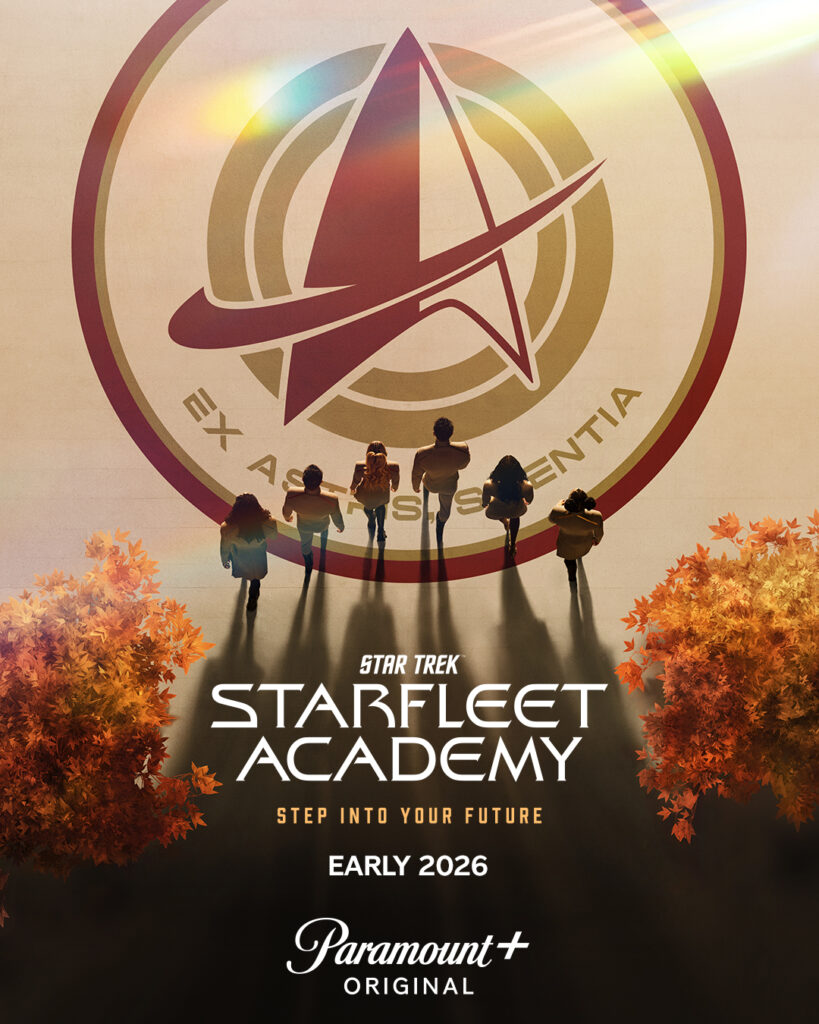

Starfleet Academy was a risky big swing, to be sure. I had my concerns about it. And, like every series that has come before it (except, IMHO, Star Trek: Prodigy), it had its challenges in its inaugural season.
But for its cancellation to be held up as proof of concept for “Go Woke and Go Broke” is such a straw man argument. There’s so much more going on than Star Trek doing what it’s always done.
To borrow from another sci-fi series, “All of this has happened before, and all of this will happen again.”
Twenty years ago, Star Trek: Enterprise suffered from franchise fatigue and network restructuring. It was the fourth series of the Next Generation era. Its network, UPN was struggling. A year after Enterprise’s cancellation, UPN was gone.
To a significant extent, both of those things factored into Academy’s cancellation as well.
Academy is the SIXTH series of the Discovery era, not including the Short Treks or Section 31, and Paramount, newly acquired by Skydance, is facing financial consequences if the proposed merger with Warner Bros. Discovery can’t move forward.

So, it wasn’t the clothes, the relationships, or the lessons on diplomacy, empathy, and inclusiveness that shut Starfleet Academy down.
It wasn’t the introduction of new species or their unique reactions to bananas. It wasn’t even the Talaxian Furfly.
In nature and function, Star Trek hadn’t changed. “New Trek” is not new. What has changed is how audiences respond and what they think they’re entitled to.
As my TV Fanatic colleague, Sam Huang, stated in Showrunners Don’t Owe Internet Warriors Anything, “it’s time to open up the conversation about setting boundaries for what fans are owed.”
And Trek has always been a conversation starter.
Infinite Diversity in Infinite Combinations

Like most science fiction, Star Trek holds up a mirror to who we are. But unique to Gene Roddenberry’s vision is how Trek presents a vision of who we could be as well.
The Federation and Starfleet exist in Earth’s post-apocalyptic (repeated, in fact) era. They exist because we keep going, keep trying, keep hoping. As goes the franchise, so go the fans.
The viewers who don’t see themselves or their beliefs and values in Star Trek are nevertheless part of the #IDIC paradigm, whether they like it or not.
What is truly fascinating is that they continue to tune in and watch. And complain. One can only assume they’re holding on to the hope that they will eventually.
There is no IP that is universally appealing. And in a franchise as varied and diverse as Star Trek, there will be characters or stories or concepts not to every individual’s liking.


Much of Star Trek’s modern-day perceived controversy can be laid squarely at the doorstep of the online megaphone, which deliberately amplifies the angry voices.
“When one has been angry for a very long time, one gets used to it. And it becomes comfortable, like… like old leather. And finally… becomes so familiar that one can’t ever remember feeling any other way.” — Jean-Luc Picard
The Internet can be a dangerous echo chamber. And, admittedly, these are dark days IRL. But it helps to have shows like Star Trek that challenge the darkness, promote resistance, and grow your perspective.
Most of us Trek fans aren’t angry. Disappointed at times, but not angry. We have a love for what the franchise puts into the world and a desire to spread that message.
What can be triggering is the thought of a future without hope, aspirations, curiosity, innovations, and surprises. Star Trek gives us that because we have to see it to be it.
Let’s shake up this echo chamber, Fanatics! Why do you think Star Trek has lasted so long?


What brings you back to it? Is it the science? The people? The problems? The music?
Some fun Trek series math for you. Between the TOS finale and the TNG premiere, 18 years passed. Between the Enterprise finale and Discovery’s premiere, 12.
Now, Strange New Worlds Season 4 premieres this Thursday. Starfleet Academy Season 2 will drop in early 2027, with the abbreviated final season of SNW expected to air later that year.
If the gaps between Trek series eras are a linear relation, the next big Trek wave will be 2033.
In the meantime, let’s #LLAP and vote on your favorite Trek series already in existence!
-

With no Star Trek shows in production for the first time in a decade, we examine why #IDIC evokes such toxicity and if #LLAP is even possible.
-

Strange New Worlds stars celebrate 60 years of Trek, tease Season 4, and reflect on legacy, family, and the Enterprise’s enduring magic.
-
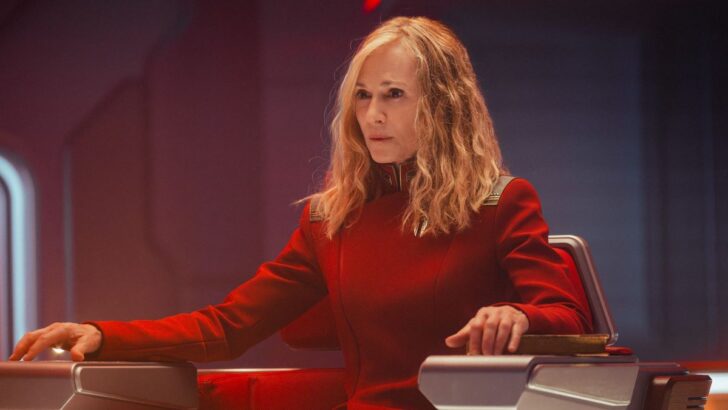
Captain Nahla Ake takes command of Star Trek: Starfleet Academy in a double-decker series premiere. We review this mission’s unique challenges
-
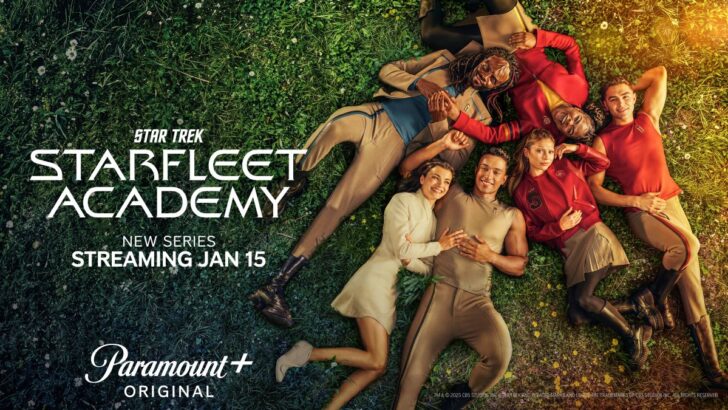
Star Trek: Starfleet Academy premieres this week, and I have never been so worried about a Trek premiere. Read why and tell me I’m wrong. Please.
-
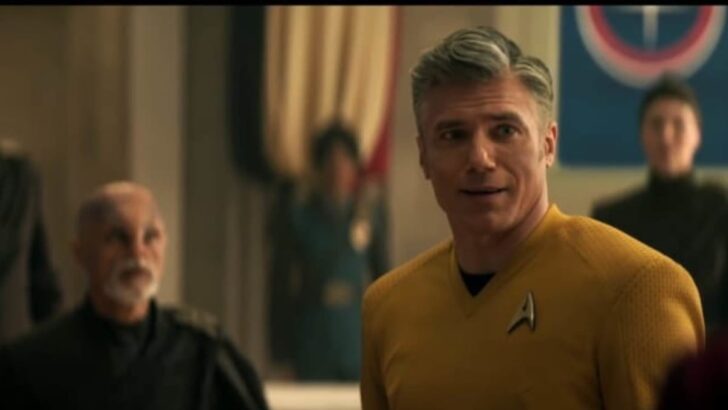
It’s almost game over for Star Trek: Strange New Worlds, with the beloved series getting the axe at Paramount+.
TV Fanatic is searching for passionate contributors to share their voices across various article types. Think you have what it takes to be a TV Fanatic? Click here for more information and next steps.