

What To Know
- Euphoria star Darrell Britt-Gibson breaks down Bishop’s betrayal of Alamo in the series finale.
- Plus, the actor discusses Bishop’s moral code, his mysterious silence, and his ending beyond the final credits.
Euphoria‘s series finale may have delivered more than one shocking twist, but it’s safe to say the final one went to Alamo’s (Adewale Akinnuoye-Agbaje) right-hand man Bishop (Darrell Britt-Gibson). Warning: Spoilers for the Euphoria Season 3 finale ahead!
After Alamo had poisoned Rue (Zendaya) by handing over a bottle of fentanyl-laced percocet pills, Ali (Colman Domingo) sought revenge for her death. The event brought Ali to the Silver Slipper, where he bolted the door with a bike lock and pulled out a sawed-off shotgun, firing it at G (Marshawn Lynch) as he sought out the boss in charge.
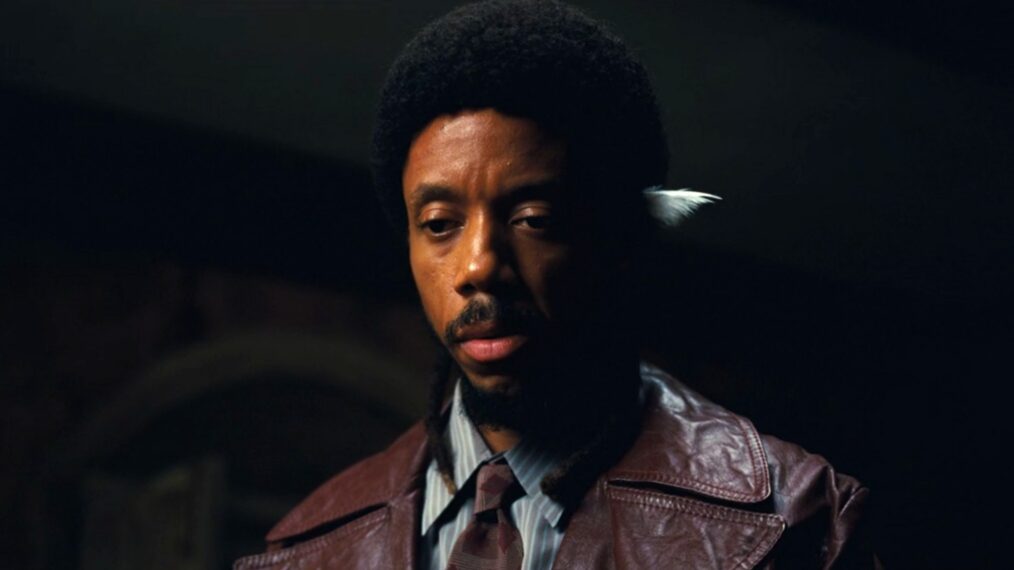
As Alamo stepped out from his backroom, where he was making an uncomfortable advance toward Maddy (Alexa Demie), he was handed a revolver by Bishop. But when it came time to fire, no bullets came out and Ali took the opening for a deadly victory. It was soon revealed that Bishop had pocketed the bullets from Alamo’s gun, disadvantaging his boss, ending a sick cycle in the man’s criminal empire.
Below, Britt-Gibson opens up about the betrayal and peels back the layers on Bishop’s moral code, his mysterious silence, and much more.
Were you aware that Bishop would betray Alamo in the end when you were offered the role? If not, how did that change your perception of him over the season?

HBO
Darrell Britt-Gibson: So I wasn’t aware, at first when I began filming, but I was made aware of it probably midway through filming and I just thought it was so beautifully done. At that point, it felt very much in line with what Bishop would do, in my opinion. And so it felt very organic that that was gonna happen. When we actually got to film it, nothing about it felt like a shock or a surprise to me.
What did you think of the juxtaposition between Bishop’s brutally violent acts and his ultimate hero move in the end? Does he have a morality code?
A lot of what he does is a job, but morally there are things that he does not agree with. I would even say the Paladin thing, that dialogue that takes place at the poker table, and Alamo’s like, “They killed that bird,” and then Bishop says, “I was told to.” I didn’t want to. Even when Laurie says to Bishop in that house, and she’s like, “Do you like animals? And he’s like, “I love them.” He’s not lying. Bishop is a truth teller and a truth seeker, and so, when he tells you something, it’s what he believes. So much of the season feels like a story about redemption, and I think that’s why I love the line at the end when he says, “May god have mercy,” and he’s speaking it to Ali, but you could feel the internal nature of it because of all the atrocities that he has committed as a person. But I’ve always felt like what Alamo did to Rue was a bridge too far for Bishop because the fentanyl… Bishop has a code, and I think that something like that doesn’t align with his code, no matter how many crazy things that he’s done.
Ali walking into the Silver Slipper is what allows Bishop to set up Alamo for failure. Would he have just continued on working for Alamo if that hadn’t happened or would he have strategized some other way to enact Alamo’s downfall?
Bishop is extremely calculated, and it’s always chess, not checkers for him, so the opportunity presented itself for this to be the moment to do whatever he had planned to do, but it’s not like some spur of the moment like thing. It’s very much in his mind’s eye that this person has to go, because Alamo has shown that the only person he truly cares about is himself, and so it’s Rue one day, and who knows who’s next, you know?Alamo has loyalty to no one but himself, so a man who has loyalty to no one but himself is essentially a threat to everyone, and it’s time for him to go.
HBO
In the moments leading up to Alamo’s shootout with Ali, Bishop witnesses his uncomfortable advances towards Maddy. Does that factor into his choice to betray Alamo as well?
Absolutely. There’s also the conversation in the car where she says, “What I’d like in this world is a little bit of grace.” And Bishop is a layered character, you never really get a handle on what he’s feeling or where he’s going or what he’s going to do and that’s the beauty of the character, it’s the unpredictability of it, and I think that’s why having Snowflake the dog with him, you’re like, what, wait, you have a dog? And I promise you that is the most taken care of dog because Bishop… if he loves something, he’s going to love it fully. I think with Maddy, he sees something there, and the Alamo of it all has to stop, and so if nobody’s going to stop it, then it’s time for him to do it himself.
I heard it took 10 days to film the final shootout. What was that experience like living in that heightened tension for multiple days, versus the minutes we see onscreen?
It was incredible, because it’s such a fun set to be on. Sam has cultivated a set that’s very welcoming, and it’s very open too. I could go by video village and look at things, it never felt like we’re doing this intense thing and there is a lot that’s required of everyone to execute it properly, but it’s so well taken care of and you’re just so excited. It’s a 10-day shoot and this is the fun part, and then you bring somebody like Coleman into the mix and it just makes it that much more of an experience because he’s just this light, this amazing human being, and totally incredible actor, so I had so much fun.
We know that Bishop turns on Alamo, but is there any warmth or concern for G on his end after he was shot by Ali? Or does he view it as a hazard of their job?
It’s a little bit of both. It’s the inherent danger of the job, any day you could lose your life, and Bishop and G and Kidd (Asante Blackk), they’re all aware that this job does carry that sort of risk, this is what we’ve all signed up for. So you could have a bond with people, but also that could have been any one of those characters that happened to.
Bishop was a very quiet character compared to his colleagues. Did that silence stem from a constant stream of observation or did it come from somewhere else?
It’s observational without having to always judge, which in turn, is what breeds awareness. So, it’s total awareness, being aware and in tune with whatever is happening or whatever is being presented so that whatever needs to happen or needs to get done can be done in a way that is efficient. I think him just judging everybody, that clouds the awareness that he needs to have to do the job that he does. Bishop is three steps ahead of everybody, and he’s somebody who has lived and seen things that I’m sure no person should see, but he has lived through them, and so, his awareness with his surroundings makes him extremely observational, without trying to be judgmental at every turn, because then you lose the awareness and to survive in that world.
What did you imagine happened to Bishop after the credits rolled? Did he take over Alamo’s empire?
I actually know, but I don’t even want to say it because I think about how incredible the fans of this show are, and I think about how much time and energy and love and pageant that they’ve put into this show and invested into it. So I want them to be able to run with whatever they want it to be because it’s their show and it belongs to them, and I really love that this gets to be theirs and whatever they want it to be, it is.
I guess the better question is, are you happy with his ending beyond the credits?
Absolutely.
Euphoria, Seasons 1-3, Streaming now, HBO Max