


Allen in Allen. Cr. Netflix © 2026.
Allen is quite a name for an alien. The titular character, a wide-eyed and childlike little extraterrestrial, is the star of Netflix’s new buddy sci-fi comedy from Ludo Studio, the Brisbane-based team behind Bluey. From filmmakers Daley Pearson and Jeffrey Walker, the film started life as a single, very silly question: “What if someone spent their whole life missing what they remembered as E.T., only to finally reunite with him and discover he’d grown into a Xenomorph?”
Sold.
The original science fiction comedy follows Petey Burns, who as a ten-year-old in 1998 befriends a small, glowing alien on a hidden Coolum beach, only for Allen to be beamed away without a goodbye. Twenty years later, adult Petey (TJ Power) is still living in his childhood home, replaying old VHS tapes and waiting for his best friend to come back. And then, finally, he does.
Getting Allen from Pearson’s head to the screen took the best part of a decade, a Queensland creature shop, a small army of puppeteers and, as Pearson told What’s on Netflix in an exclusive interview, plus a year and a half of work nobody quite saw coming. Below, we’re going to expand on how they made Allen come to life courtesy of that interview and other press notes.
Designing Allen: “Gizmo if Gizmo was all-powerful”
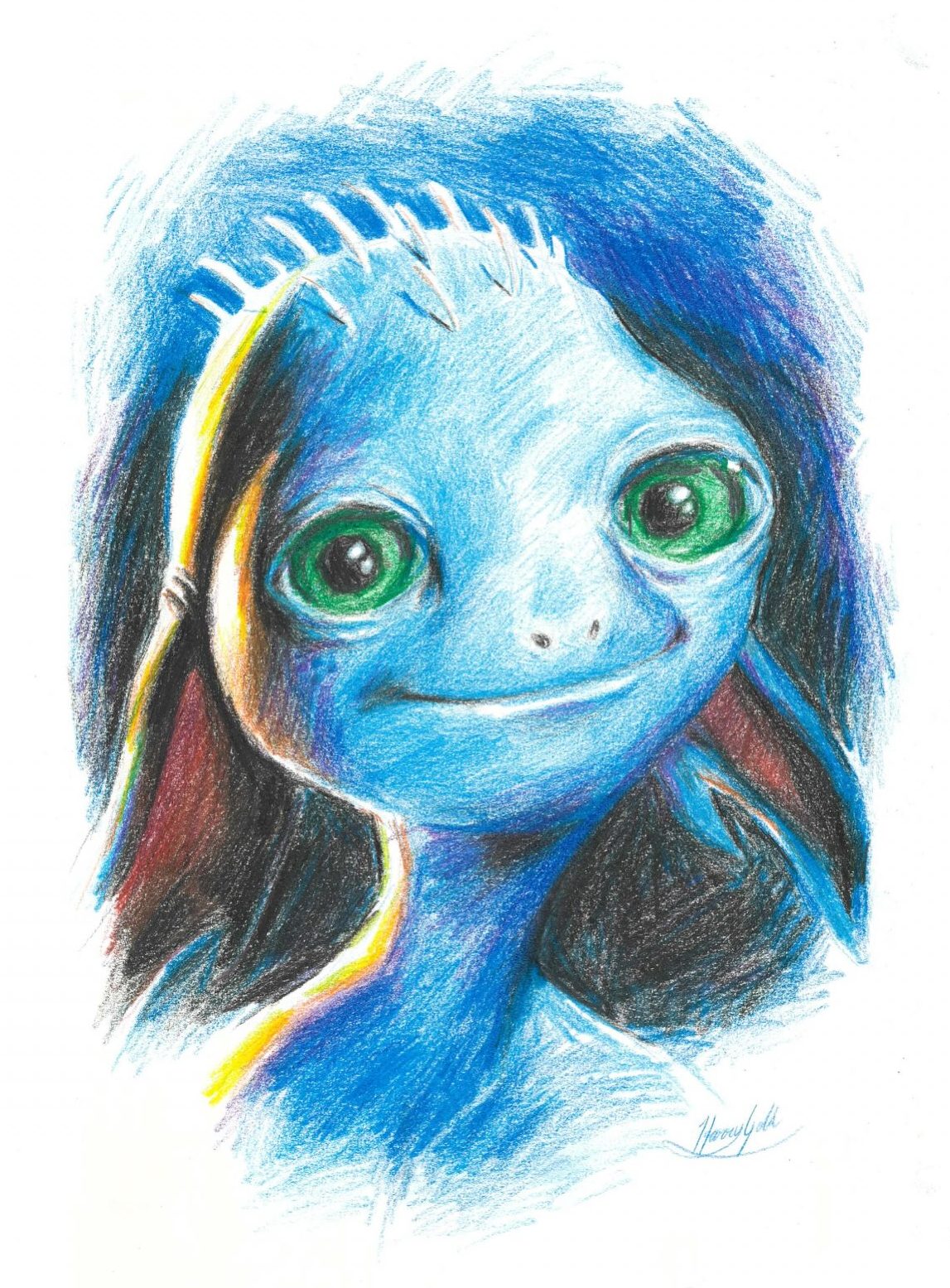
Pearson wanted Allen to feel familiar without being a copycat of the famous movie aliens he grew up with. In the film’s press notes, he describes Allen as “a goldfish with great powers,” small and cute with a big heart, “or Gizmo if Gizmo was all-powerful.”
The job of building him went to Formation Effects, the Brisbane creature effects house led by Steve Boyle, who has been working in creature design and puppetry since he was eight. Conveniently, Formation Effects operates out of Screen Queensland Studios, with its VFX division upstairs and its manufacturing floors below.
Boyle’s usual territory is a lot scarier (seriously, look at the creatures page on the official website – NSFL!). “He just finished up making snakes for Anaconda and all sort of terrible, horrible stuff that’s brilliant,” Pearson told What’s on Netflix. “And this was probably his first very cute character.”
“You had to believe that a kid who finds him on the beach would want to pick him up and take him home,” Pearson said in the press notes. “He had to feel like something from your childhood, without actually being from your childhood.”
The final design borrowed from some unexpected corners of the animal kingdom: Allen’s default smile comes from a gecko, his translucent skin from a green tree frog, and the warmth around his face from a baby hippopotamus.
“We started with the grays, a traditional gray alien, but the warmth around his face got a lot more of the reaction we wanted,” Boyle said. “Once we put that warmth back in, he just came alive.”
Camera tests began around three years before production. An earlier version with wider-set eyes and duller colouring passed those tests, but the team kept refining him.They moved the eyes forward for a more readable expression, intensified his colour and added translucent quills and ears that give him a mischievous glow when backlit. The finished Allen stands just 69 centimetres tall.
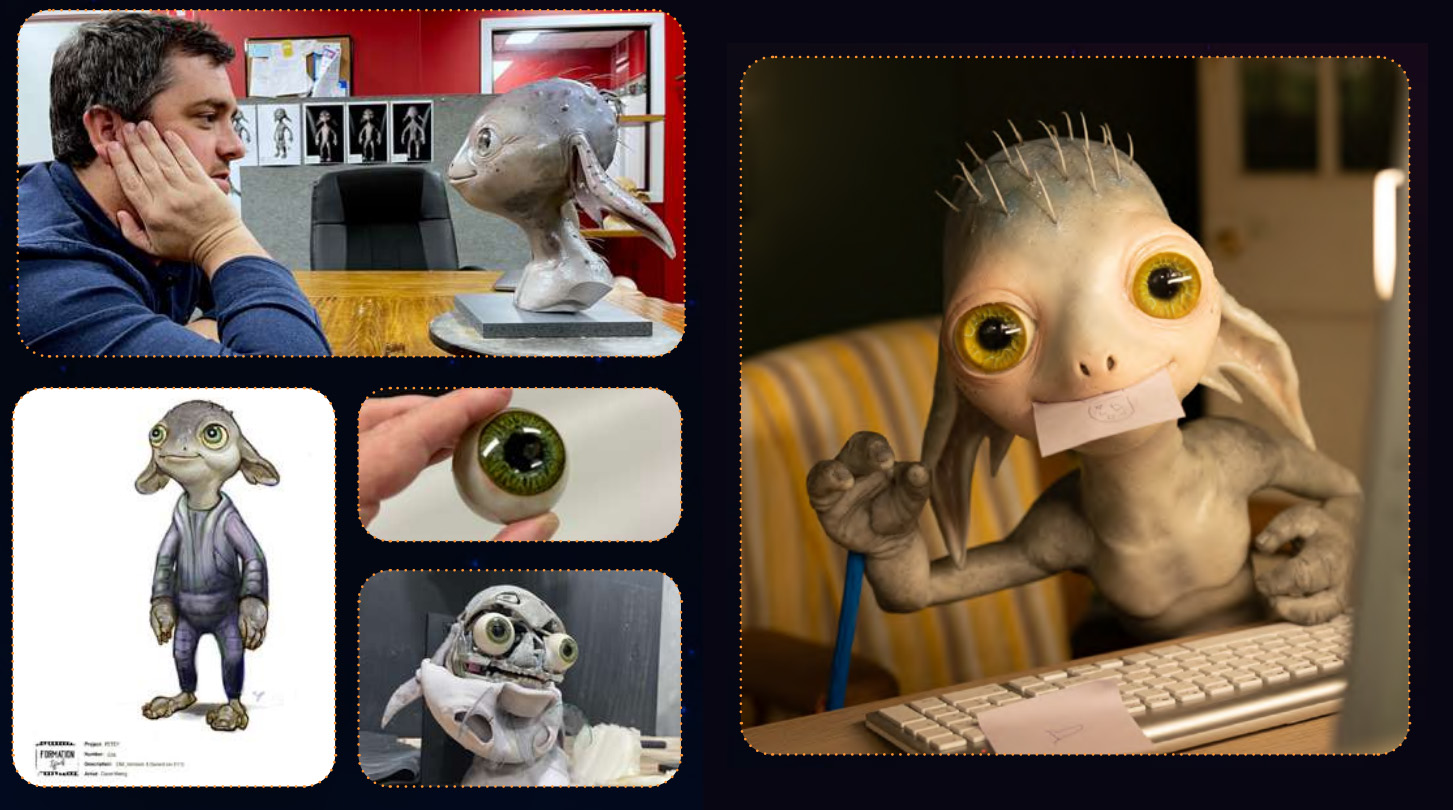
Pictures courtesy of Netflix
The animatronic that “didn’t fly”
The team’s first instinct was to make Allen fully animatronic. After a large-scale test with Netflix, it was clear that wasn’t going to work.
“It felt like you’re building a plane that you’re saying it’ll take off and it doesn’t take off,” Pearson told What’s on Netflix. “We built this animatronic like a Howard Hughes thing, like the goose will fly. And it’s like, well, it didn’t fly.”
The problem, he explained, was Allen himself. “He was too fine a character. And he was too small and delicate,” Pearson said, and the animatronics made him “too severe.”
A family of puppets
So the production went to puppetry. Because Allen is so small, no single puppet could do everything the role required, so Formation Effects built a family of around eight purpose-specific puppets, each suited to a different kind of shot.
They came complete with interior mechanics that simulated breathing and silicone skin heavy enough to wear puppeteers out over a long rehearsal.
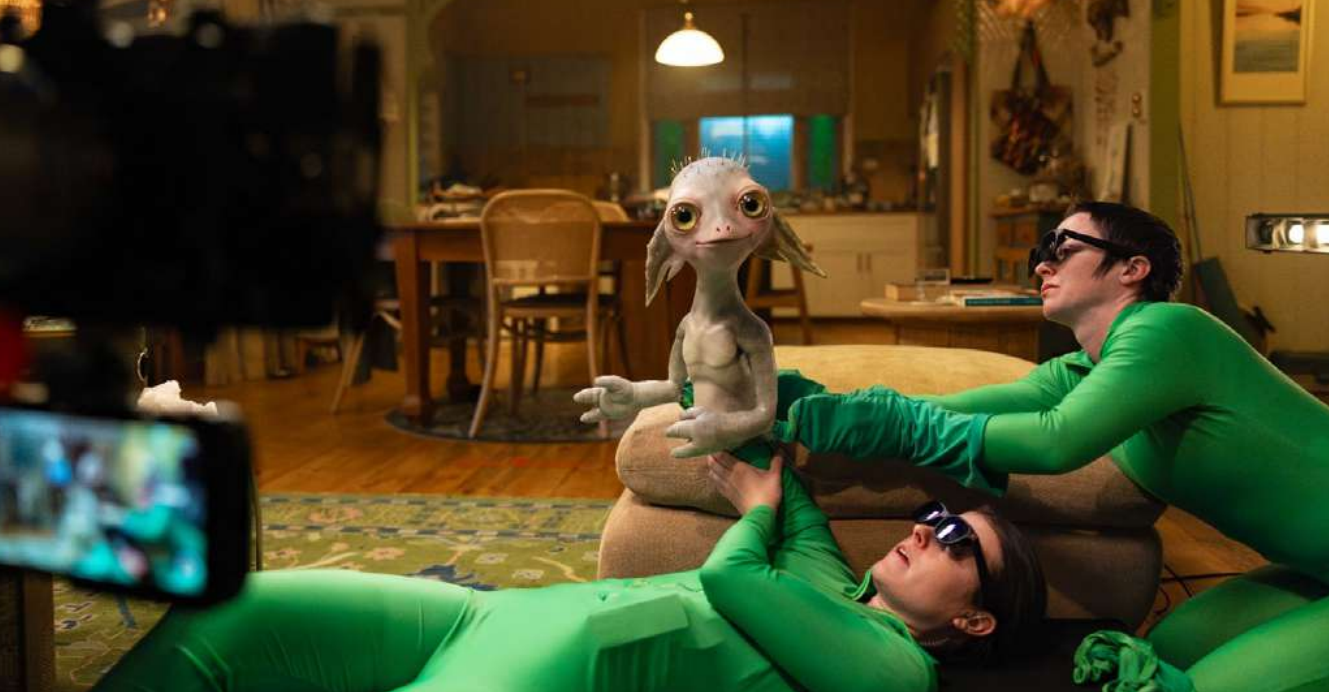
Picture Courtesy of Netflix
On set, Allen was performed by Sarah McLeod, Gemma Keliher and Anna Straker in the bunraku tradition, with several operators controlling one puppet at once.
Pearson told us that anywhere from two to ten people were operating Allen at any given time. He recalls puppeteers, Boyle included, “being crammed underneath a bed or on the crashing waves of Coolum beach” behind the tiny alien.
For Pearson, who grew up on E.T., Gizmo and the Ninja Turtles, a physical Allen was non-negotiable. “The dream was that this film felt handmade,” he told us. “And it did have a few cracks and sticky tape on it. Like it felt warm and handmade.”
It also gave the cast something real to play against. “Working with a physical puppet meant there was something tangible to perform with,” Power said. “It was like another actor, another performer in the room.”
“When they called cut, you’d think, ‘Oh, that’s right, there are two puppeteers in full body green suits right there.’ It was kind of strange. But also kind of wonderful.”
Going digital: “Like making an animated film for a year and a half”
As the screenplay grew, it became clear the puppet had limits that the story didn’t. “Allen was conceived as a puppet from very early stages and we ended up with some absolutely beautiful puppets,” said visual effects supervisor Murray Pope.
The production added a portable motion capture system, with performer Aljin Abella embodying Allen’s physicality for complex sequences like the film’s kite festival.
What started as small digital face and hand replacements gradually grew, until Allen became primarily a digital character on screen, with the puppet still present throughout. Part of that came from a bold creative call.
Pearson told us he originally planned to lean on the old tricks, keeping Allen hidden behind bookshelves and in the dark. But eventually, “he had to be the T-Rex in broad daylight eating the Gallimimus,” he said. “We couldn’t get past the midpoint without sort of saying, no, he’s just sitting in the living room. And that’s what’s fun and funny.”
“It felt really scary and vulnerable to sort of decide that,” he added, “because it could have been very, very, very bad.”
The puppet footage then went to VFX supervisor Jordan McInnes and the team at Alt.VFX, and the scale of what followed surprised even Pearson.
“We made a film with a puppet, and we did make a film with a puppet,” Pearson told What’s on Netflix. “And then it felt like we were making an animated film for a year and a half afterwards, which was sort of unexpected, I think, for everyone.”
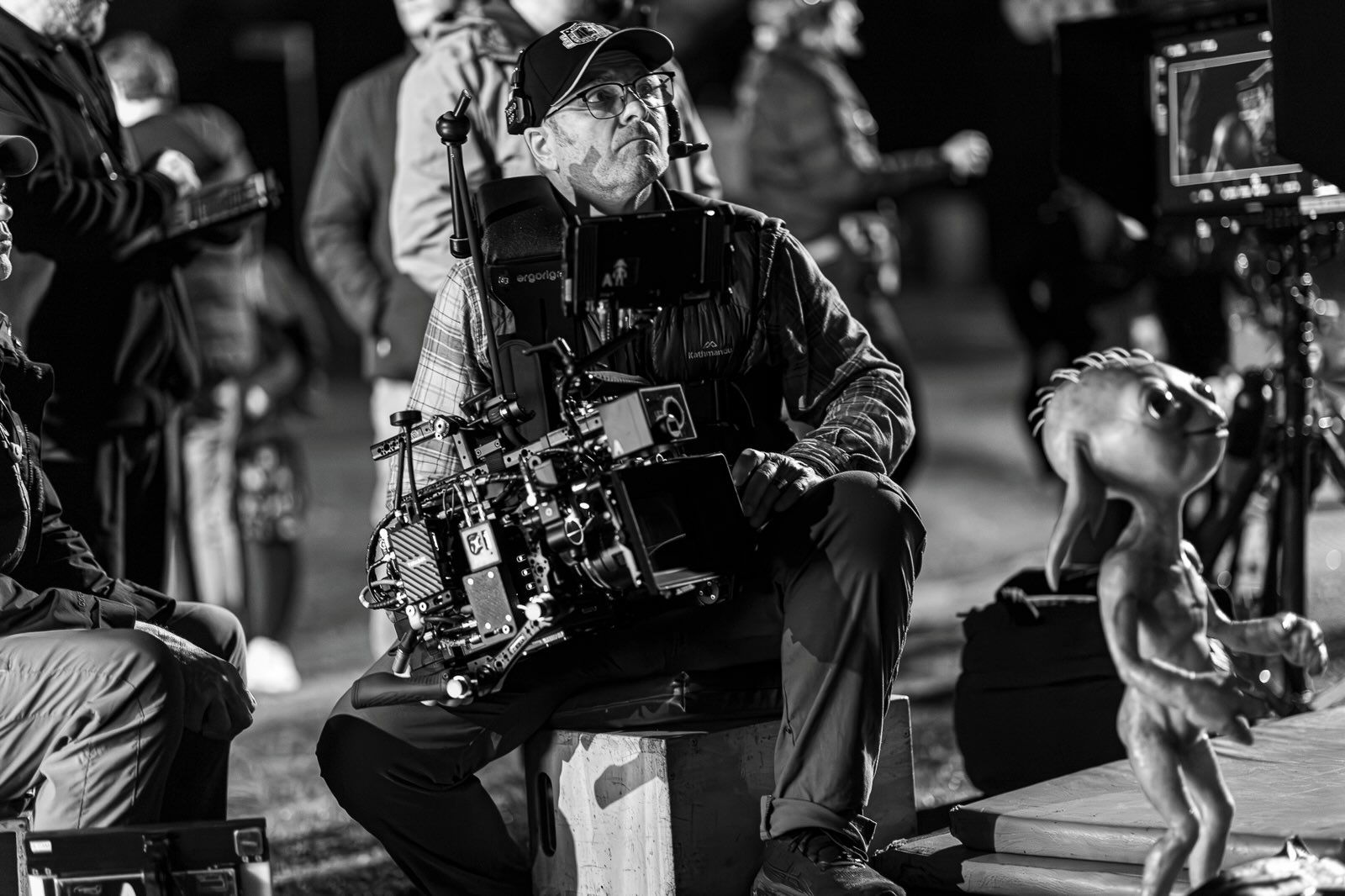
Picture via Daley Pearson / Instagram
Lighting gags, done in camera
Not all of Allen’s magic was added in post. His powers, from manipulating light to the tractor beam at the film’s climax, were achieved on set wherever possible using remotely controlled LED rigs.
“A lot of what Allen does is manipulating the light,” said director of photography Toby Oliver (Apple Cider Vinegar, M3GAN 2.0). “When they first walk into the kite festival, it’s all turned off and dead. And then all these things come on one by one, and that’s all controlled by Allen.
“It can all happen in camera. We’re not doing that stuff later in visual effects. It’s happening now on set.”
If you’re in Brisbane and want to hear more, Screen Queensland and Ludo Studio are hosting a free panel, The Making of Allen: When Puppetry and Movie Magic Collide, at the State Library of Queensland on Tuesday, November 17th, from 10am to 11:30am. Pearson will be joined by Boyle, McInnes, Tim Schultz of PROXi VP’s realtime unit PROXi Vision, and post-production producer Livia Hanich to walk through Allen’s journey from concept to screen, from the puppet build to motion capture and visual effects. Registration is free via Eventbrite.
Allen premieres globally on Netflix on Thursday, November 12th, 2026.