

The crisis of Native American women being trafficked and murdered is not just underreported; it is consistently mishandled when it does get attention.
Data already paints a disproportionate picture of crimes committed against this group, where they make up a huge percentage of victims despite being a small percentage of the population.
That reality should demand care, precision, and a willingness to step back and let the issue speak for itself.

Marshals Season 1 Episode 5, “Lost Girls,” takes on one of the most urgent crises facing Native American communities and then sidelines it in favor of two men trying to feel like heroes
The show has made it clear that it wants to explore issues affecting Native Americans and Broken Rock, but here, those issues feel less like the story and more like a backdrop for character validation.
Kayce Tries to Outrun His Shadow
This hour finds Kayce and Tate together again, but the tension between them is immediate and unrelenting.

Monica’s memorial is here, and while Tate has clearly anchored himself to preserving her memory, Kayce seems determined to orbit around it without ever actually engaging.
That disconnect has always existed in their relationship, but here it feels more exposed than ever.
Kayce has never really figured out how to bridge the gap between him and his son, and for the longest time, Monica carried that weight for both of them.
Without her, the fault lines are harder to ignore, and they’re becoming larger. The differences in heritage, age, and emotional capacity all sit just beneath the surface.
Moments like their fishing trip in Episode 2, “Zone of Death,” help, but they don’t solve anything. They just delay the inevitable.
That’s why in “Lost Girls,” Kayce doesn’t try to confront the distance — he tries to outrun it.

By throwing himself into Hayley’s case, Kayce is trying to accomplish several things at once: avoid dealing with Monica’s absence, prove something to Tate by saving a friend, and reinforce his standing with Broken Rock.
Only one of those motivations is clean.
The problem is not that Kayce wants to bring Hayley home. It’s that everything surrounding that goal feels compromised by what he’s trying not to face.
The case becomes less about urgency and more about displacement, and that undercurrent never really goes away.
Hero or Traitor? Miles Hopes He Can Change How People View Him
The situation becomes more unstable once Miles enters the picture because, like Kayce, he overcompensates.
Miles is dealing with the slow erosion of his identity, caught between his role as a Marshal and the way his community now sees him.

Taking on Hayley’s case gives him something immediate and tangible to hold onto, but it also pushes him into a more volatile headspace.
His urgency makes sense. His approach doesn’t.
What’s harder to reconcile is the belief — from both him and Kayce — that cutting corners and playing vigilante somehow strengthens the case. If anything, it does the opposite.
In a situation already complicated by jurisdictional gaps, missing data, and limited resources, their actions don’t risk breaking the case entirely.
Miles’ position is complicated, but it’s not unique.
Choosing to work within a federal system that has historically failed your own community was always going to come with consequences.

Whether those consequences are fair is a different conversation, but they are inevitable.
What he hasn’t come to terms with yet is that there may not be a clean resolution waiting for him.
The tribe may never fully accept his choices, and no single case — no matter how personal — is going to change that overnight.
If anything, trying to force that validation is what’s pushing him further away from it.
A Glimmer of Hope
One thing I appreciate about Marshals is that it doesn’t pretend like their off-book actions don’t have consequences.
Through Pete, it lays them out in the open, warning that disregarding the law could, at best, cost them a good outcome in this case.

The problem is that Pete isn’t being firm enough. So far, he has been able to contain the situation by raising his voice in the eleventh hour, but what happens when Kayce or Miles fails to hear him at that crucial moment?
They have barely survived Gilford’s inquisition, and while he’s happy to take credit when they do great work, he could also throw them under the bus to save his own skin.
Overall, this arc is a noble endeavor, but its execution is watered down by its focus on the egos of two men.
The only saving grace is Rainwater’s return, which offers a glimmer of hope that the writers know what they’re doing.
Rainwater has always been a compelling character. Behind the fitting suits and calm delivery is a man who knows that every battle requires different tactics.
His approach to things did not make him popular with the more radical voices, especially on Yellowstone, but who survived and got what he wanted in the end?

On the one hand, he is not afraid to call out Kayce and the Marshals for using a family’s tragedy to feel better about themselves, but on the other hand, he knows to take help when it’s offered, and he could use it.
But with him still, his entanglement with Kayce and the Dutton saga could enlarge blinders that he never knew he had.
Gut Check
“Lost Girls” is not a bad episode; it’s just poorly executed.
When the focus shifts from the victims to the egos of the men chasing the case, the story loses both its urgency and its credibility.
Add in an investigation that relies more on assumption than process, and what should have been a grounded, hard-hitting procedural ends up feeling hollow.

There is still time to course-correct. The foundation is there, and characters like Rainwater prove the show knows how to approach these themes with nuance when it wants to.
But if Marshals is going to take on stories like this, it needs to trust the weight of the issue and not take shortcuts.
Intrusive Thoughts
- If we thought Andrea was unlikable, Miles proves that anyone can be unlikable with the right motivations. I mean, who does this guy think he is?
- Kayce’s avoidance of anything Monica-related is a huge red flag. The pilot rushed past this arc, and I hope they dive into it fully, but is there something we’re missing here?
- Time really does pass. It’s only the other day that Brecken Merrill was a wee little boy, and now he’s almost the same height as Luke Grimes. [insert dramatic emoji here]
Alright. What did you think, Marshals fanatics? This show is starting to lose me. Episode 4 had a major procedural problem, and this one has issues, too. It’s still too early to call it, but we can’t have more weak episodes.
Let’s keep the conversation going — it’s the only way the good stuff survives.
Say something in the comments, share if you’re moved to, and keep reading. Independent voices need readers like you.
-

Marshals Season 1 Episode 5 Fumbles an Important Arc
Marshals Season 1 Episode 5 is the first part in a 2-part storyline but the show handles the storyline quiet poorly and dilutes its impact. We dive into it.
-
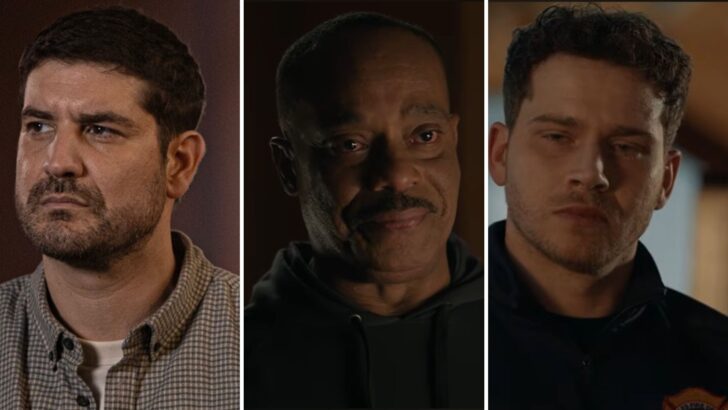
Characters of the Week: The NCIS Franchise, 9-1-1 & More Pack an Emotional Punch
From NCIS to 9-1-1, these characters of the week left us reeling, and we have to talk about it. Check out our full list!
-
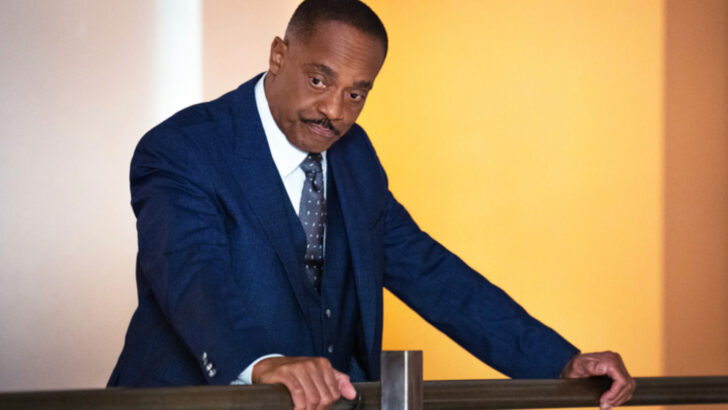
NCIS 500th Episode Twist Proves the Series Still Has Life Left
NCIS went there with its 500th episode, and I think it’s a good thing for the show’s future. Let’s discuss!
-
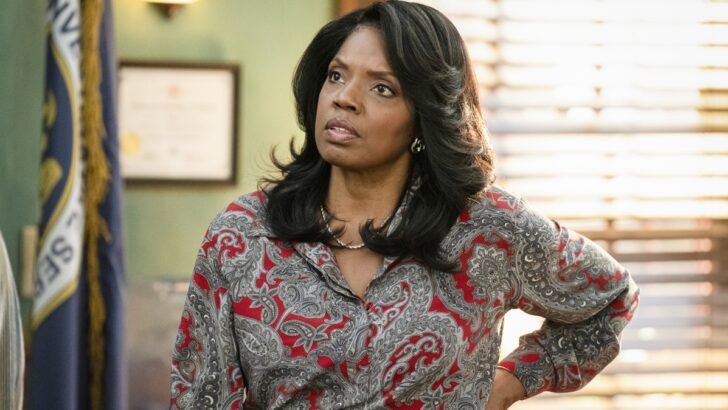
NCIS: Origins’ Tyla Abercrumbie Talks Mary Jo’s Shocking Romance, Moving Forward & Navigating ’90s Sexism
We caught up with NCIS: Origins star Tyla Abercrumbie to discuss Mary Jo’s secret romance, being the heart of the NIS, and more!
-
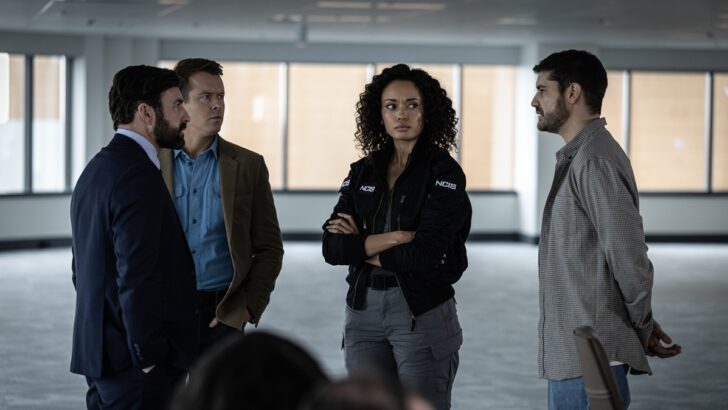
NCIS: Sydney Season 3 Episode 12 Hits All of Trigger’s Pressure Points in Explosive Hour
They cannot leave us hanging like that! The best aspect of a two-part arc is that it’s super-sized. And the worst …
The post Marshals Season 1 Episode 5 Fumbles an Important Arc appeared first on TV Fanatic.